10 hr
Abu Simbel Day Trip from Aswan with Guided Tour
- Expert local guide
- Small group
- Skip-the-line access
- Free cancellation
Abu Simbel Sound and Light Show — Evening Entry & Reserved Seating
Colossi lit from the dark, voices carried across stone.
Compare fares, pick the fit — all bookings are mobile-voucher and eligible for free cancellation where shown.
10 hr
10 hr
10 hr
Worth it for evening visitors who love atmosphere
For 350 EGP, the abu simbel sound and light show buys you roughly 45-60 minutes: the four colossal Ramses II statues washed in shifting projection light against the sandstone facade, plus a narrated walk through the temple's story via multilingual headsets. The value math is honest. If you judge it purely as theatre, the narration feels dated and the effects are simpler than modern projection mapping elsewhere. But the illuminated facade after dark against the Lake Nasser sky is a genuinely different sight from the daytime temple, and many reviewers say that view alone justifies the fee. These abu simbel sound and light show tickets pay off best for anyone already staying overnight in the village who wants an unhurried evening. Day-trippers racing back to Aswan get squeezed. Among Aswan landmarks, few evening experiences match this UNESCO facade under artificial light for the price.
Bottom line: If you are sleeping in Abu Simbel, the abu simbel sound and light show tour is an easy yes; rushed day-trippers can skip it without regret.
For most travelers, the abu simbel sound and light show is the easier and more reliable choice, while the Sun Festival rewards only those building an entire trip around two fixed dates. If your schedule is flexible only within a normal Egypt itinerary, skip-the-line abu simbel sound and light show tickets get you a guaranteed evening spectacle any night of the year.
|
Top pick Sound and Light Show |
Sun Festival | |
|---|---|---|
| What you see | Narrated light projection on temple facades | Sunrise beam illuminating 3 inner statues |
| How often it happens | Nightly, every day of the year | Twice yearly — Feb 22 & Oct 22 |
| Cost to attend | 350 EGP show ticket, foreign adult | Standard temple entry, no extra fee |
| Crowd level | Moderate, unnumbered bleacher seating | Very heavy, predawn crush |
| Time of day | Evening, 19:00–20:00 | Sunrise, roughly 06:00–06:30 |
| Advance planning needed | Arrive 19:00–19:30, no date restriction | Trip must align with one of 2 dates/year |
| See tickets & prices |
Verdict: The Abu Simbel Sound and Light Show suits any traveler on a standard schedule, while the Sun Festival is worth chasing only if your trip dates already happen to fall on February 22 or October 22.
Hand-picked experiences loved by thousands of travelers
15 hours
Free Cancellation
Embark on a private journey from Luxor to explore the monumental, UNESCO-listed Abu Simbel temples.
8 hours
Free Cancellation
Discover the colossal temples of Ramses II and Nefertari on this private, guided day excursion from Aswan.
10 hours
Free Cancellation
Experience the grandeur of Ramses II’s temples and the vibrant, colorful culture of a traditional Nubian community.
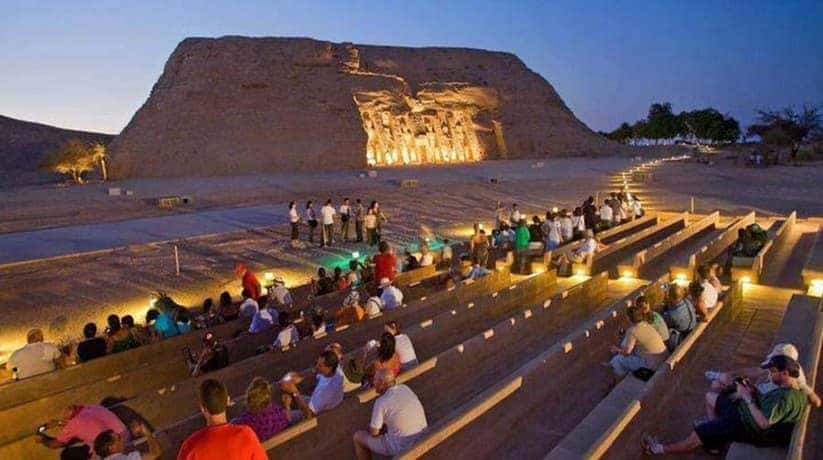
Enter through the main gate, pass the security check, and walk toward the amphitheater seating in front of the Great Temple.
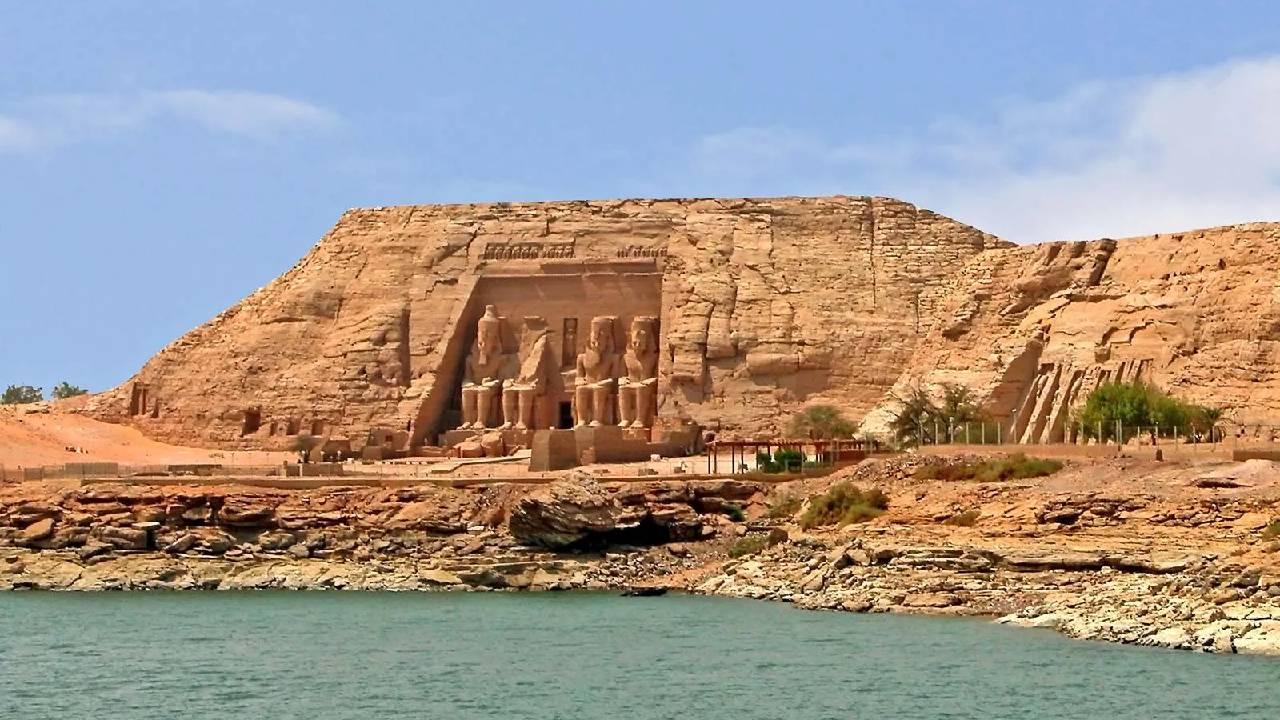
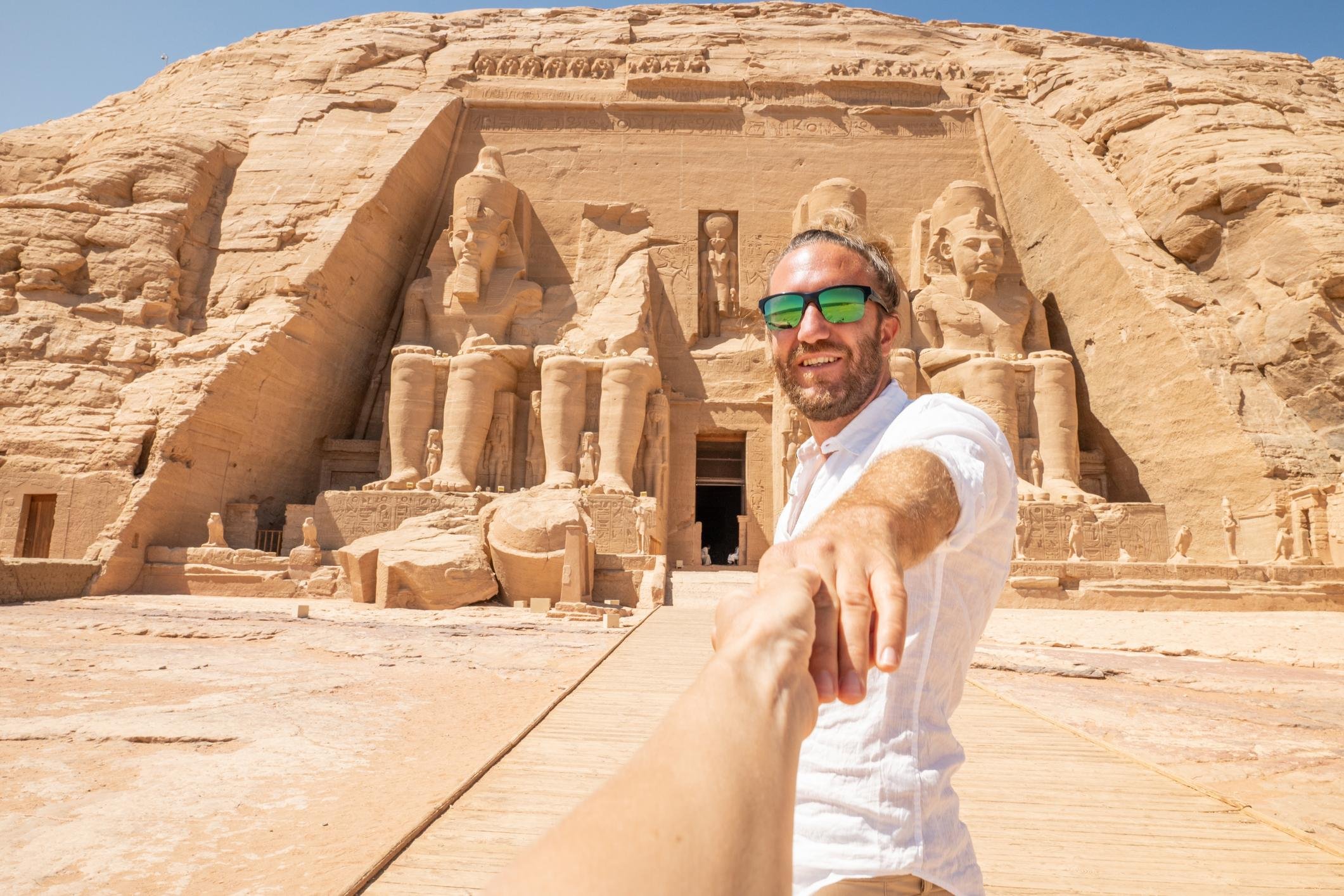
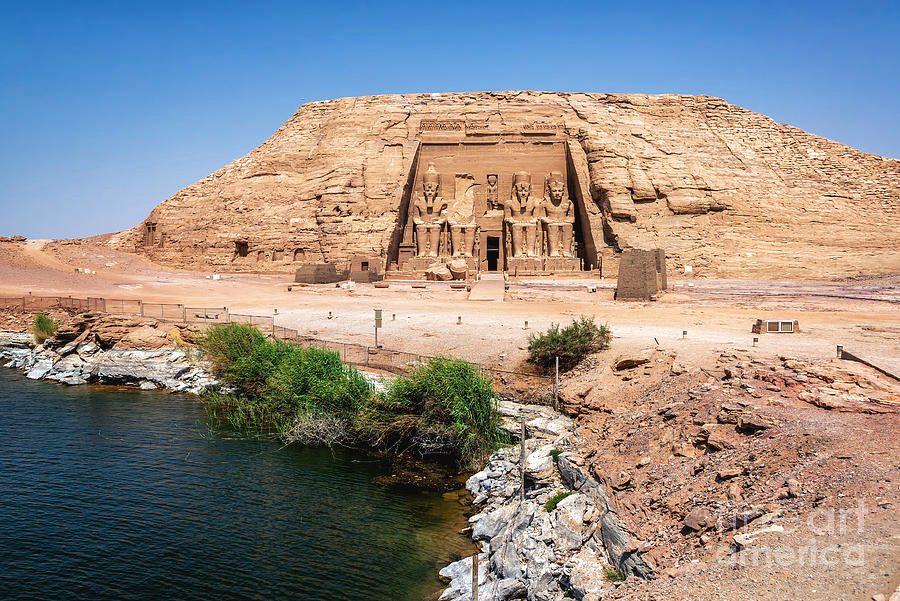
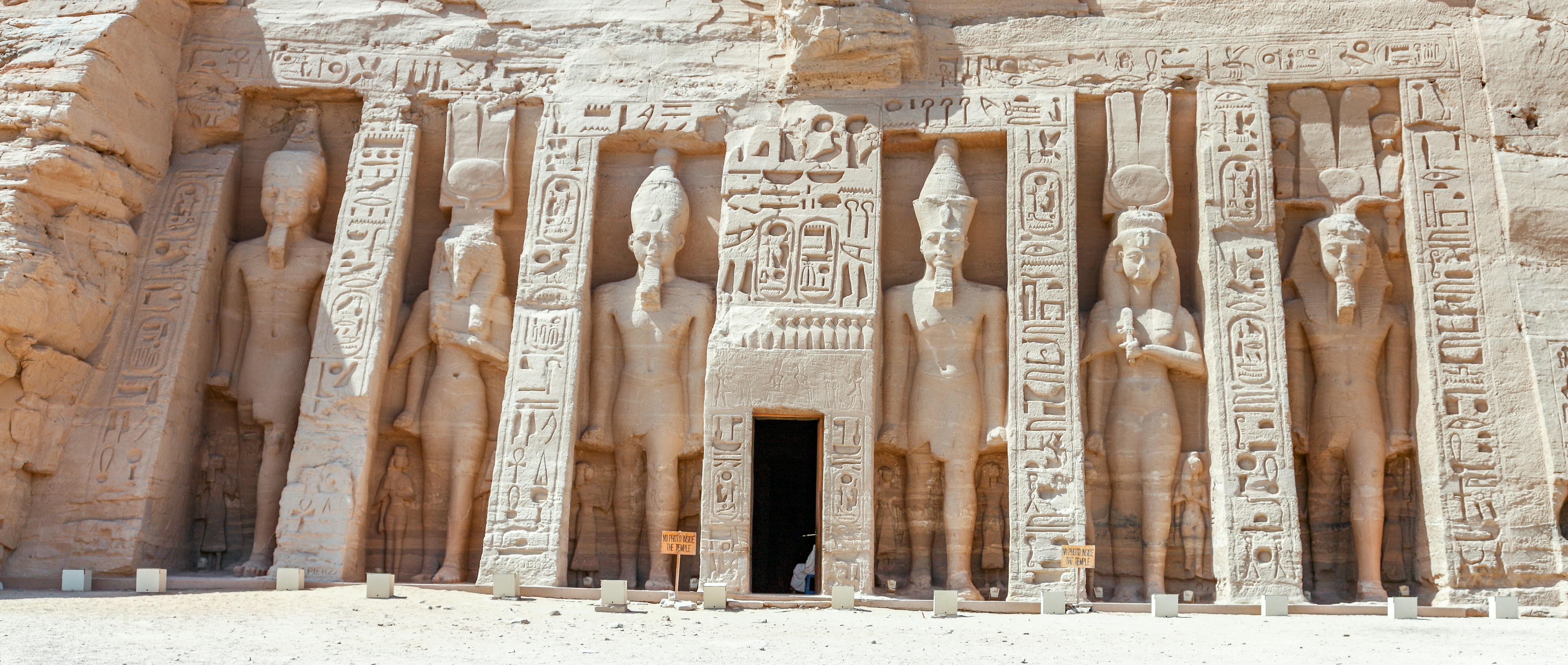
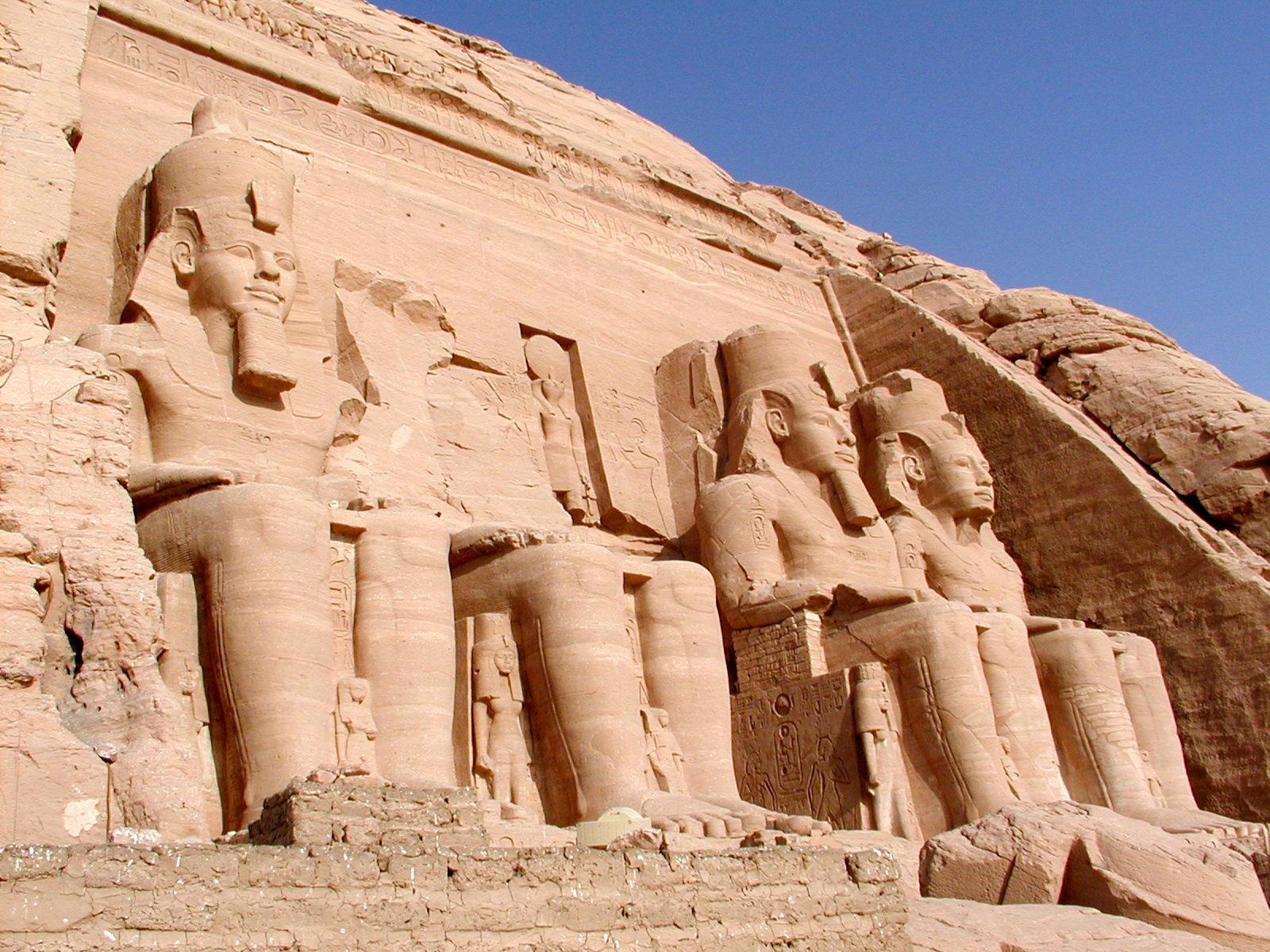
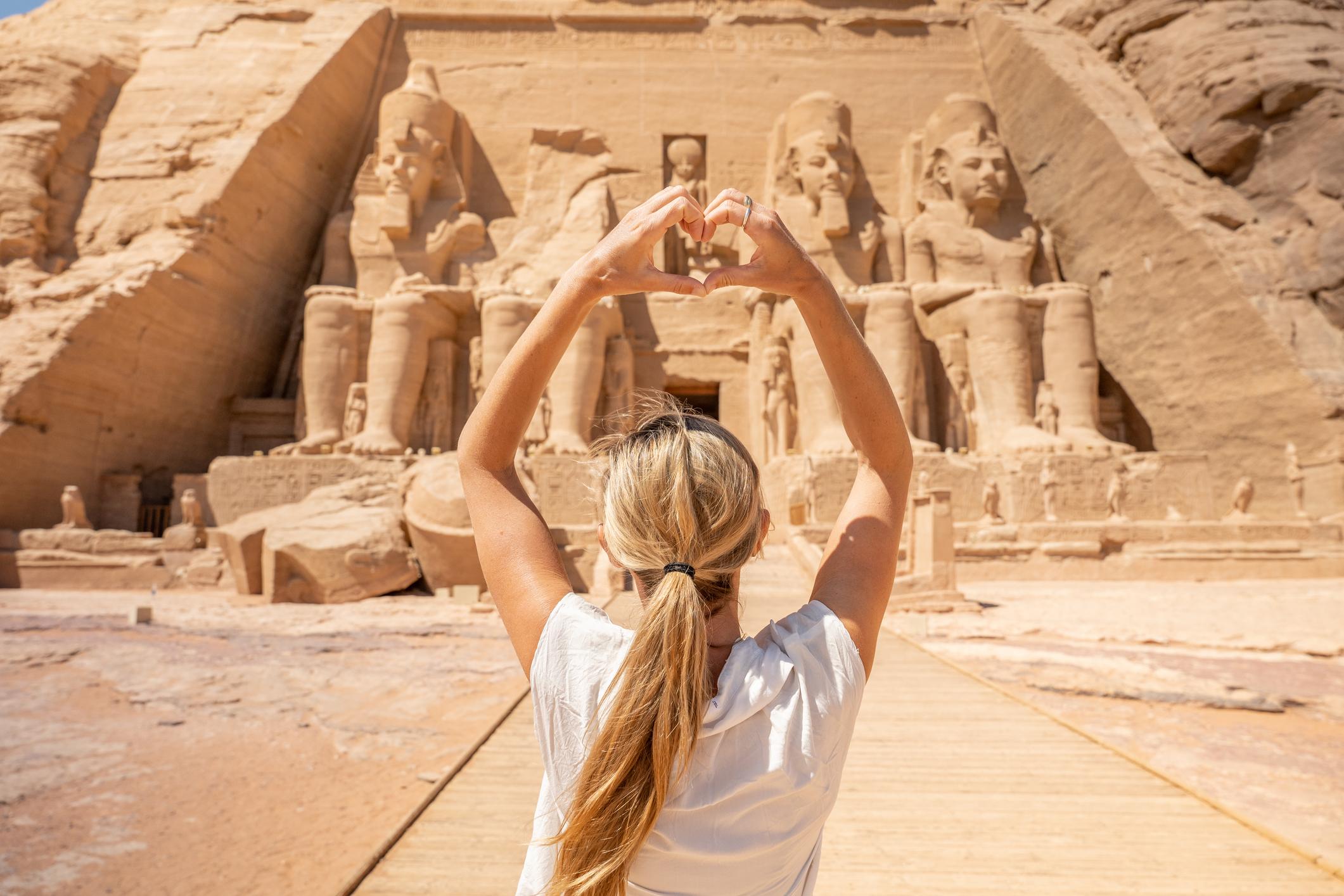
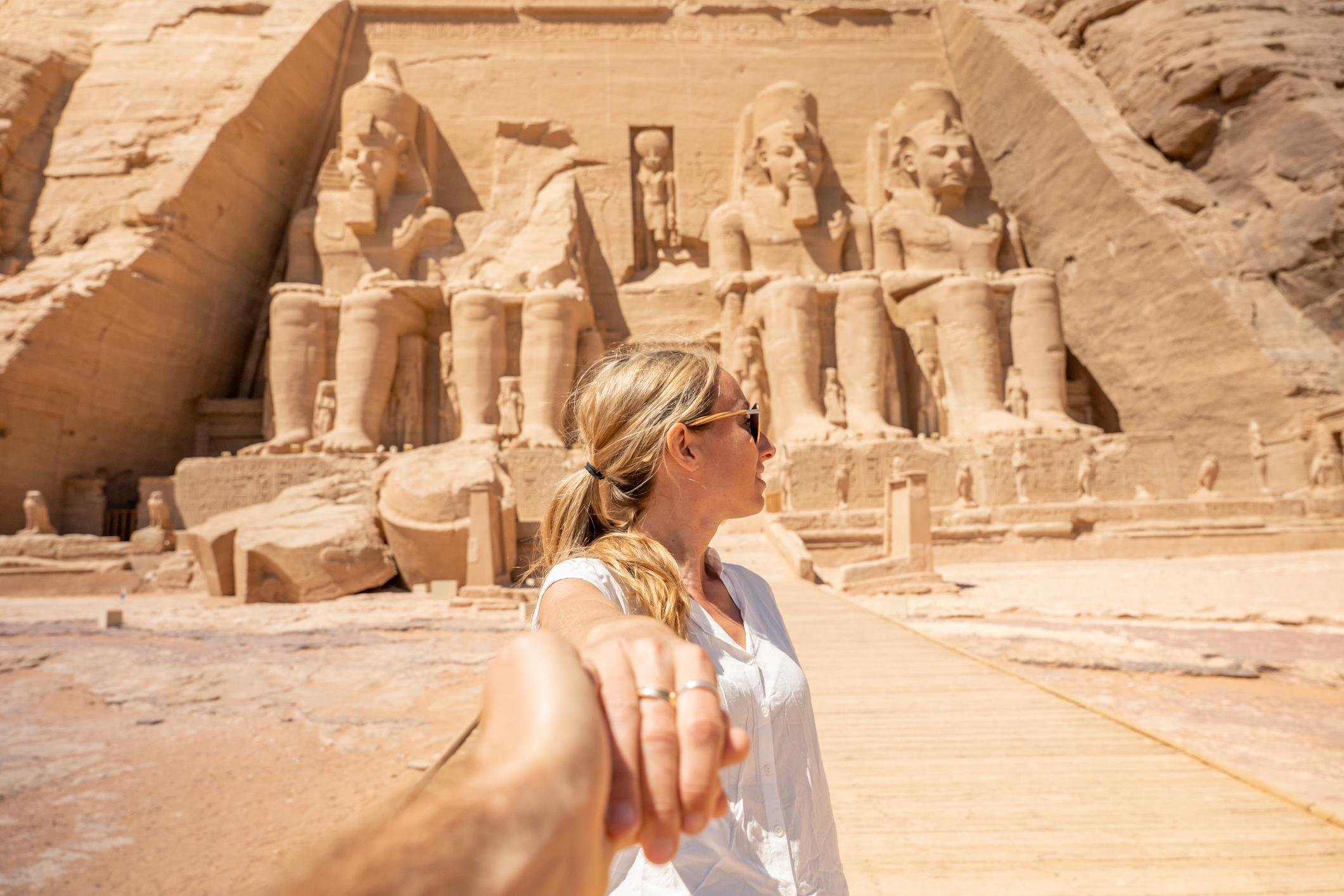
The facade features four seated colossi of Ramses II, each about 20 meters tall, carved directly into the sandstone cliff and serving as the projection surface for the sound and light show. Twice a year, in February and October, sunlight reaches roughly 63 meters into the temple's inner sanctuary, a solar alignment preserved almost exactly after the 1960s relocation.
You arrive in the arrival window between 19:00 and 19:30, while the last daylight drains from Lake Nasser and the desert cools. Seating is unnumbered, so you come before the 19:00 start, choose a place facing the Great Temple, and let your eyes adjust to the pre-show darkness. The border town is silent; there is no traffic behind you, only the lapping of the reservoir and the settling hush of the crowd. When the projection begins, you watch the four colossi of Ramses II emerge from black, washed in shifting colour as the narration opens. You follow the account across both facades — the pharaoh's temple, then Nefertari's beside it — as hieroglyphs and reliefs brighten and fade in sequence. You track the retelling of the Battle of Kadesh, catch the names of the gods, and feel the scale of the seated figures grow in the dark. The abu simbel sound and light show runs a single hour, ending by 20:00. When the lights fall, you rise from your seat, let the crowd thin, and step back into the cold desert night with the illuminated facade still fixed behind you. You walk out past the reconstructed hill knowing the stone above you was moved here, block by block, to survive.
All the details about your upcoming adventure in one place
The abu simbel sound and light show projects narrated history and coloured lighting across the twin temples of Ramses II and Queen Nefertari, carved into the Nubian sandstone beside Lake Nasser. Multilingual headsets let visitors follow the story of the great temple facade and its colossal statues in their own language, and most abu simbel sound and light show tours pair the evening programme with a daytime temple visit. Booking صوت وضوء أبو سمبل tickets ahead secures a seat during the busy summer season.
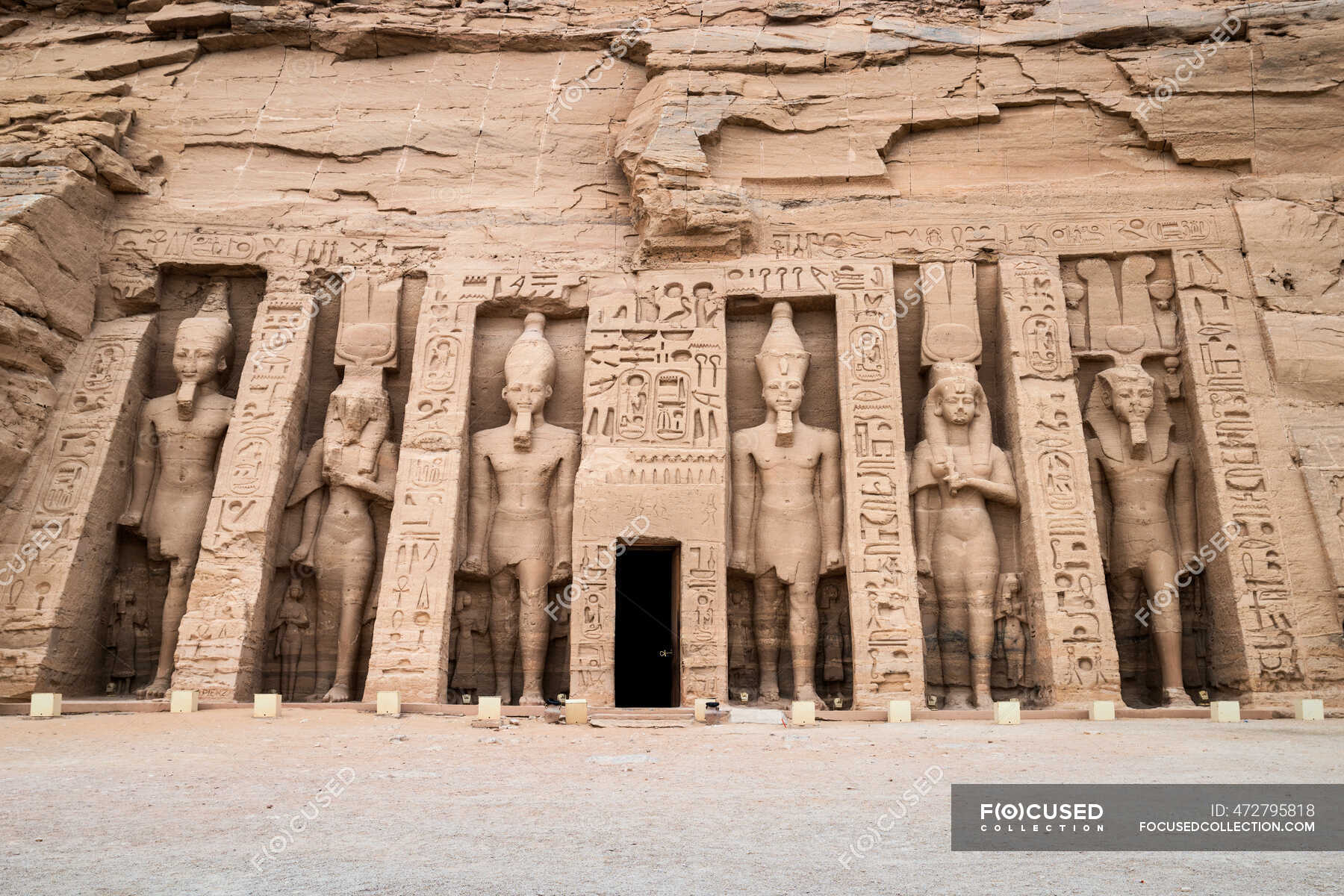
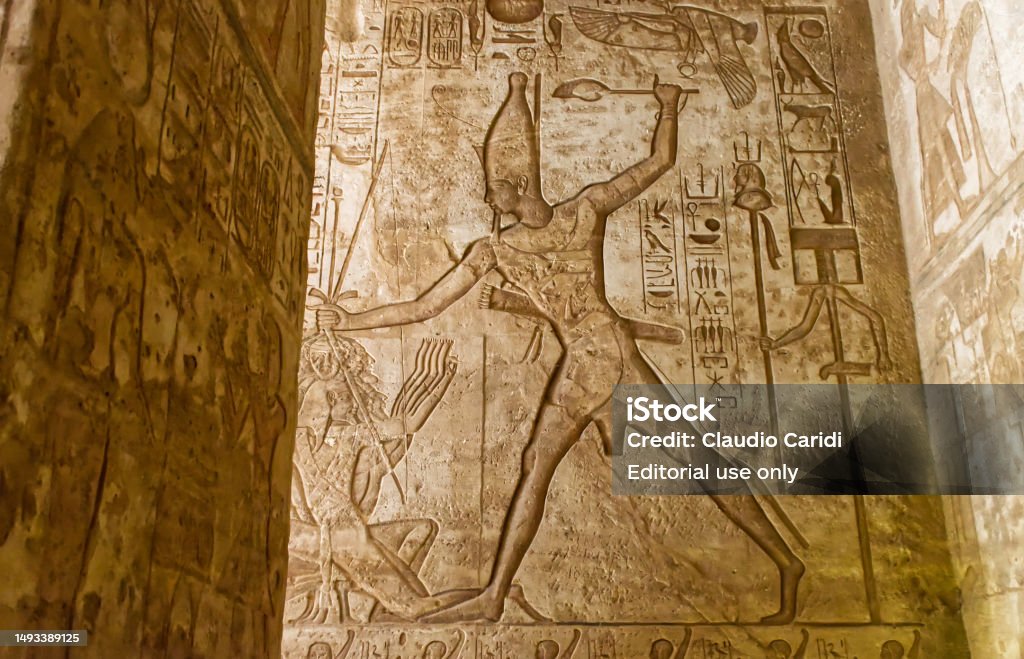
The four seated colossi of Ramses II at Abu Simbel were carved not from assembled blocks but from a living sandstone cliff, each figure rising roughly twenty metres above the desert floor. When the Aswan High Dam threatened to drown the temples beneath the rising waters of Lake Nasser, a UNESCO campaign between 1964 and 1968 cut both the Great Temple and the smaller Temple of Hathor into more than a thousand numbered pieces and reassembled them on higher ground, sixty-five metres up and two hundred metres back from their original site. That relocation is the reason the abu simbel sound and light show exists at all: a monument saved for the modern eye, now addressed by light after dark. The Great Temple was dedicated to Ra-Horakhty, Amun, Ptah and the deified pharaoh himself, its axis engineered so that twice a year sunlight penetrates the inner sanctuary. Beside it stands the Temple of Hathor, raised for Queen Nefertari, whose facade sets her statues at the same scale as her husband's — a rare gesture in Egyptian royal iconography. Together the two temples form one of the most complete surviving statements of Ramesside ambition, their walls carved with the Battle of Kadesh and files of bound captives. After sundown the facades become a projection surface. Coloured light washes the sandstone, hieroglyphs surface and recede, and a multilingual narration recounts the reign of Ramses II and the myth-freighted history of the site. Visitors watching one of the aswan landmarks by night find the scale of the figures amplified rather than flattened; darkness removes the horizon, and the colossi read as they might have to a Nineteenth Dynasty pilgrim. Many who search for abu simbel sound and light show tickets come chiefly for the temples themselves, then stay for the projection that returns the stone to something like animation. The show sits within a wider tradition of Egyptian evening spectacles, kin to the productions staged at Karnak, Philae and Giza, yet the remoteness of Abu Simbel — close to the Sudanese border, hours south of Aswan — lends it a particular quiet. There is no competing city glow. The abu simbel temple night show unfolds against genuine desert dark, and the ramses ii temple light show closes on the same four watchful faces that have looked east across the water for more than three thousand years.
Darkness removes the horizon, and the colossi read as they might have to a Nineteenth Dynasty pilgrim.
Light, breathable clothing is recommended since evenings in Abu Simbel remain warm even after sunset; a light layer helps once the desert air cools. There is no formal dress requirement for the sound and light show, but closed shoes are practical on the uneven amphitheater ground.
A security checkpoint at the Abu Simbel Temples entrance screens all bags before the sound and light show begins, similar to daytime temple access. Large backpacks, professional camera bags, and tripods are commonly restricted, so keeping belongings to a small handbag speeds entry.
Handheld photography and smartphone video are allowed during the projection sequence on the Great Temple facade, though tripods and monopods are generally not permitted without a separate photo permit. Flash photography adds little in the dark amphitheater setting and is best avoided so it doesn't disturb nearby viewers.
Children are welcome at the evening show, though the 19:00 start and dark, unlit walking surfaces call for holding young hands. There are no child-specific ticket discounts noted for the single 350 EGP entrance fee.
Seating for the Abu Simbel sound and light show is arranged in an open-air amphitheater with sand and gravel underfoot, which can be difficult for wheelchairs or those with limited mobility. Staff can sometimes assist toward front-row areas, but there are no paved ramps or elevated platforms.
No food stalls or restaurants operate inside the amphitheater itself, so plan to eat beforehand at one of the small restaurants near the Abu Simbel Temples entrance. Bottled water is generally permitted, but glass containers and alcohol are not allowed inside the viewing area.
;Tue
Show time
Nightly show 19:00 – 20:00, arrive by 19:00 for seating;location
Car · 3-3.5 hours from Aswan · Fuel and possible convoy fees;Public transport
Private transfer or rental car from Aswan follows the desert highway south, arriving directly at the Abu Simbel Temples parking area near the amphitheater.
Tickets for the Abu Simbel sound and light show can typically be cancelled up to 24 hours before the scheduled performance for a full refund. Cancellations made after that window, or no-shows, are generally non-refundable given the fixed 350 EGP per-person ticket price.
Recommended time
1-1.5 hours
Budget about 90 minutes on-site for the abu simbel sound and light show: arrive in the 19:00-19:30 window, settle onto unnumbered bleacher seating while dusk fades, then sit through the roughly 45-60 minute program before the walk back out. Add 15-20 minutes if you're joining one of the abu simbel sound and light show tours with a coach transfer, since parking areas sit a short walk from the seating. Skip-the-line abu simbel sound and light show tickets cut the entry wait to almost nothing, but without one, arriving right at 19:00 can mean queuing behind coach groups for the best sightlines. Subtract time only if you're comfortable with rear-row seats and arrive closer to 19:20.
Crowd levels through the day
Weather · crowds · average price — dots go green to amber to red as each metric rises.
Cooler evening temperatures make the outdoor amphitheater far more comfortable, and this period coincides with the heaviest Nile cruise and tour bus traffic to Abu Simbel.
The amphitheater and walking paths are dimly lit after dusk, so a phone light or small flashlight helps navigate uneven ground safely.;Check the language schedule
Abu Simbel Temples, Abu Simbel, Aswan Governorate, Egypt
Primary gate for both daytime temple visits and the evening sound and light show
Get directionsRamses II ordered the Great Temple of Abu Simbel carved into a sandstone cliff around 1264 BCE, dedicating it to Ra-Horakhty, Amun, Ptah, and his own deified image. Four colossal seated statues of the pharaoh, each near twenty metres tall, guarded the façade. Beside it rose a smaller temple honouring his queen, Nefertari. The sanctuary was aligned so that twice yearly sunlight pierced the inner hall to illuminate the gods within. For centuries the desert buried the monument. In March 1813 the Swiss traveller Johann Ludwig Burckhardt sighted the upper heads protruding from sand. The Italian explorer Giovanni Belzoni entered the cleared temple in 1817, beginning the modern record of the site. The gravest threat arrived in the twentieth century. Construction of the Aswan High Dam, begun in 1960, would create Lake Nasser and drown the temples. UNESCO launched an international rescue campaign in 1964. Engineers cut both temples into more than a thousand blocks, some weighing thirty tonnes, and reassembled them on higher ground sixty-five metres above and two hundred metres back from the river. The relocation ran from 1964 to 1968 and preserved the original solar alignment within a day. That salvage is the narrative heart of the abu simbel sound and light show, which projects the drowning waters and the lifting of the colossi onto the stone itself. Today the nightly performance narrates that same rescue to visitors seated before the illuminated façade. Recorded voices trace Ramses II, the rediscovery, and the UNESCO campaign, while projection mapping animates the cliff. Many arrive on organised abu simbel sound and light show tours from Aswan, others on an independent abu simbel sound and light show tour timed to the evening. The programme frames these Aswan landmarks as a story of loss and preservation rather than mere spectacle. The show continues to run each evening at the relocated temples, a UNESCO World Heritage site since 1979. Visitors booking abu simbel sound and light show tickets watch history and engineering merge on the reassembled sandstone. The sound and light experience at Abu Simbel keeps the memory of both Ramses II and his twentieth-century rescuers alive after dark.
Ramses II orders the Great Temple carved into the cliff, with a smaller temple for Nefertari.
Johann Ludwig Burckhardt sights the sand-buried heads of the colossi.
Giovanni Belzoni enters the cleared inner temple, opening the modern record.
Aswan High Dam construction begins, threatening the temples with Lake Nasser.
UNESCO launches the international campaign to cut and move the monuments.
Temples are relocated sixty-five metres higher on reassembled blocks.
Abu Simbel is inscribed as a UNESCO World Heritage site.
Watching the abu simbel sound and light show with children means concrete open-air bleachers, a cool wind off Lake Nasser, and a dark walk back afterward, so a bit of prep goes a long way. It works well for kids old enough to sit still for roughly 30 to 40 minutes in the evening chill.
Arrive in the 19:00–19:30 window and pick a lower row on the bleachers, closer to the aisle. Lower rows sit more sheltered from the lake wind than the top tiers, and getting there before dark makes it easier for kids to find footing on the unnumbered concrete steps.
The seats face away from Lake Nasser, and wind chill after sunset catches most first-timers off guard even when the daytime heat was intense. Pack a light jacket or fleece for each child, even in summer, and pull it on before the show starts rather than after.
Children around 6 and up generally cope best, since the show runs close to 30 minutes of sitting still in the dark with narration overhead. Toddlers can struggle with the wind, the wait, and the loud sound design bouncing off the temple facade.
The bleachers themselves are stepped concrete, so strollers stay at the base rather than coming up with you; a baby carrier works better for younger children on this abu simbel sound and light show tour. Paths in are flat and lit before showtime, but grow harder to navigate once the lights dim.
When the show ends, house lights don't come up right away, so families exit the bleachers and walk back toward transport in near darkness. Keep kids close, use a phone flashlight, and hold hands on the steps rather than letting children run ahead.
There are no baby-change facilities or kid-specific amenities at the viewing area itself, so handle diaper changes and bathroom stops beforehand. Bring water and a snack in a bag, since options are limited once you're seated for the abu simbel sound and light show tickets you've booked.
Real experiences from real travelers
We stayed overnight in the village just to catch the evening projection, and the abu simbel sound and light show was worth the extra night. The temperature dropped once the sun went behind Lake Nasser and the four seated figures turned gold then deep red as the narration played. Bring a light layer because the desert cools fast after dark.
Booking one of the abu simbel sound and light show tours through our hotel saved us the hassle of arranging transport across the lake. The story of Ramesses II and the temple's relocation is told in several languages via headsets, and the scale of the colossi under projected light is hard to describe. Seats fill up, so arrive early for a center spot.
The narration order rotates, and English was not first the night we went, so we waited through another language before ours. Still, watching the Nubian sandstone façade glow under colored light beside Lake Nasser made the trip from Aswan feel justified. Buy your abu simbel sound and light show tickets in advance during festival season.
Coming back for the evening projection meant a much cooler, quieter experience than the midday crowds at these Abu Simbel landmarks. The light traced the hieroglyphs and the standing statues of Nefertari's temple beside the main one. We combined it with a daytime visit and preferred the night.
The reflection of the illuminated temples on the calm water of Lake Nasser stayed with me. The abu simbel sound and light show narration covered the pharaoh and the rescue of the monuments from the rising reservoir. Simple wooden seating, so a cushion helps.
As an Egyptian guide I bring most of my groups to the evening projection rather than only the daytime Abu Simbel tour, because the crowds thin and the desert air is kind. The colored light on the sandstone shows the carved detail you miss at noon. Headsets are handed out at the entrance near the visitor center.
We arrived just after sunset and the sky over the Nubian desert was still faintly orange behind the colossi. The abu simbel sound and light show tour ran about forty minutes and the audio was clear through the headset. Photography is tricky in the low light, so lower your expectations for phone shots.
Nothing prepares you for standing below the seated Ramesses figures as light climbs them in the dark. We had booked our abu simbel sound and light show tickets alongside a Lake Nasser cruise and it fit neatly into the evening. Quiet, cool, and far less rushed than the daytime queue.
The projection walked us through the temple's history and its move to higher ground stone by stone, which made the carvings feel alive. Watching the abu simbel sound and light show among the Abu Simbel landmarks after dark, with stars appearing over the desert, was the highlight of our Nile trip. Dress warmer than you think.
Check the schedule before you commit, as the evening projection does not run every night in the low season. The colored light across the façade and the calm of Lake Nasser behind it were lovely once the show started. Transport back to Aswan after dark takes planning.
Everything you need to know for your journey
The show runs nightly from 19:00 to 20:00, with the same one-hour schedule every day of the week.
A single show ticket for a foreign adult costs 350 EGP per person.
Arriving between 19:00 and 19:30 is recommended, since seating is unnumbered and getting settled before full darkness improves your view of the projections.
The amphitheater has sand and gravel terrain without paved ramps, so visitors with mobility limitations should expect some uneven ground, though staff can sometimes help with front-area seating.
Tripods, monopods, drones, large backpacks, glass bottles, and professional camera equipment are generally not allowed past the entrance security check.
Handheld photos and videos are permitted during the projection, though tripods require a separate permit and are usually turned away at the gate.
Yes, children can attend the evening show, though parents should hold young hands given the dark, uneven walking paths to and from the amphitheater.
Light, breathable clothing works well, with a jacket or shawl for the cooler evening air once the desert sun sets.
There are no food stalls inside the viewing area itself, so eating beforehand at a nearby restaurant near the temple complex is the practical option.
Most visitors reach Abu Simbel by car, coach, or domestic flight from Aswan, a roughly 3 to 3.5-hour drive, with some choosing direct evening transfers for abu simbel sound and light show tours.
Tickets can typically be cancelled up to 24 hours ahead for a full refund, based on the 350 EGP single-ticket price, with later cancellations usually non-refundable.
The Great Temple of Ramses II and the Temple of Nefertari, both part of the same complex, are natural pairings, along with a walk along the nearby Lake Nasser shoreline.
The main rock-cut facade featuring four seated colossi of Ramses II, also the backdrop for the evening sound and light show.
A cluster of small hotels and guesthouses within walking distance of the temple complex, convenient for evening show attendees.
Join thousands of happy travelers who have discovered this incredible experience
Book Your Experience Now