November-March
This is the core cooler-season window, comfortable for the open-air temple forecourt and easier on visitors queuing before dawn.
Twin rock-cut temples carved for a pharaoh and his queen, standing above the desert on Egypt's southern frontier.
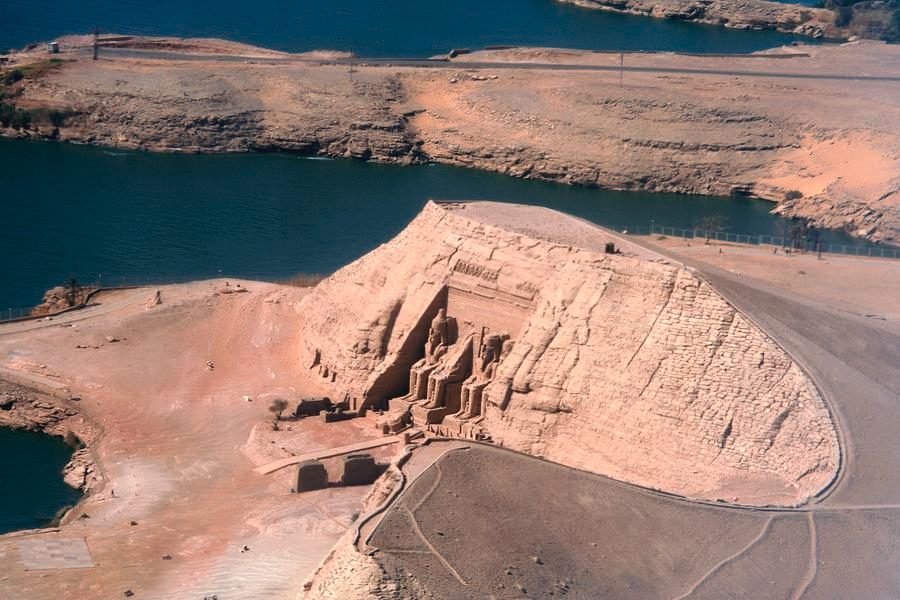
The entire monument that draws visitors to Abu Simbel does not stand where it was built. In the 1960s the two temples were cut into more than a thousand blocks and lifted some sixty metres up the cliff, rescued from the waters that Lake Nasser was about to close over them.
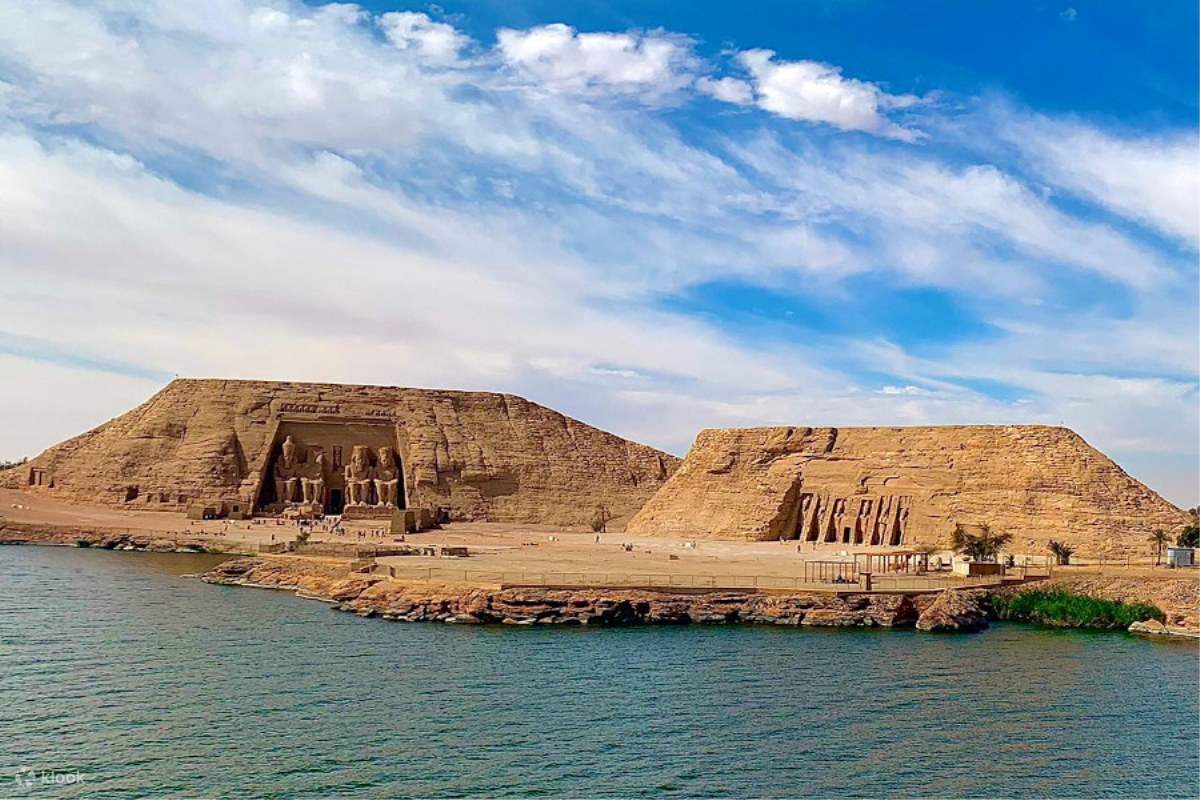
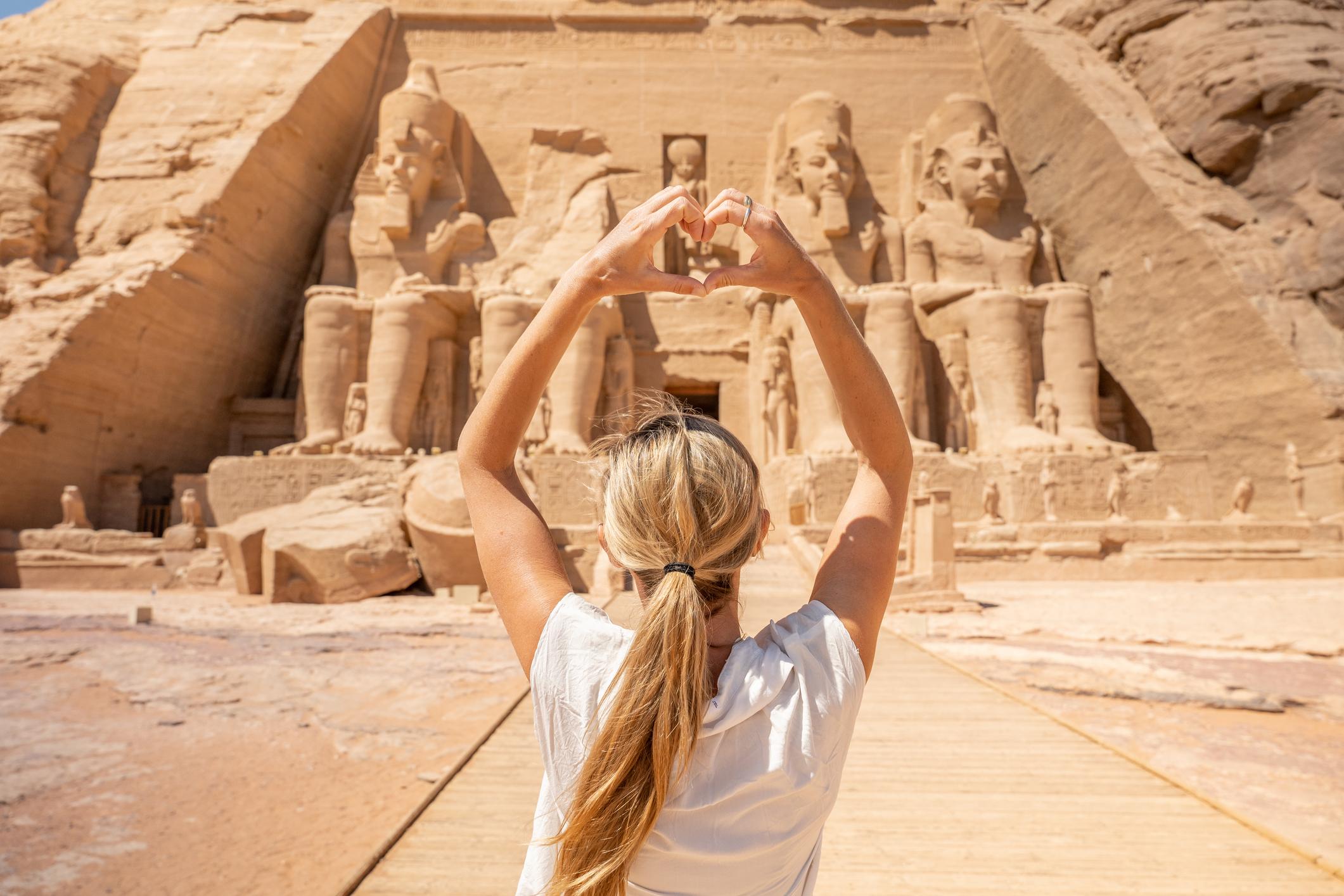
The Ramses II colossi now watch the reservoir from an artificial hill, a relocation so precise that the original sun alignment still holds.
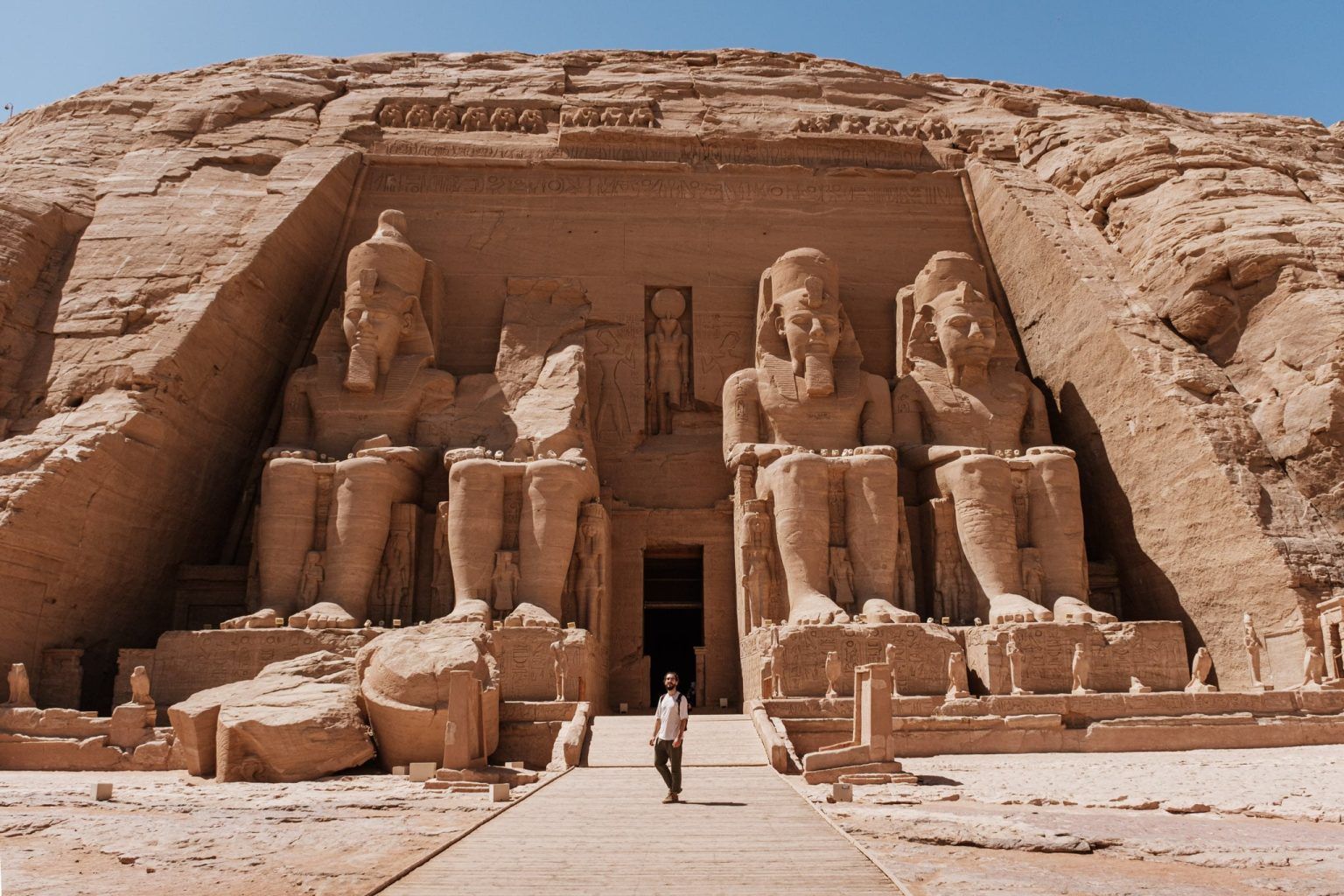
What shaped this place was ambition on a pharaonic scale. Ramses II ordered the temples carved into the Nubian sandstone in the thirteenth century BCE, partly as worship and partly as a warning to those approaching Egypt from the south. The Great Temple honours the king among the gods; the second, smaller sanctuary honours his queen, Nefertari, and the goddess Hathor. Together they announced dominion over a frontier. That declaration still reads clearly on the four seated figures at the entrance, their faces turned toward the desert dawn. Securing Abu Simbel Tickets remains the practical gateway to standing before them.
Today the village exists almost entirely for the temples. A cluster of lodges, a scattering of cafes, and a small airport frame a terrace that empties by mid-afternoon and fills again before sunrise. The scenery is austere: pale dunes, the flat blue sheet of Lake Nasser, and the carved cliff catching low light. Visitors weighing an Abu Simbel temple tour will find the experience concentrated and unhurried, closer to pilgrimage than sightseeing. Interest in Abu Simbel Tickets tours has grown alongside easier connections from Aswan, yet the site rarely feels crowded outside festival mornings.
The destination's own pages map the ways to reach and read it. An Abu Simbel tour from Aswan follows the desert road across Nubia; a Luxor to Abu Simbel journey suits those already up the Nile; an Abu Simbel private tour offers a slower, guided pace at the facades; the Abu Simbel Sound and Light Show projects the temple's story onto the stone after dark; and Abu Simbel flight tours compress the distance into a short hop over the reservoir. Each frames the same two temples from a different angle, and each begins with an Abu Simbel Tickets tour or an Abu Simbel Tickets ticket booked in advance.
Abu Simbel suits travellers who prize antiquity and Lake Nasser's stark horizons over comfort or convenience. It is a place for those willing to travel far south, stand quietly before Ramses and Nefertari, and let scale do the rest.
“The entire monument that draws visitors to Abu Simbel does not stand where it was built.”
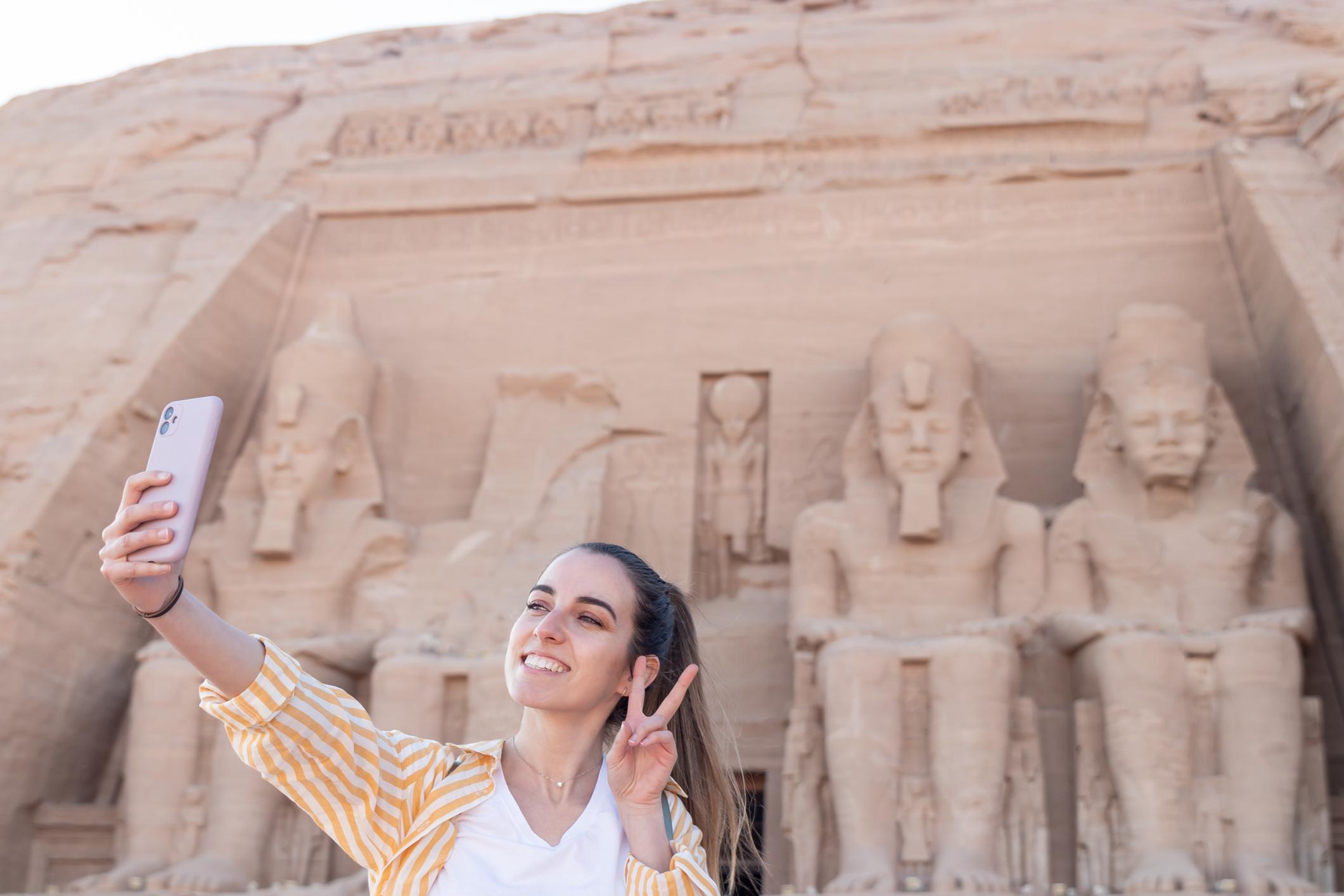
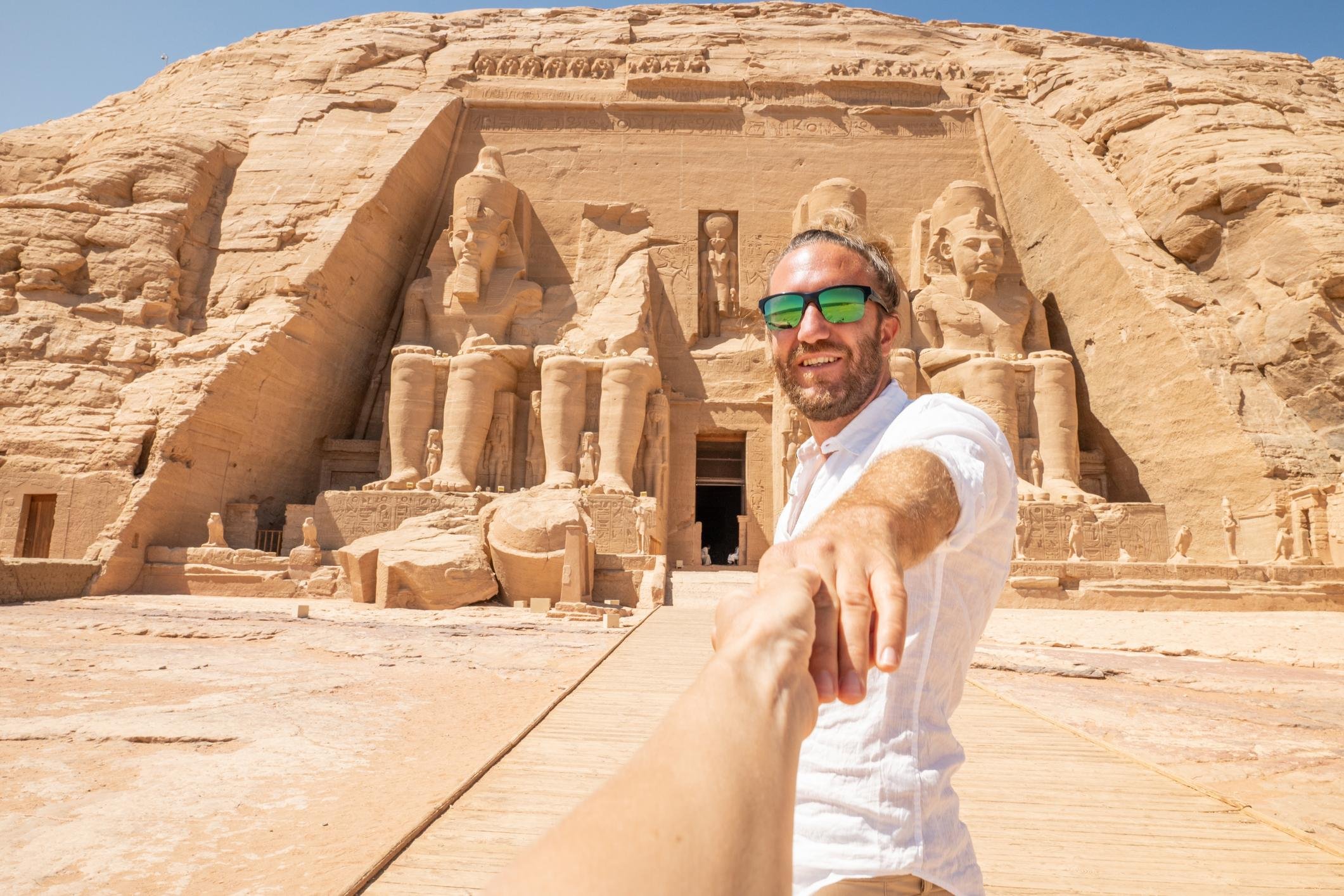
The Great Temple of Ramses II and the Nefertari temple stand side by side, both carved into living rock above Lake Nasser.
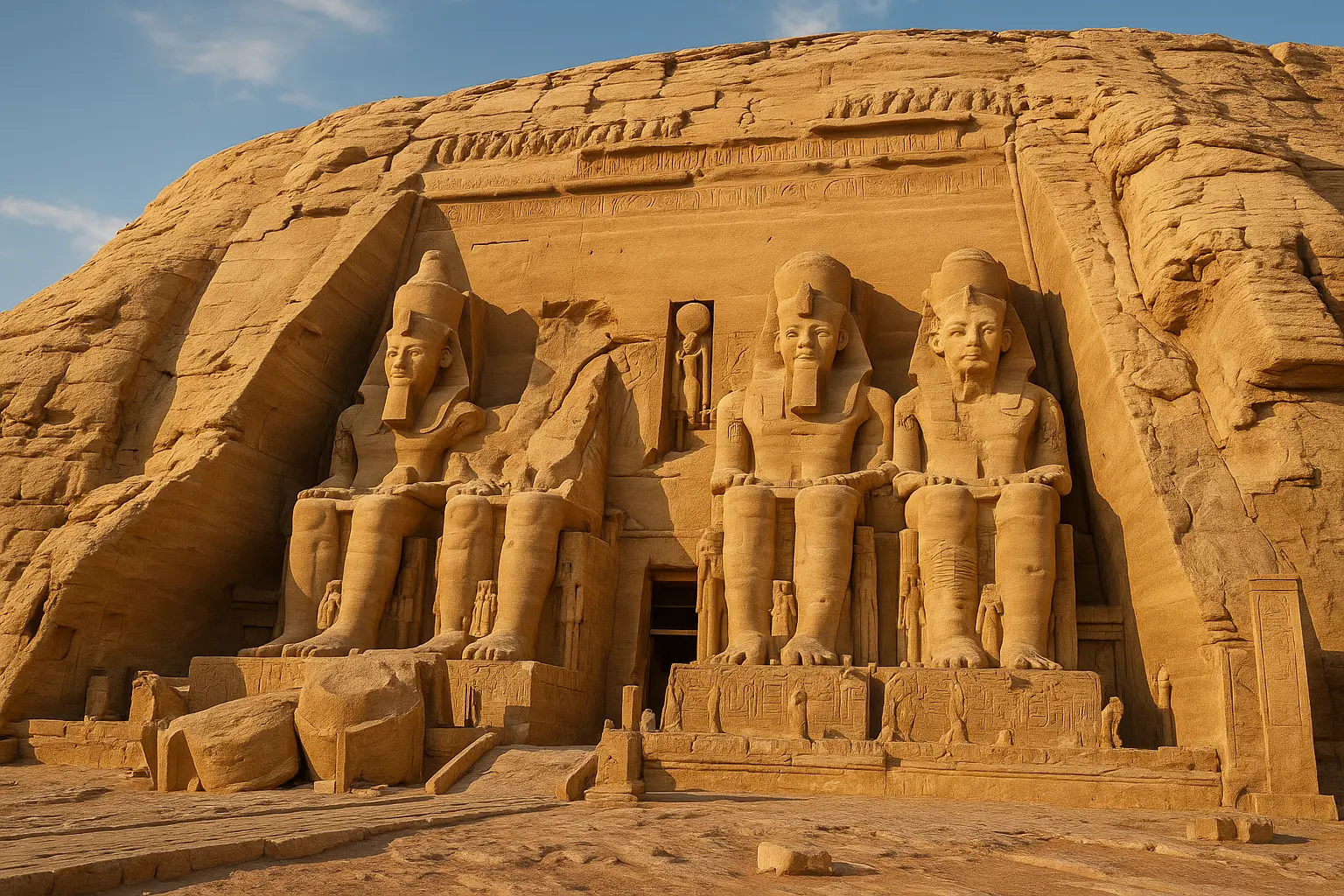
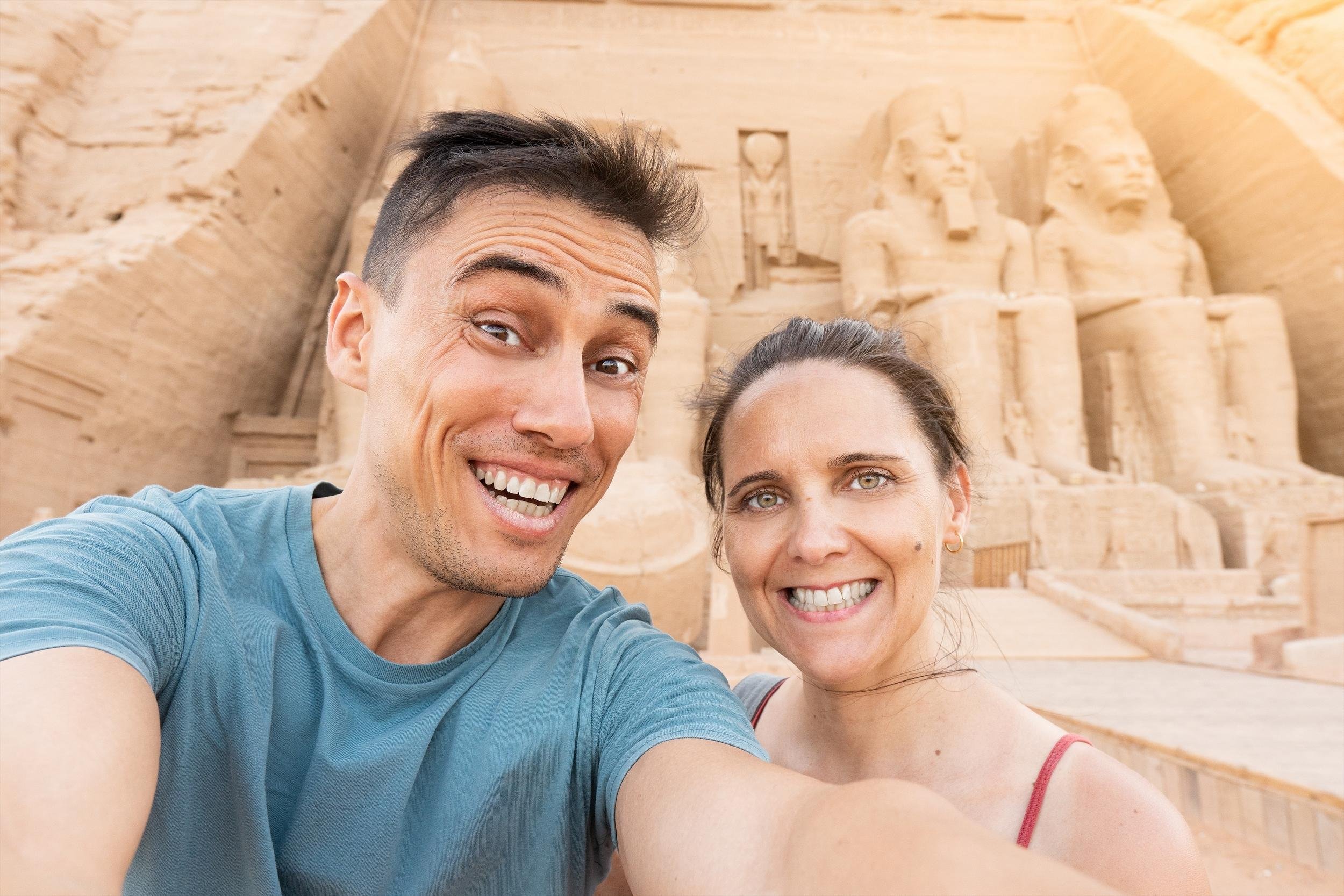
Four seated statues of Ramses II, each over twenty metres tall, form one of the ancient world's most recognisable frontages.
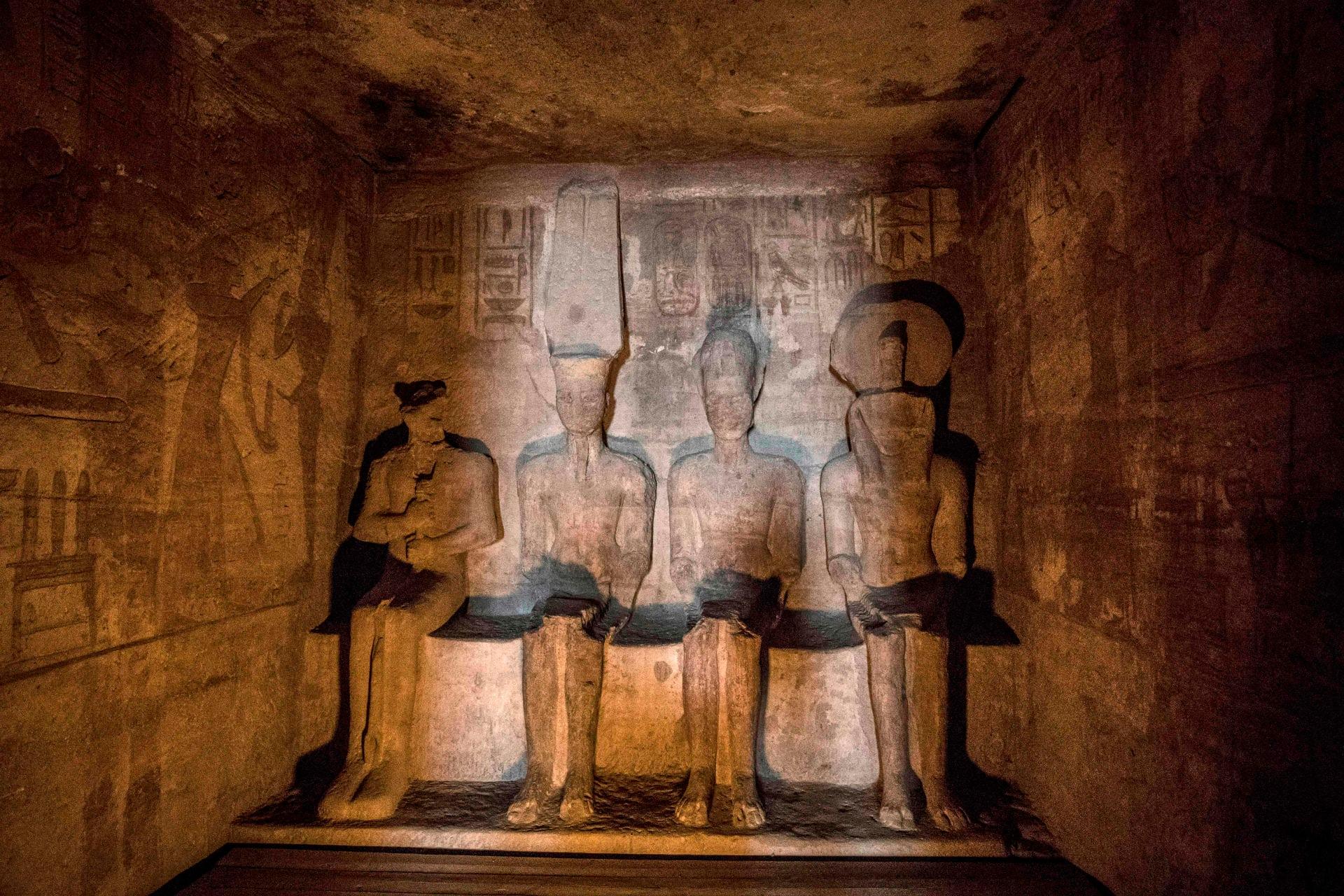
The Great Temple's inner sanctuary was oriented so sunlight reaches its statues on two dates each year.
Reaching Abu Simbel is only half the decision; how you arrive and what you add shapes the whole visit. These pages sort the options by starting point and pace: overland runs from Aswan or Luxor, a private itinerary you control, the flight route for time-tight travelers, and the after-dark projection show. Match the choice to where you're based and how much of a day you want to spend at the twin temples of Ramesses II and Nefertari.
Show
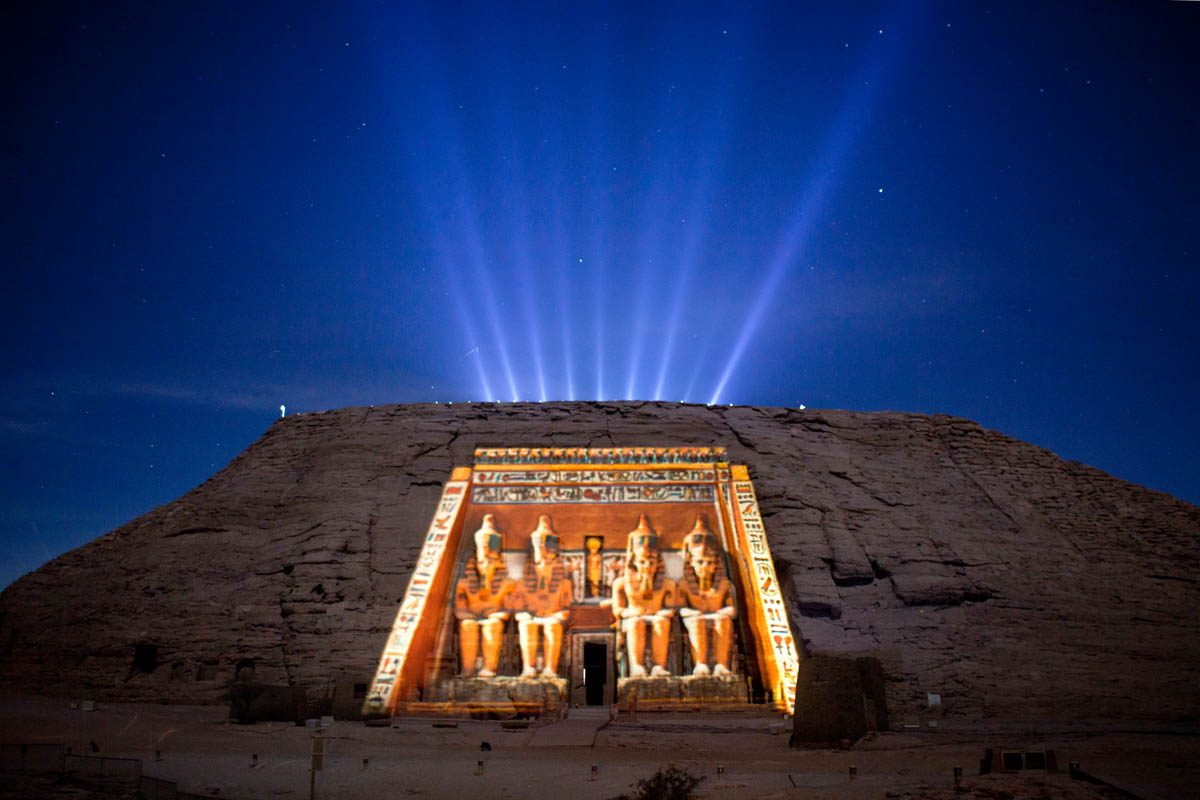
The evening projection maps the pharaoh's story across the sandstone faces, offering a second, illuminated look at temples most visitors only see by day.
Flight
The air route into ABS, cutting the desert drive to a short shuttle from the airstrip; suited to travelers trading road hours for a same-day return.
Tour
Your own driver and schedule, letting you linger at the Nefertari temple or time arrival to your liking rather than following a fixed group departure.
Tour
The long-haul option for Luxor-based travelers, usually routed via Aswan; built for those unwilling to relocate south before seeing the Ramesses II colossi.
Tour
The standard overland route, roughly 290 km each way, pairing the shortest desert drive with early arrival before the crowds thin the light on the facade.
Abu Simbel works as a long day trip from Aswan, a fuller day from Luxor, or an overnight stay that folds in the evening show. Below are three plans, each linking to the sub-page that handles the logistics for that leg. Pick the one that matches how much time you have and how far you're starting from.
Leave Aswan early by road or air; browse tour formats before booking so the timing suits your return. Allow the full morning for the outbound leg.
View guideEnter at the four seated colossi and work through the hypostyle hall; budget about 90 minutes for both temples before the heat peaks.
Cross to the smaller temple next door, then rest in shade near the visitor area. Carry water; there is little cover on site.
Reboard for the trip back, arriving late afternoon or early evening depending on your transport choice.
Start before dawn for the longer haul south; review the Luxor-based tour options to match pickup and return windows.
View guideReach the site by late morning and cover both the Great Temple and the Hathor temple. A private guide keeps the tight schedule on track.
View guideTake lunch and a short walk along the Lake Nasser frontage before the drive back. Keep it brief to stay ahead of the return timing.
Begin the northbound leg; expect a late arrival, so plan a light evening.
Come in by flight or road and check into local lodging near the temples, leaving the afternoon free.
View guideTour both temples without a same-day return deadline; the unhurried timing lets you linger at the facade carvings.
Return after dark for the projected show across the temple faces; book tickets ahead as sessions are scheduled.
View guideAbu Simbel village itself is small and walkable, but nearly every visitor arrives from Aswan first, so the real navigation challenge is choosing how to cross the desert to get there.
Private taxis and shared tour minivans form the road convoy that leaves Aswan before dawn and takes roughly 3.5 to 4 hours each way to Abu Simbel. There's no formal public transit, so seats are booked through hotels, tour desks, or drivers directly.
EgyptAir runs short domestic flights between Aswan and Abu Simbel in about 45 minutes, landing at the small Abu Simbel Airport a few kilometers from the temples. Tickets are booked directly through EgyptAir and suit travelers who want to skip the pre-dawn drive.
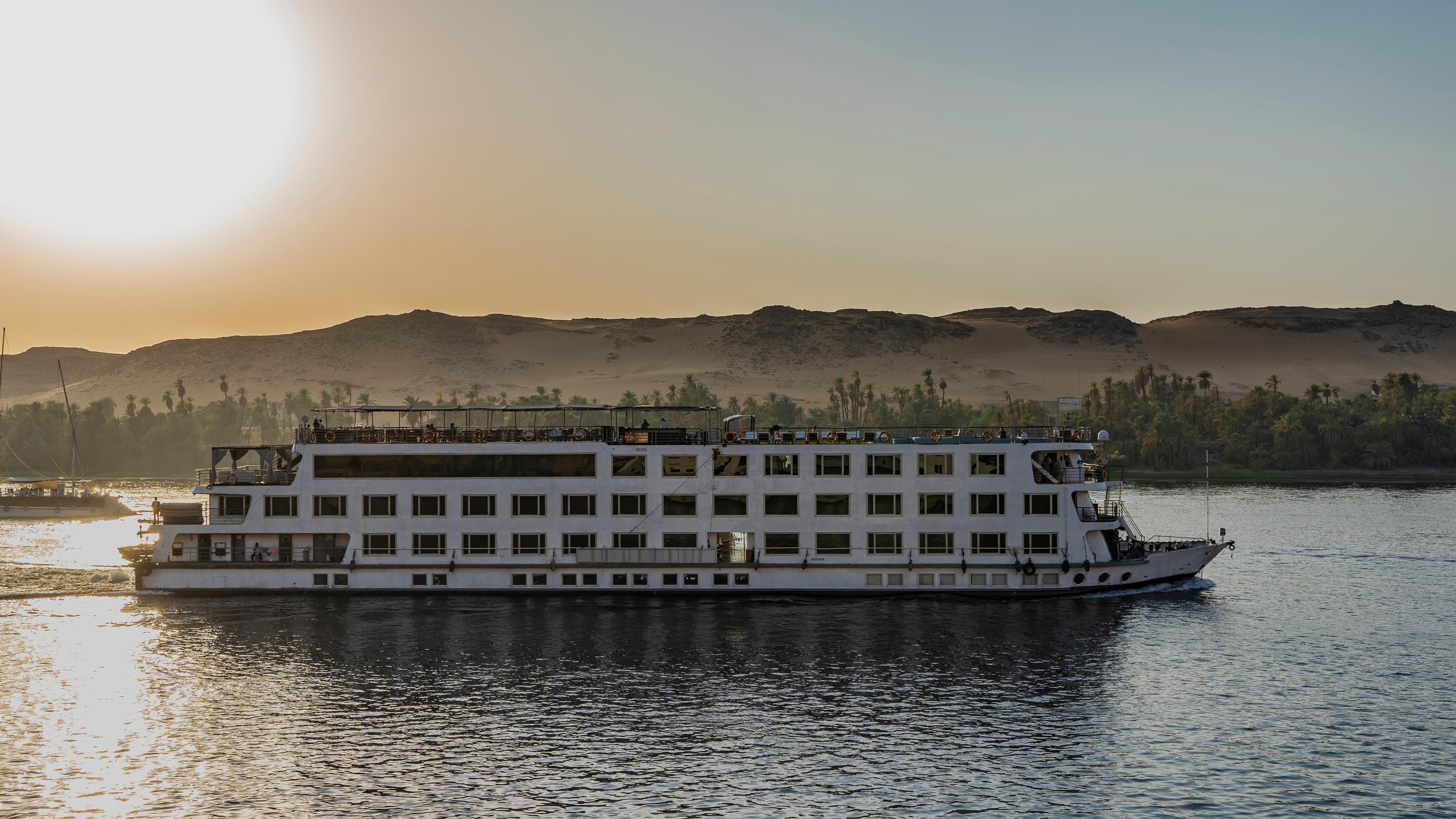
Some Lake Nasser cruise itineraries between Aswan and Abu Simbel include a stop at the temples as part of the sailing schedule, docking passengers close to the site without a separate road or air transfer. This works well for travelers already booked on a multi-night Nile or Lake Nasser cruise.
From Luxor or Cairo, the practical route is a connecting flight to Aswan first, then either the road convoy or the Aswan-Abu Simbel flight; there's no direct road link from those cities.
From the airport: From Abu Simbel Airport, ticketed EgyptAir passengers get a free shuttle bus, about 10 minutes for the 5 km to the temples; taxis cover the same distance in roughly 10 minutes for approximately EGP 150-300.
The best window falls between November and March, when desert daytime highs settle around 20-25°C rather than summer's 40°C-plus, with the two Sun Festival dates of 22 February and 22 October marking the calendar's fixed points.
This is the core cooler-season window, comfortable for the open-air temple forecourt and easier on visitors queuing before dawn.
The solar alignment illuminates the inner sanctum only on these two mornings, so site numbers spike sharply and buses arrive well before sunrise.
Visitors who skip the exact festival date by a day or two see the same temples and comparable weather without the crowd surge tied to the alignment itself.
Heat becomes the limiting factor rather than crowding, which is why arriving at first light matters here even more than in cooler months, when the desert sun is still tolerable a few hours after sunrise.
Total cost swings more on transport choice than on anything spent at Abu Simbel itself, since a shared bus, a private car, and a flight from Aswan sit at three different price tiers before lodging or meals enter the picture.
Daily budget: A realistic day-trip budget lands around EGP 600-900 per person sharing a bus or minivan, versus EGP 4000-5000 for a private car for the group, plus EGP 1500-3000 a night for anyone extending the stay in the village.
Ramses II ordered the twin temples cut into the Nubian sandstone cliff around 1264 BCE, midway through his sixty-six-year reign. The Great Temple honored Ra-Horakhty, Amun, and Ptah, though the four seated colossi guarding its facade, each roughly twenty metres tall, were carved as the pharaoh himself. This was propaganda in stone. Facing south toward Nubia, the monument announced Egyptian dominance to any traveler moving up the Nile. The smaller temple beside it honored Queen Nefertari and the goddess Hathor, a rare dedication placing a royal wife at colossal scale. Sand buried the site for centuries until Swiss traveler Johann Ludwig Burckhardt recorded the facade in 1813. Anyone weighing Abu Simbel Tickets tours is really tracing a monument that vanished and returned twice over. The second disappearance nearly became permanent. Construction of the Aswan High Dam threatened to drown the temples beneath Lake Nasser. In 1964 UNESCO launched an international rescue, and engineers sawed both temples into 1,036 numbered blocks weighing up to thirty tonnes each. Between 1964 and 1968, workers reassembled every block sixty-five metres higher, inside an artificial mountain, sheltered by a concrete dome. Interest in an Abu Simbel Tickets tour still centres on this feat of salvage. What survives today is that reconstruction, seamless enough that the joins hide in the carving. Visitors buying Abu Simbel Tickets tickets walk into the hypostyle hall past Osiride pillars and reliefs of the Battle of Kadesh, standing where Ramses stood, on ground the Nile can no longer reach. Among Nubian landmarks, none records its own rescue so plainly.
Ramses II begins carving the twin temples into the Nubian cliff.
Construction concludes after roughly two decades of work.
Johann Ludwig Burckhardt rediscovers the sand-buried facade.
Giovanni Belzoni clears the entrance and enters the Great Temple.
UNESCO launches the international campaign to save the temples from Lake Nasser.
Reassembly of 1,036 cut blocks finishes 65 metres above the original site.
Everything you need to know about visiting Abu Simbel Tickets
Most travelers see Abu Simbel as a long day trip, since the temple complex itself only needs about two to three hours to explore fully. If you fly in, a single morning is enough time to buy Abu Simbel Tickets, tour both temples, and fly back out the same day. Overlanding from Aswan makes it more of a full-day commitment rather than a separate overnight stay.
October through April is the preferred window, when cooler desert temperatures make walking between the two temples more comfortable. Crowds peak around the Sun Festival dates of 22 February and 22 October, when sunlight famously illuminates the inner sanctuary statues. Booking Abu Simbel Tickets in advance is worth it during these weeks, since demand for skip-the-line Abu Simbel entry rises sharply.
Travelers arriving on a ticketed flight to Abu Simbel Airport can use the free EgyptAir shuttle bus, which takes roughly ten minutes to cover the five kilometers into town. Otherwise, a taxi from the airport to the temple site also takes about ten minutes and typically costs EGP 150-300. Either option connects easily with same-day Abu Simbel temple tours.
There's no formal public transit network in Abu Simbel, so private taxis and tour minivans are the standard way to get around. A single ride, such as the airport-to-temple route, runs about EGP 150-300. Most visitors simply arrange transport as part of their Abu Simbel Tickets and tour package rather than hailing rides independently.
Abu Simbel Tickets themselves aren't the biggest expense; a mid-range meal runs EGP 150-300, coffee costs EGP 40-60, and a local drink like tea or soft drink is EGP 25-40. The larger cost driver is transport, since a private taxi round-trip from Aswan covers around 290 km one way and runs about EGP 4000. Compared with many Nile Valley landmarks, a well-planned visit keeps daily costs moderate outside of that transport line item.
There's no dedicated multi-attraction city pass covering Abu Simbel Tickets, since the temple site is typically visited on its own rather than bundled with a broader sightseeing pass. Booking Abu Simbel Tickets online ahead of peak season or Sun Festival dates helps avoid on-site price surprises and queue delays. Sharing a taxi or joining a group minivan from Aswan is the main way travelers reduce the transport portion of the trip.
Abu Simbel is generally considered safe for tourists, with a steady flow of visitors, tour guides, and airport staff throughout the day. As with most archaeological sites in Egypt, it's sensible to stick to marked paths, keep valuables secure, and use licensed taxis or tour operators for transfers. Standard travel precautions apply more than any site-specific risk.
Modest dress covering shoulders and knees is expected when visiting the temples, and loud behavior inside the inner chambers is discouraged out of respect for the site. Small tips for guides and drivers are customary in Egypt's tourism sector, though not obligatory for ticket purchases themselves. English is widely spoken among tour staff, which makes navigating Abu Simbel Tickets and site logistics straightforward for English-speaking visitors.
Abu Simbel can work well for families, since the towering facade statues and boat rides on Lake Nasser tend to capture children's attention. The heat and the three-to-four-hour road journey from Aswan are the main considerations, so an early start or a short flight suits families better than a long midday drive. Guides at the site are used to explaining the history in accessible terms for younger visitors.
Abu Simbel is famous for its two rock-cut temples built under Ramesses II, most notably the Great Temple's four colossal seated statues facing the entrance. The complex is equally known for the 20th-century engineering feat that relocated the entire site to save it from the rising waters of Lake Nasser. Among things to do in Abu Simbel, witnessing the temples at sunrise before tour buses arrive remains a highlight for many visitors.
Choose from amazing attractions and create unforgettable memories in this beautiful city
View All Attractions