Open today · 06:00 – 17:00

Abu Simbel Private Tour

Abu Simbel Private Tour — Guided Entry to the Rock Temples

Four colossi at dawn, one river between kingdoms.

142K+ travelers chose this
Free Cancellation
Right now: Moderate — summer weekday Midday heat is intense in July; arrive at opening or plan a mid-afternoon return before 17:00 closing
3-4 hours recommended
1 Languages
Private, up to 6
Free Cancellation
Free cancellation Instant confirmation Mobile voucher Verified partner Skip-the-line
20 m
Statue height
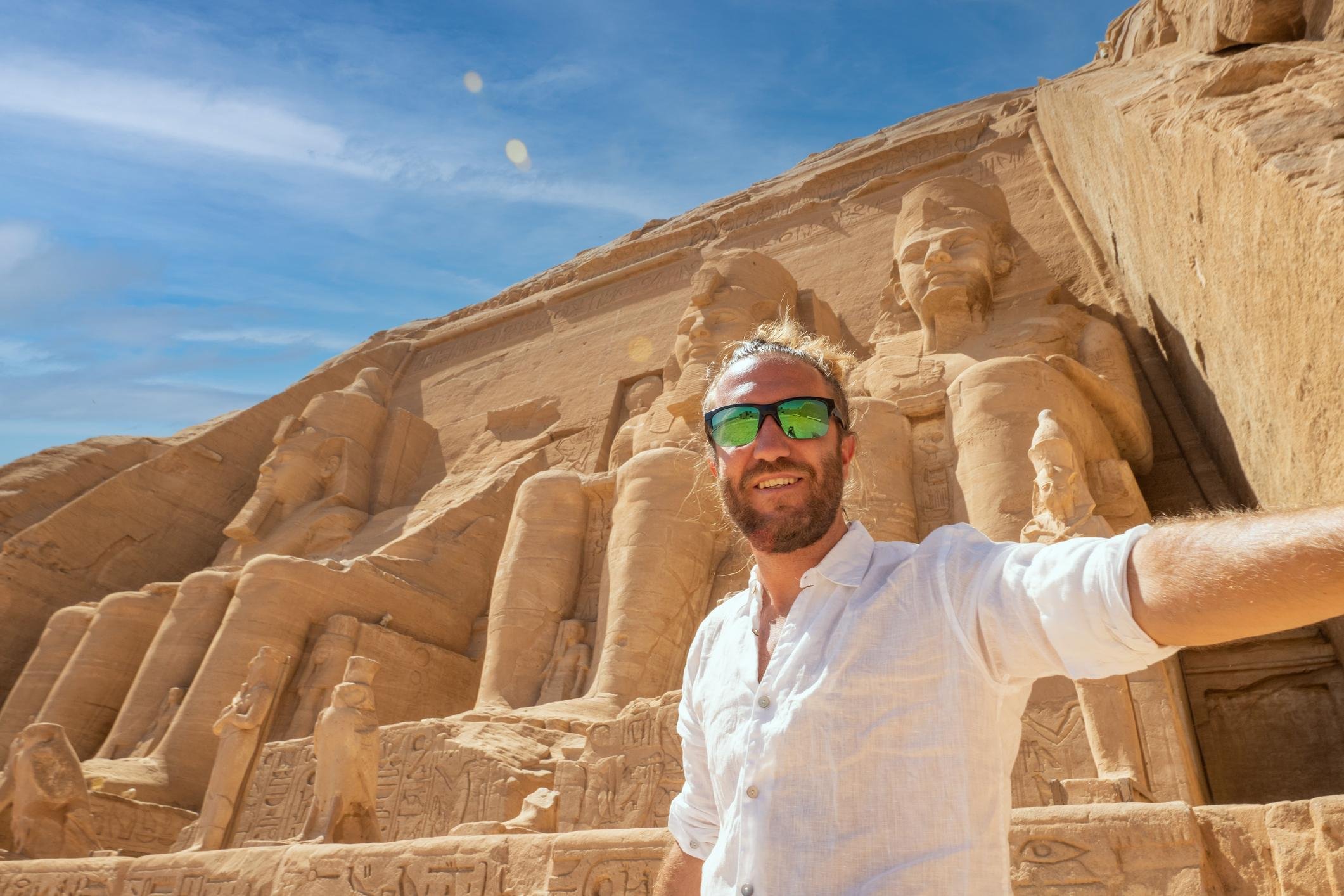
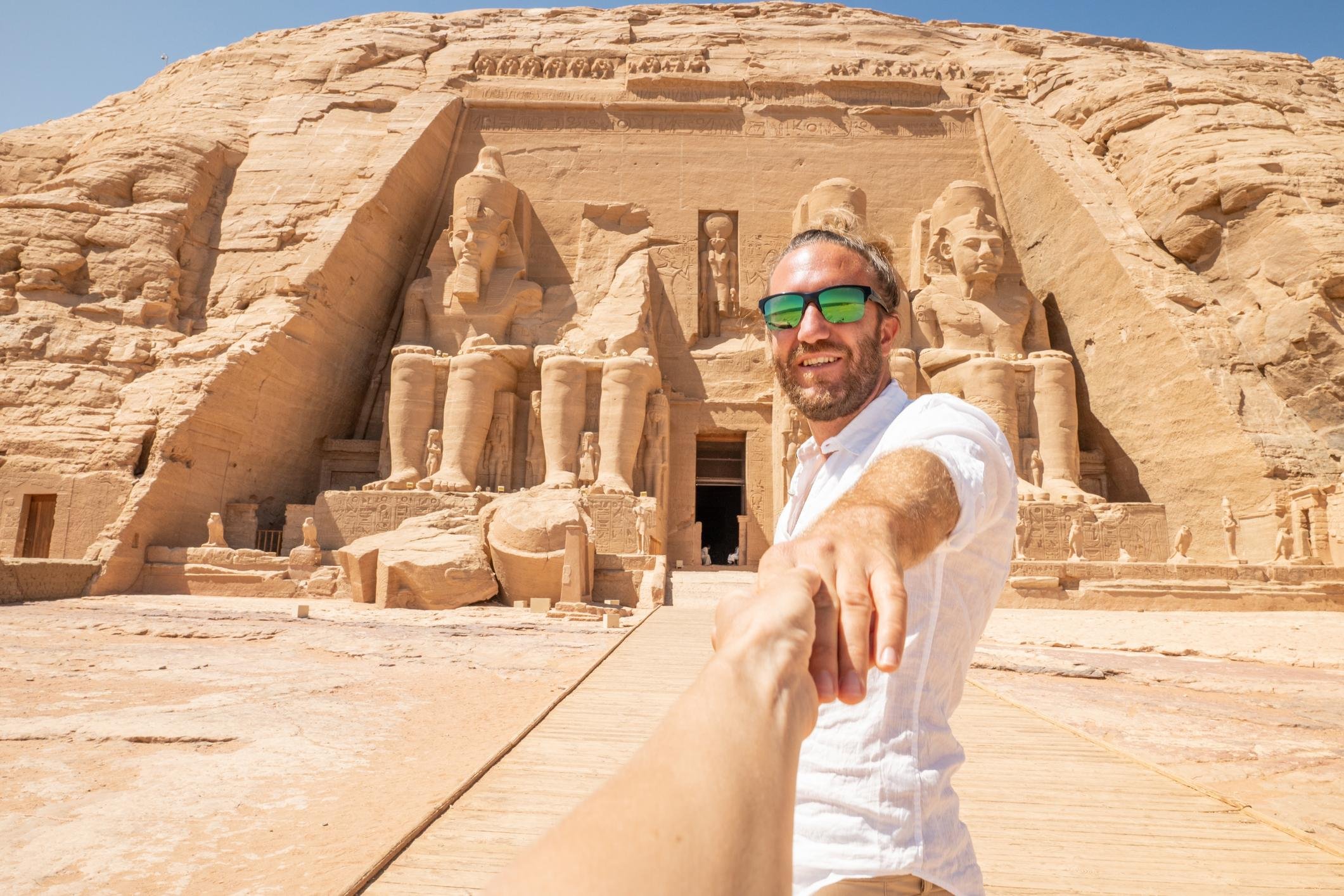
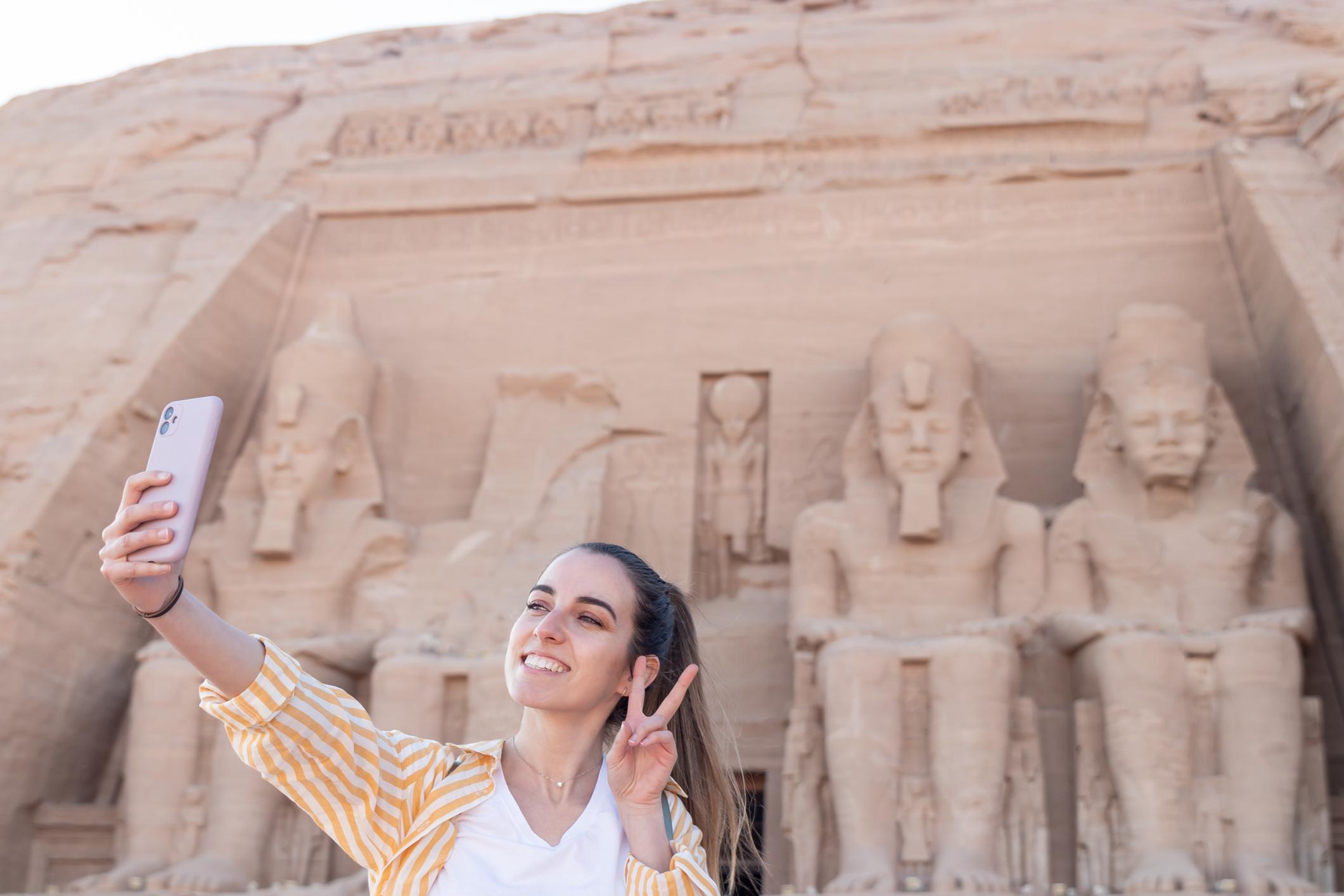
Four seated Ramesses II colossi
1,000+
Relocation blocks
Cut apart in 1960s UNESCO move
60 m
Sunlight reach
Twice-yearly light to sanctuary
~3,200 yrs
Since construction
Built under Ramesses II
750 EGP
Entrance fee
Foreign adult, paid by card
06:00–09:00
Best arrival
Cooler air, softer light
Choose your ticket

Ticket options at a glance

Compare fares, pick the fit — all bookings are mobile-voucher and eligible for free cancellation where shown.

Private Luxor to Abu Simbel Day Trip 15 hr
Luxury / Private

Private Luxor to Abu Simbel Day Trip

4.6 (647)
€129
  • Private experience
  • Personal attention
  • Premium amenities
  • Free cancellation
Book this ticket
Private Abu Simbel Day Tour from Aswan 8 hr
Luxury / Private

Private Abu Simbel Day Tour from Aswan

4.9 (2)
€91
  • Private experience
  • Personal attention
  • Premium amenities
  • Free cancellation
Book this ticket

Is it worth it?

Worth it for nearly every visitor

An abu simbel private tour bundles a 750 EGP gate fee (foreign adult, card only) with the real cost: the long haul from Aswan by flight or convoy desert drive. That journey is why going private pays off. What you get is one of Egypt's rare rock-cut wonders, where Ramses II's four colossal seated statues face the sunrise light the 06:00–09:00 window delivers. Skip-the-line Abu Simbel access matters less than the flexibility a dedicated guide brings on such a remote run. Weigh it fairly: the entrance itself is cheap; transport and time are the spend. For first-timers and anyone chasing the engineering and relocation legend behind these Aswan landmarks, an abu simbel private tour tour earns its price. Solo budget travelers on tight schedules may prefer a shared coach and buy tickets at the gate instead.

What makes it worth it

  • Private timing hits cool 06:00–09:00 light
  • Guide handles the remote Aswan-to-temple logistics
  • 750 EGP gate fee is genuinely low
  • Rare rock-cut colossi reward the long journey
  • Flexible pace on a once-in-a-trip site

Keep in mind

  • Transport dwarfs the modest 750 EGP entrance
  • Long flight or convoy drive from Aswan
  • Private abu simbel private tour tours cost more per head
  • Solo travelers pay a steep single premium

Bottom line: For most travelers the abu simbel private tour tickets and guide justify the distance, while budget solo visitors can go shared.

Featured Experiences

Popular tours & activities

Hand-picked experiences loved by thousands of travelers

Recommended Experience

Powered by GetYourGuide

Another traveler favorite

Powered by GetYourGuide
Private Abu Simbel Day Expedition from Aswan 9 hours Free Cancellation

Private Abu Simbel Day Expedition from Aswan

Discover the majestic temples of Ramses II and Nefertari on a guided private day trip from Aswan featuring hassle-free transfers.

4.5 (263)
FromFrom €126.07
See details
Aswan Private Tour: Abu Simbel Temples & Nubian Village 10 hours Free Cancellation

Aswan Private Tour: Abu Simbel Temples & Nubian Village

Experience the grandeur of Abu Simbel and the vibrant culture of the Nubian Village on this private full-day excursion.

4.6 (35)
FromFrom €104.33
See details
2-Day Private Abu Simbel Experience with Nile Felucca Ride 2 days Free Cancellation

2-Day Private Abu Simbel Experience with Nile Felucca Ride

Discover the majestic temples of Abu Simbel on a private 2-day excursion from Aswan featuring a scenic Nile sunset cruise.

4.8 (9)
FromFrom €217.36
See details
Your journey

Step-by-step — what your day looks like

1

Arrival and security check

Guests pass through the bag-scanning checkpoint at the visitor plaza before the walk to the temples.

2

Walk to the Great Temple

A roughly 200-meter walk along a paved path leads past the artificial hill covering the relocated temples.

3

Exterior viewing of the colossal statues

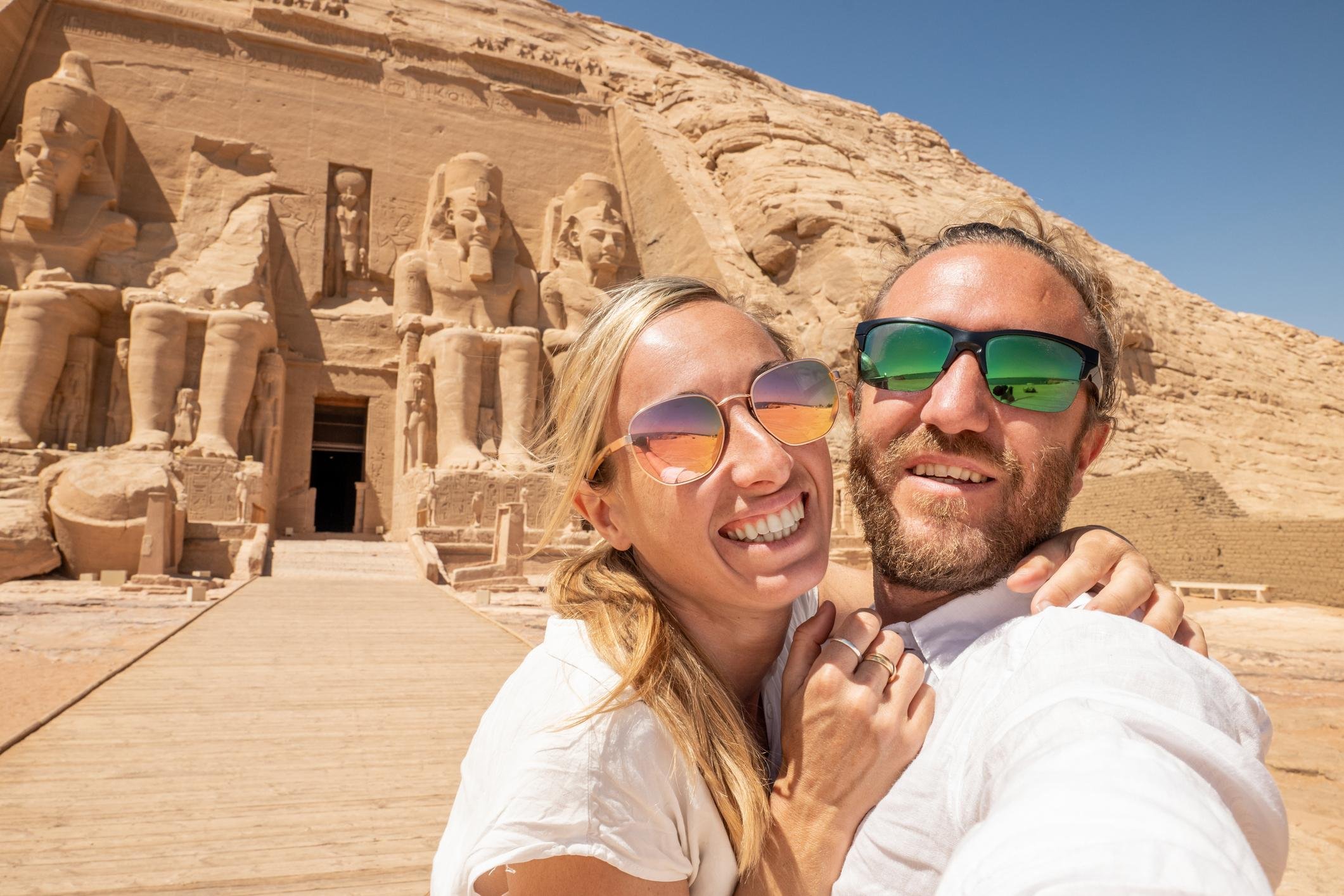
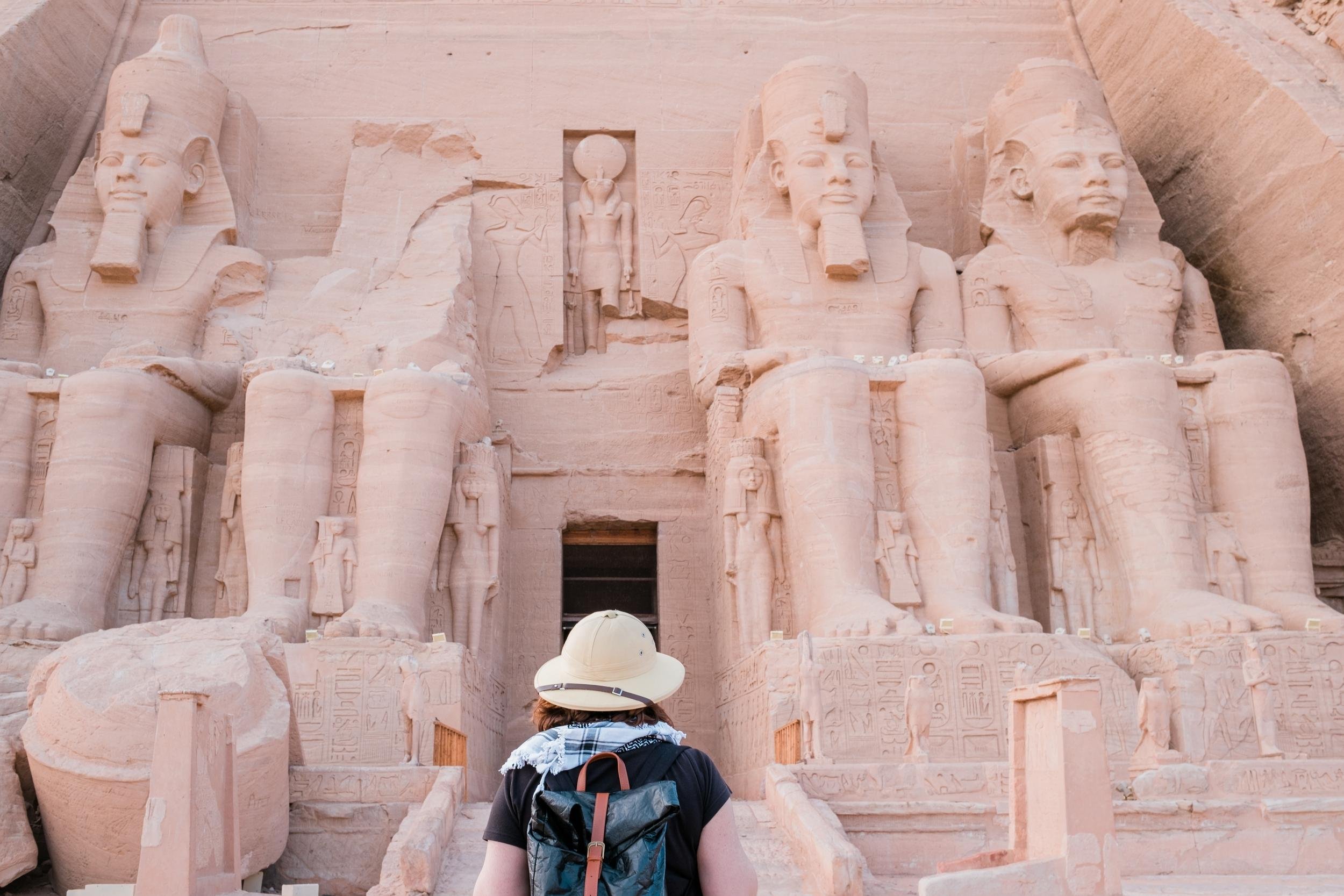
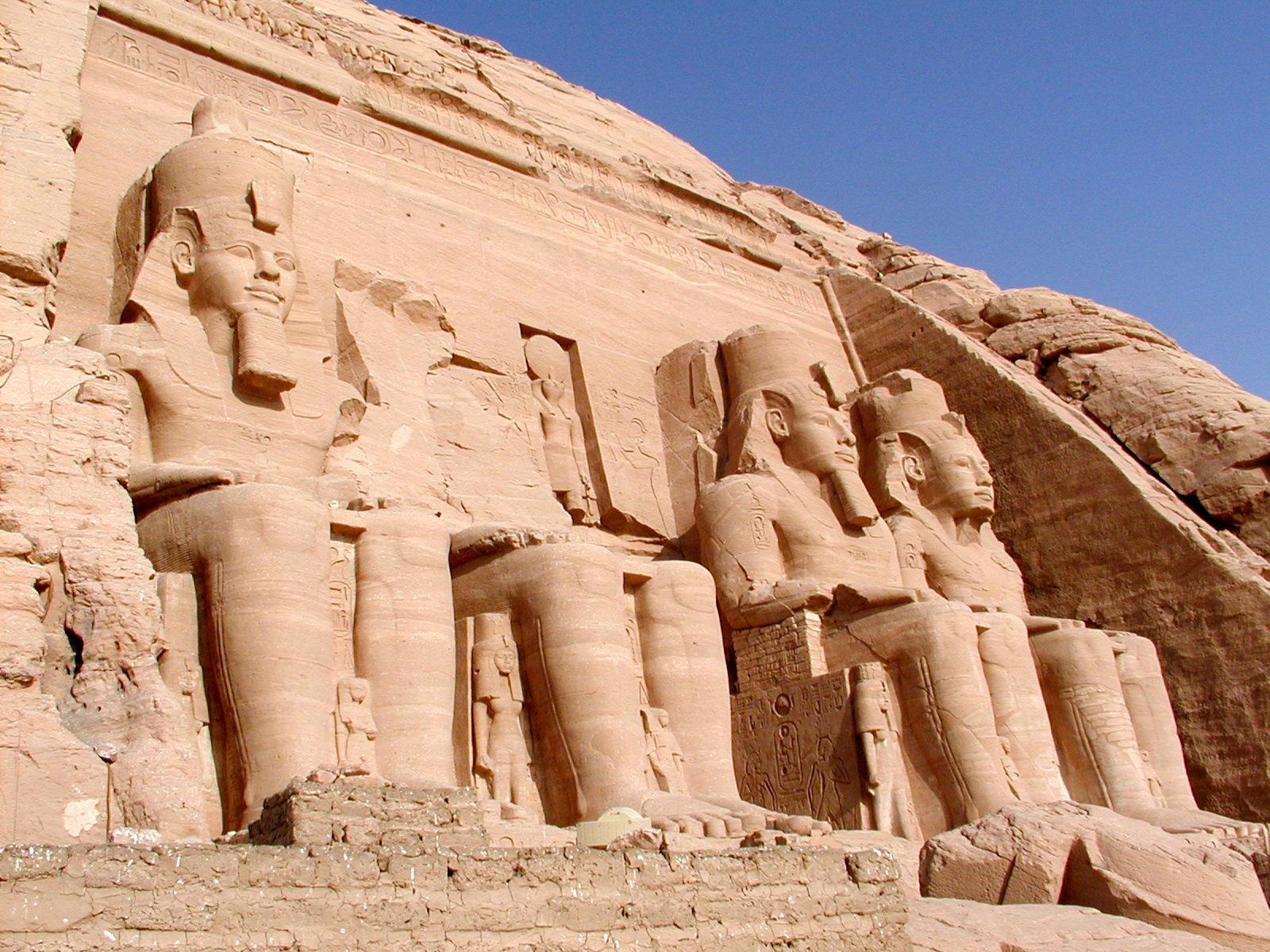
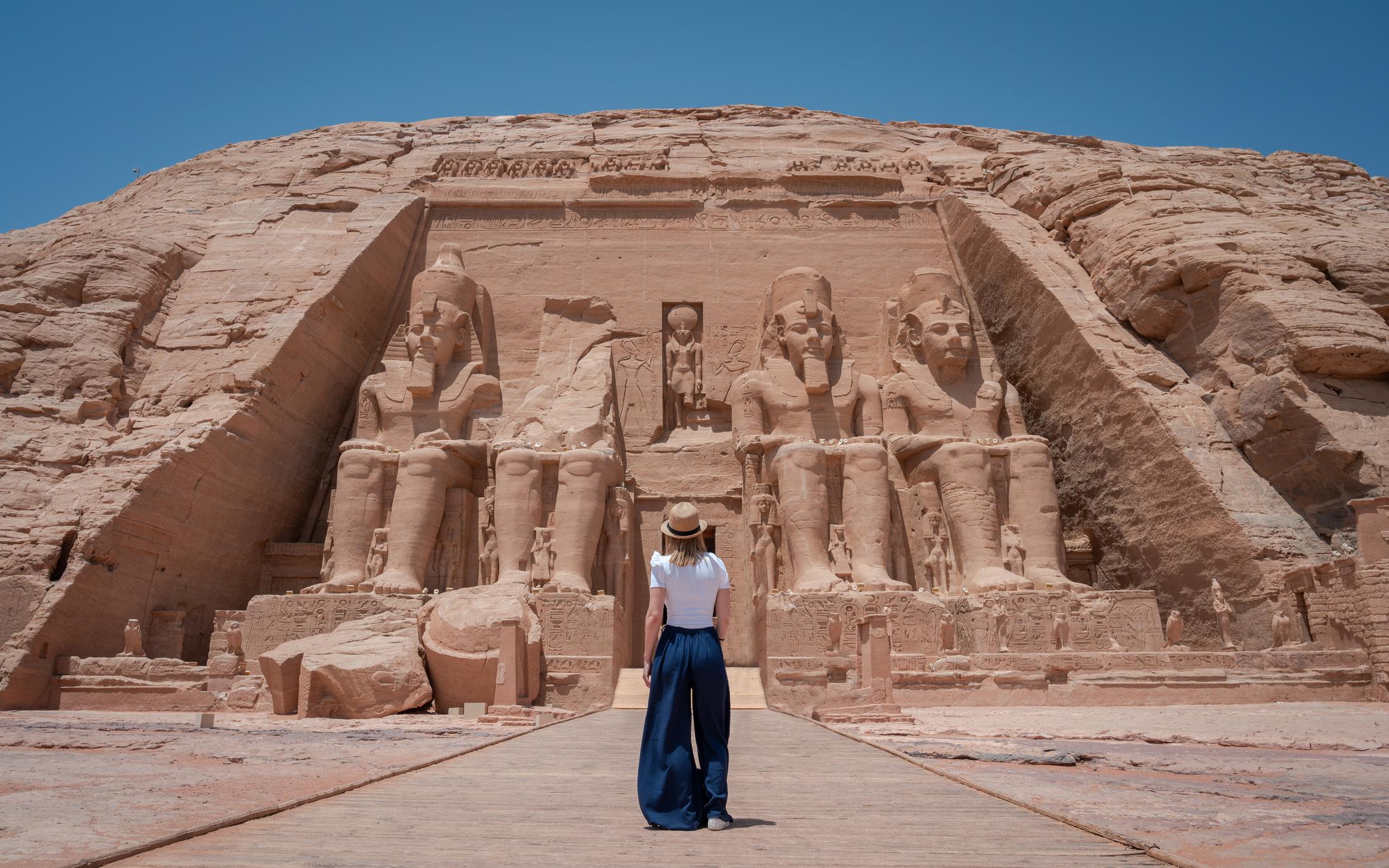
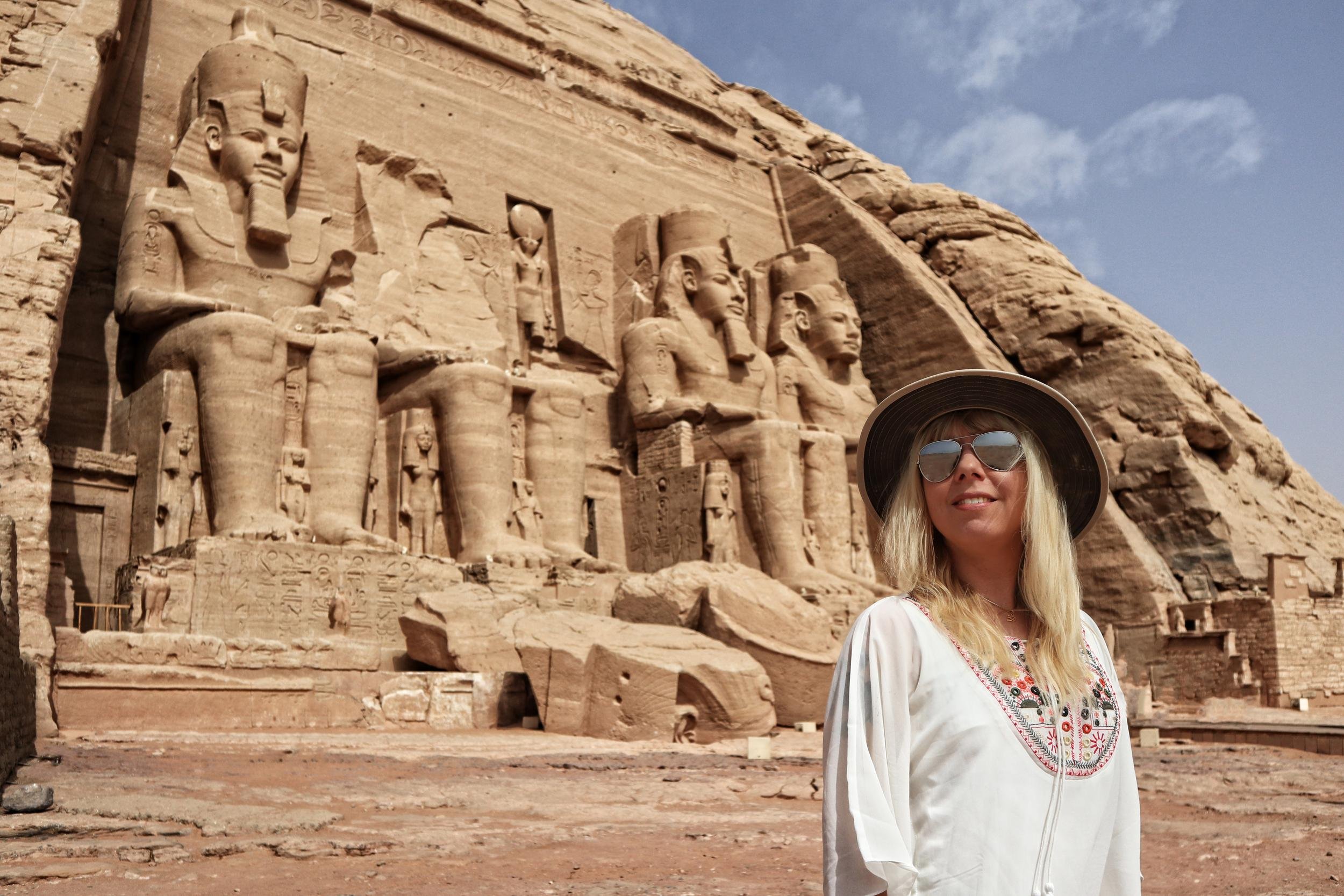
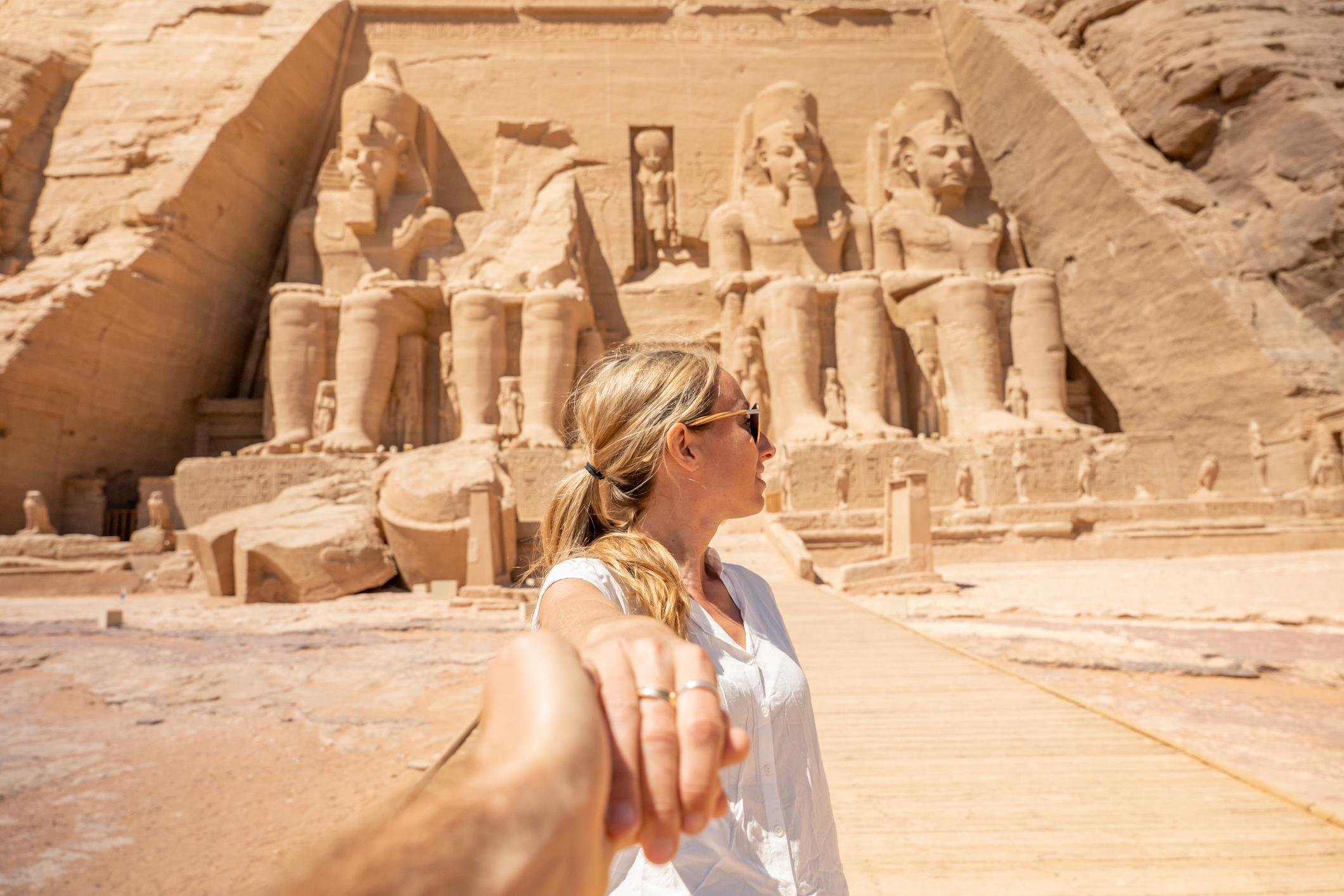
Visitors photograph the four seated statues of Ramses II, each nearly 20 meters tall, at the Great Temple facade.

4

Interior of the Great Temple

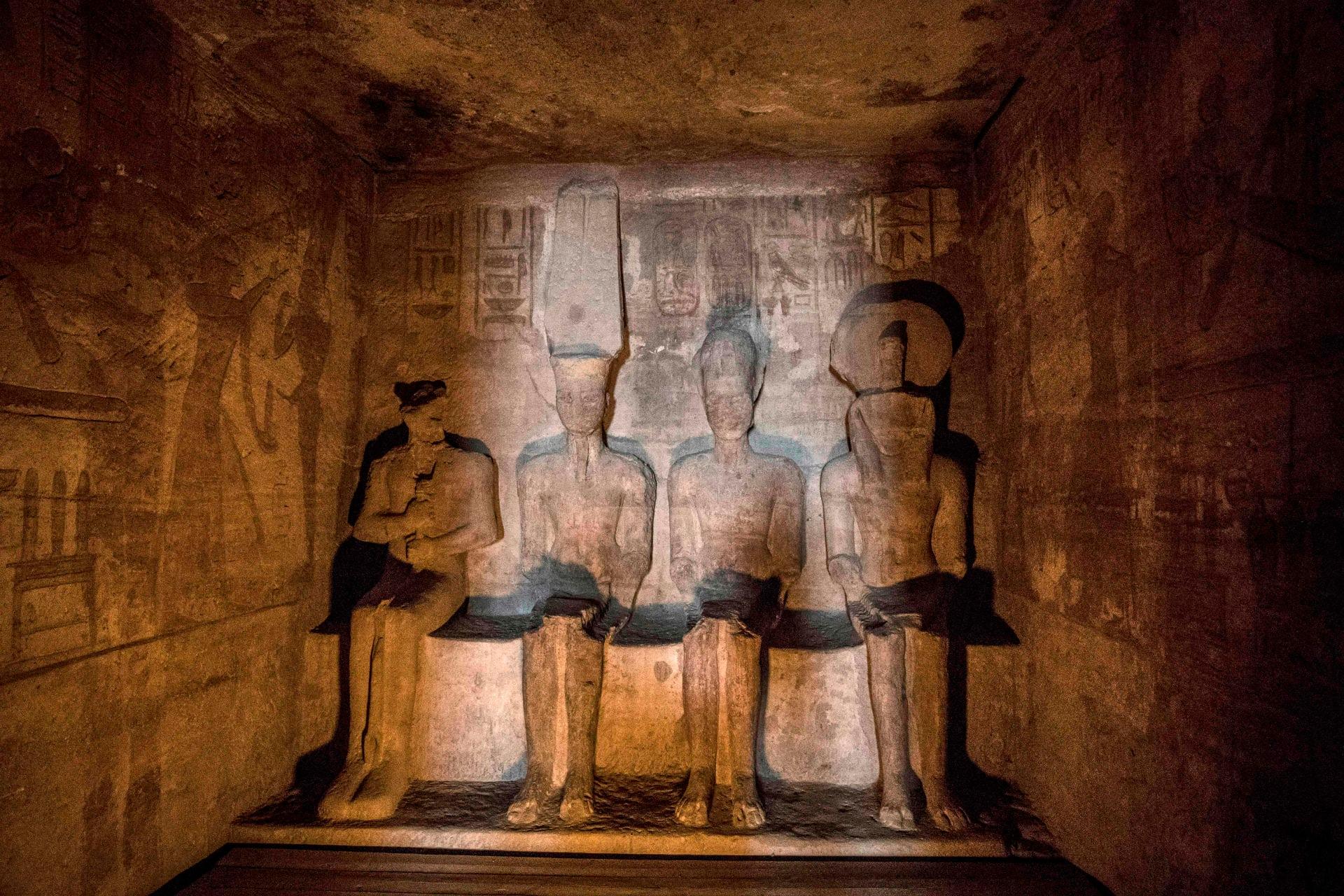
Guides lead guests through the hypostyle hall and inner sanctuary where the famous solar alignment occurs on Feb 22 and Oct 22.

5

Temple of Hathor and Nefertari

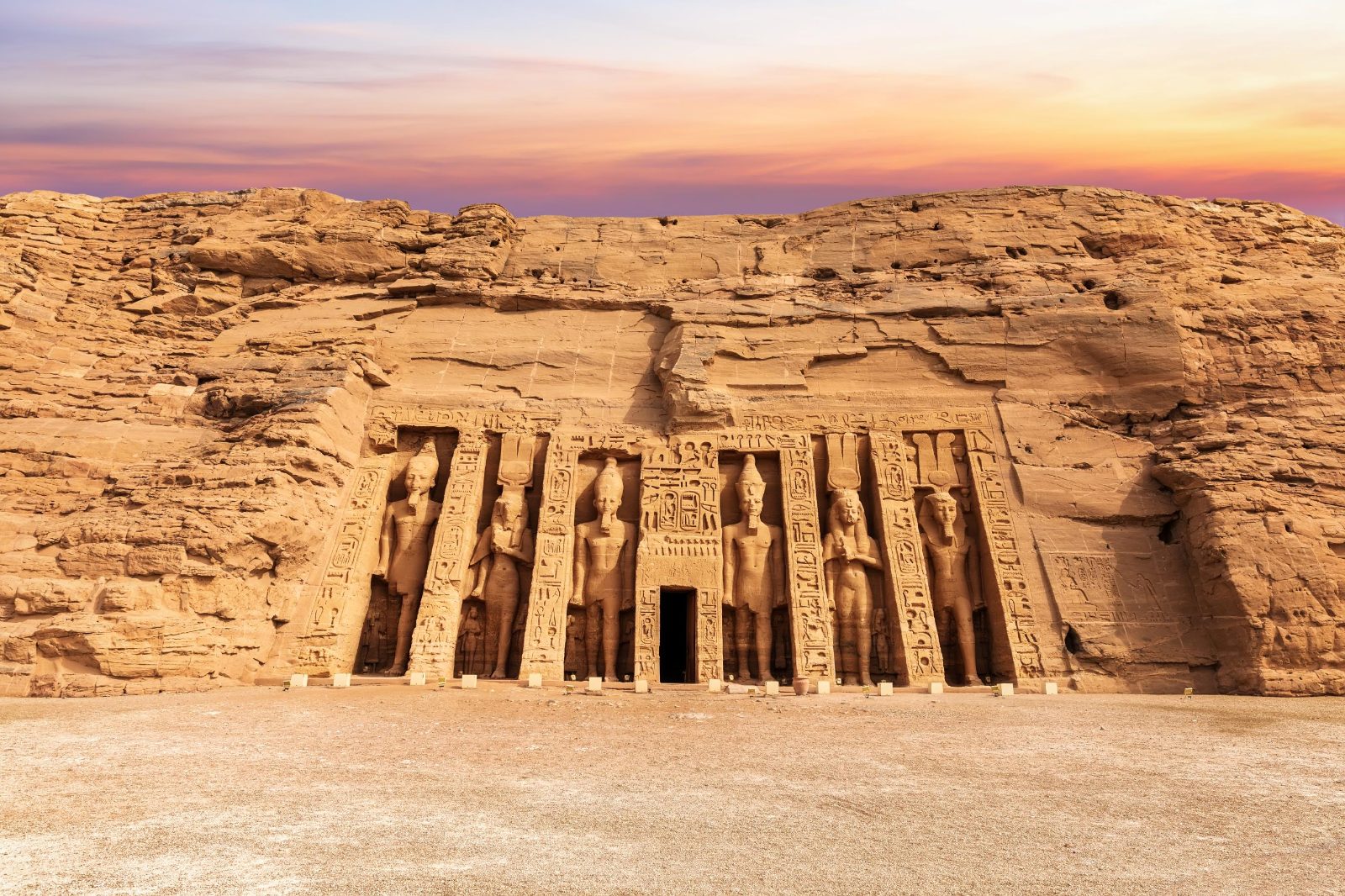
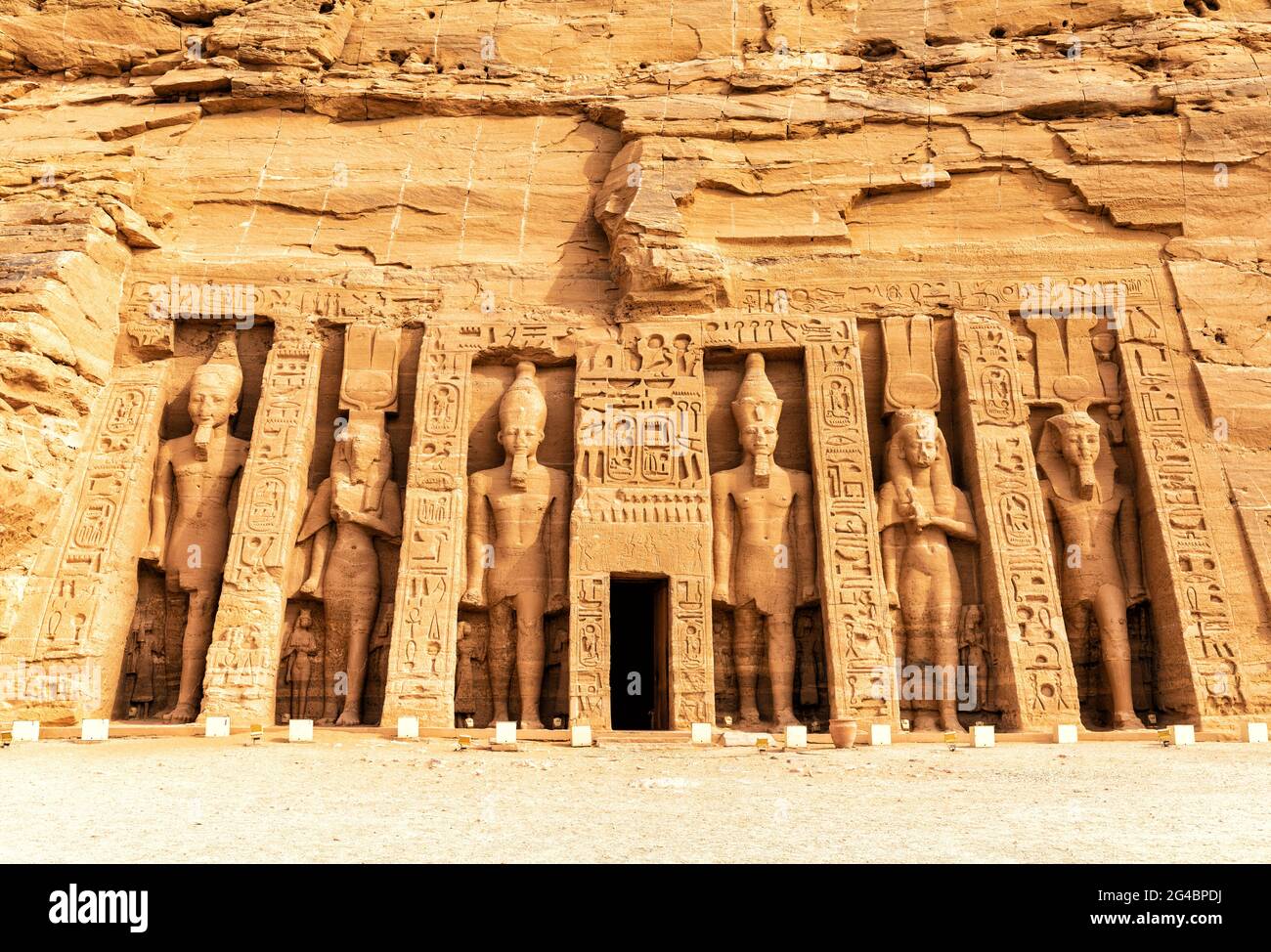
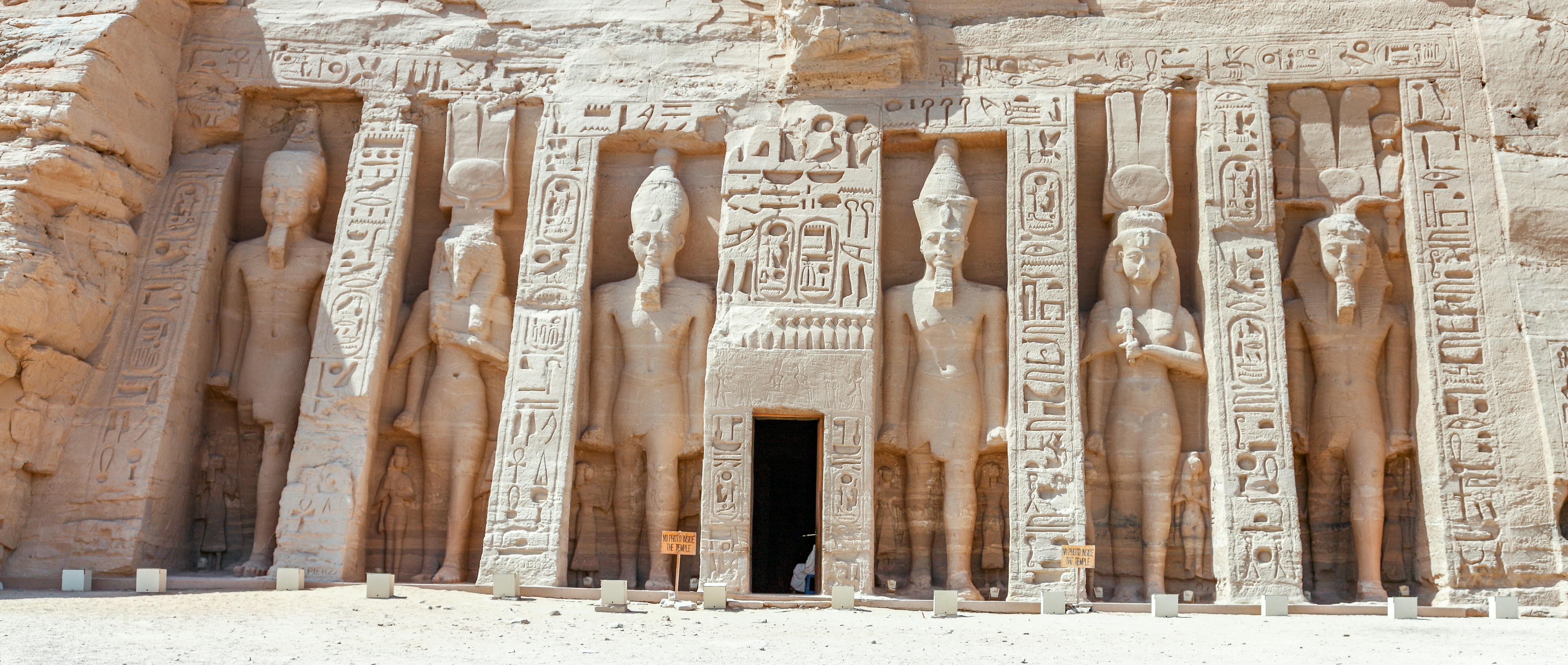
The smaller second temple honors Queen Nefertari and the goddess Hathor with six standing statues on its facade.

6

Return walk and departure

Guests return to the vehicle or bus park for the drive or flight back toward Aswan.

What you'll see

Highlights not to miss

Great Temple of Ramses II

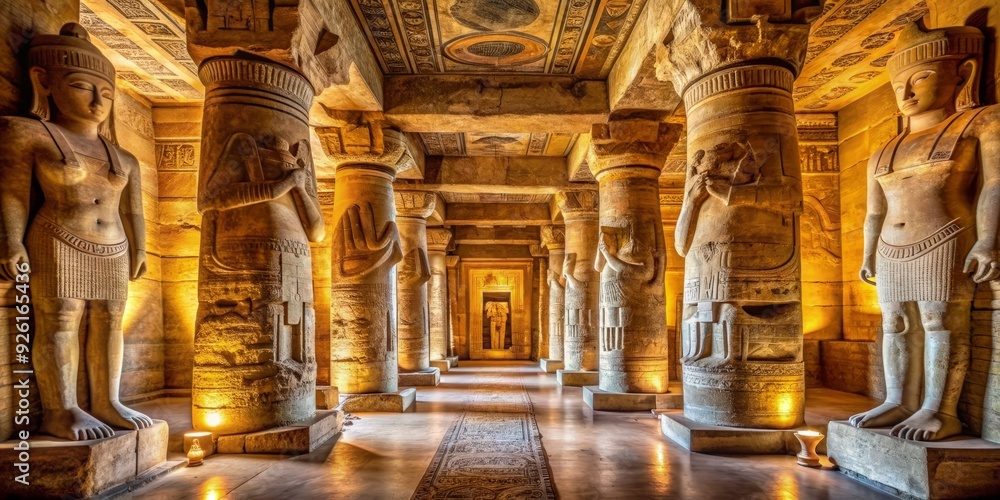
The larger of the two rock-cut temples features four seated colossal statues of Ramses II at its facade, each measuring nearly 20 meters tall. The interior hypostyle hall holds eight Osiride pillars leading toward the inner sanctuary where sunlight aligns twice yearly.

Inner Sanctuary and Sun Alignment Chamber

Deep inside the Great Temple sits the sanctuary where sunlight travels the full length of the temple axis on February 22 and October 22 each year. The alignment illuminates three of four seated statues, leaving the god Ptah in permanent shadow.

Temple of Hathor and Nefertari

The smaller second temple is dedicated to Queen Nefertari and the goddess Hathor, with six standing statues on its facade split between the royal couple. It is one of the few ancient Egyptian temples where a queen's statues stand equal in height to the king's.

Hypostyle Hall

The hall inside the Great Temple contains eight massive Osiride pillars depicting Ramses II in the form of the god Osiris, flanking a central passage lined with painted battle reliefs. Wall carvings depict the Battle of Kadesh in extensive narrative detail across multiple registers.

Relocation Site and Artificial Hill

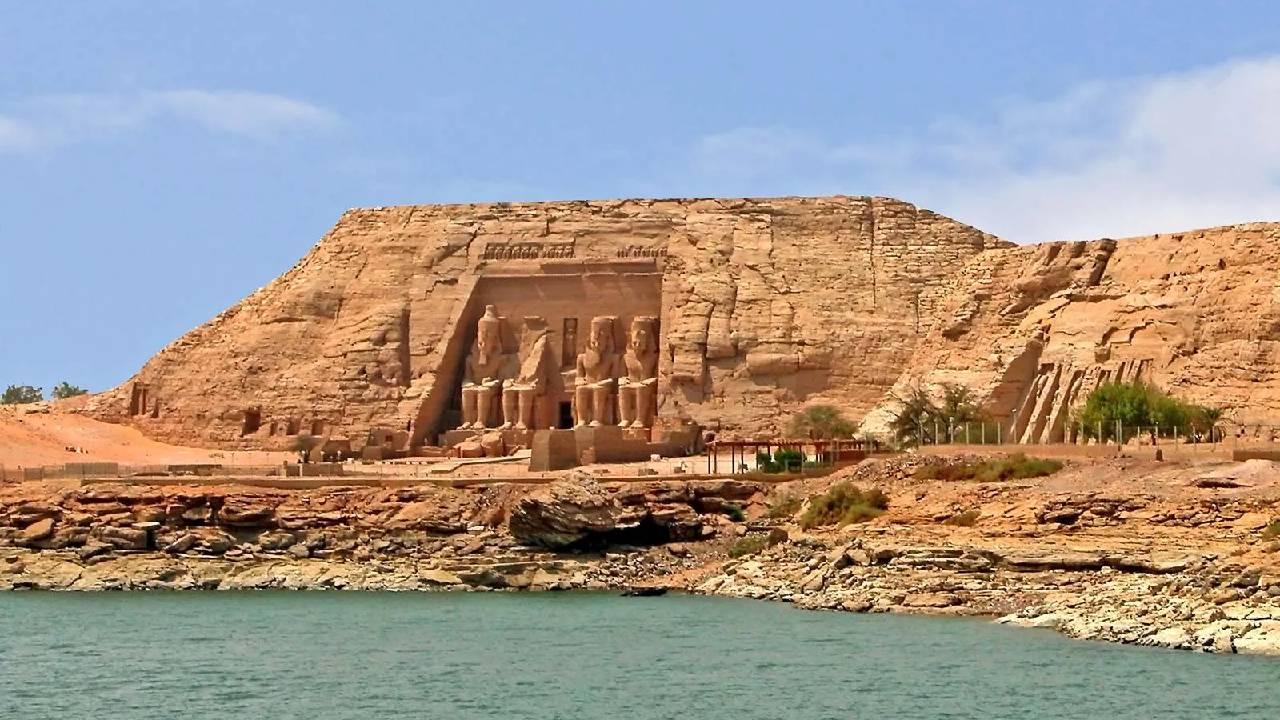
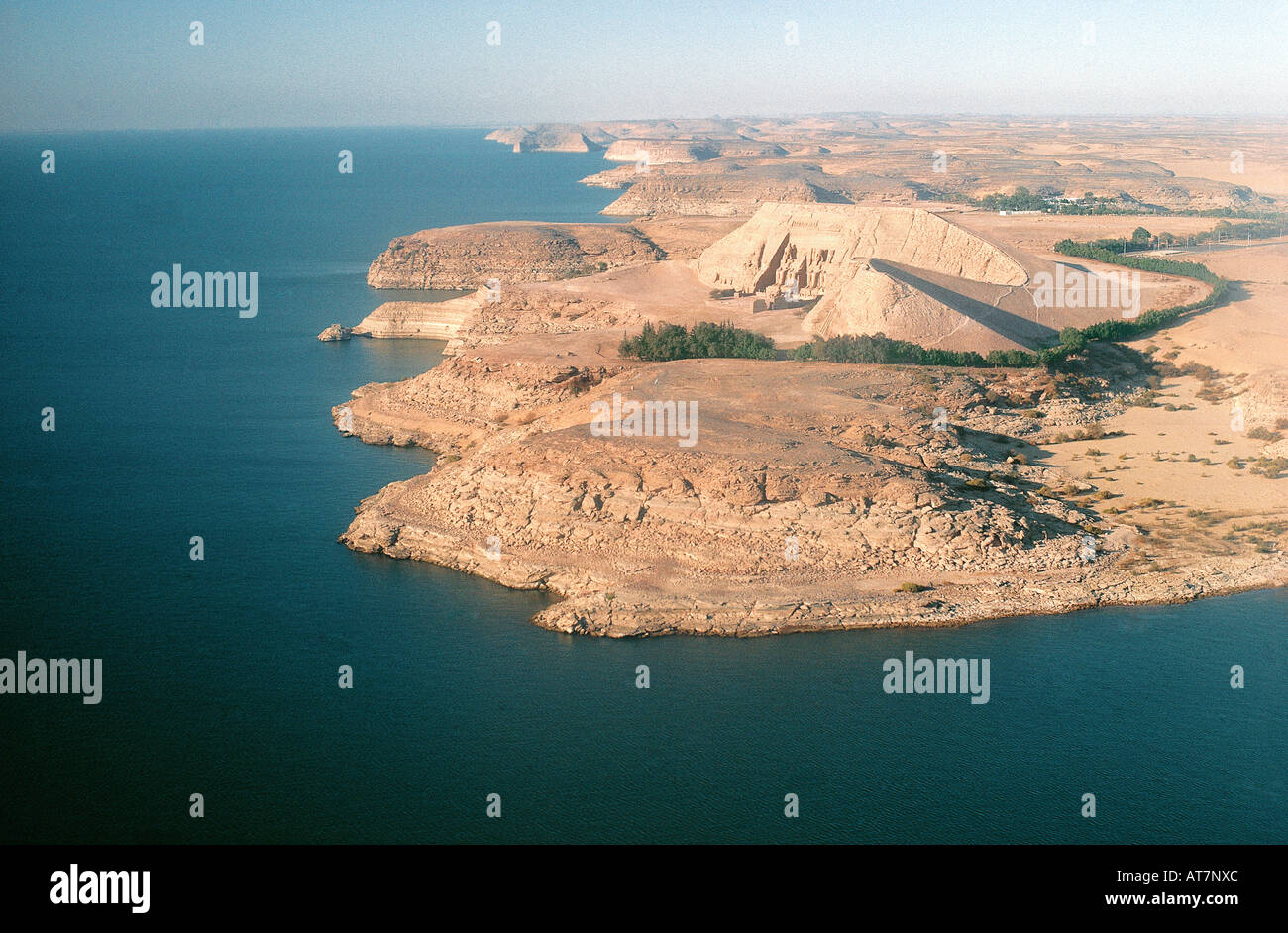
Both temples sit inside an artificial mountain built during the 1960s UNESCO project that cut each monument into large blocks and reassembled them 65 meters higher and further from the original riverbank. The dome structure supporting the hill is a hidden engineering feat concealed beneath the recreated cliff face.

Colossi Facade Plaza

The open plaza in front of the Great Temple gives full unobstructed views of all four seated Ramses II statues together with Lake Nasser visible in the background. It is the widest vantage point for taking in the entire facade in one frame.

The experience

What the visit is really like

You arrive in the cool of early morning, when the light rakes low across the sandstone and the four colossi throw long shadows toward the water. From the ticket gate you follow the curving path around the artificial hill, and the facade reveals itself gradually — first a knee, then a shoulder, then the full 20-metre seated figures of Ramesses staring south. You pause at the entrance, where a fallen colossus lies split at the waist, left exactly as the earthquake of antiquity left it. Stepping inside on your guided abu simbel private tour, you feel the temperature drop as the hypostyle hall opens around eight towering Osiride pillars. Your guide points out the Battle of Kadesh unfolding along the walls in carved registers, chariots wheeling across the stone. You walk the axis toward the sanctuary at the rock's deepest point, then double back into daylight. A short stroll brings you to Nefertari's smaller temple, where you trace Hathor's cow-headed columns. Outside again, you climb slightly for the wide view over Lake Nasser, the blue water pressing against the reassembled cliff, and you understand how far these stones travelled to remain standing.

Everything You Need to Know

Your complete experience guide

All the details about your upcoming adventure in one place

Your Abu Simbel Private Tour Explained

An abu simbel private tour brings you face to face with the twin sandstone temples of Ramesses II and Queen Nefertari, carved into the Nubian cliffs above Lake Nasser. With a dedicated Egyptologist guide, these abu simbel private tour tours let you move at your own pace across the Great Temple's colossal facade and the smaller Temple of Hathor. Personalized attention makes the Nubian monument tour ideal for travelers wanting depth over crowds when exploring Abu Simbel's landmarks.

The four seated colossi guarding the Great Temple stand roughly 20 metres tall, each carved from the living sandstone cliff rather than assembled from blocks. An abu simbel private tour brings visitors to the threshold of one of the ancient world's boldest acts of self-promotion, commissioned by Ramesses II in the thirteenth century BCE to mark the southern edge of his kingdom and overawe Nubia beyond it. The two temples were cut directly into the rock above the Nile: the larger dedicated to Ramesses and the state gods Ra-Horakhty, Amun and Ptah, the smaller to his queen Nefertari and the goddess Hathor. What survives is not only scale but calculation. The Great Temple's axis was aligned so that sunlight would penetrate some 60 metres to the inner sanctuary and illuminate three of the four rear statues on two mornings each year, leaving Ptah, god of the underworld, in shadow. Few structures anywhere translate solar geometry into theology with such precision, which is why a private abu simbel temples tour tends to linger longest in that dim, deliberate interior. Inside, the hypostyle hall carries eight Osiride pillars bearing the king's likeness, and the walls record the Battle of Kadesh in registers of chariots, archers and captured enemies — a monument doubling as royal propaganda. The smaller temple is rarer still: Nefertari appears on its façade at the same height as her husband, an unusual parity in Egyptian royal art. Together the sites anchor the wider group of Nubian monuments that trace pharaonic power down the river's last Egyptian reach. Today Abu Simbel matters as much for its second life as its first. When the Aswan High Dam threatened to drown the temples beneath Lake Nasser, an international campaign sawed them into more than a thousand blocks and reassembled them on higher ground inside an artificial mountain — a feat that helped shape modern heritage law. That relocation is why any abu simbel private tour today reaches a site that technically no longer sits where it was built. Among Aswan landmarks, few reward attention like these facades, and abu simbel private tour tours continue to draw travellers to a monument twice made monumental — once by a pharaoh, once by the engineers who refused to let it vanish.

Few structures translate solar geometry into theology with the precision of Ramesses II's inner sanctuary.

Dress code

Shoulders and knees should be covered, especially inside the two rock-cut temples and in the surrounding Nubian village. Loose, breathable cotton works best given the desert heat around Abu Simbel, and a hat is strongly advised for the walk from the bus park to the temple entrance.

Bags & security

A security checkpoint with bag scanning sits at the entrance plaza before the 200-meter walk to the temples. Only small daypacks are typically allowed through; large backpacks, suitcases, or duffel bags should stay with the vehicle or driver.

Photography

Photography of the exterior facades and the four colossal statues of Ramses II is permitted without restriction. Inside the Great Temple and the Temple of Hathor, camera use is officially restricted, and tripods, flash photography, and drones are prohibited throughout the site.

Families & strollers

Children are welcome at the site, and the outdoor plaza and colossal statues are described as safe and easy for kids to view up close. Strollers struggle on the uneven ground near the temple entrances, so a carrier is more practical for very young children.

Accessibility

The path from the parking area to the temples covers roughly 200 meters with some uphill grade and no dedicated ramp for most of the route. Wheelchair users can view the exterior facades but the temple interiors have raised stone thresholds and uneven rock-cut floors that limit access.

Food & drink

No food or drink is allowed inside either temple, and eating is restricted to the designated cafeteria and rest area near the visitor center. Bottled water is permitted on the outdoor plaza and strongly recommended given the desert heat.

Not allowed

× Tripods × Drones × Flash photography equipment inside temples × Large backpacks and suitcases × Sharp objects and knives × Glass containers × Alcohol × Outside food vendors' displays × Selfie sticks with extendable poles beyond standard length × Loudspeakers × Flammable items × Camping or picnicking equipment

What to bring

✓ Passport or ID ✓ Sun hat ✓ Sunscreen ✓ Bottled water ✓ Comfortable walking shoes ✓ Cash and card for the gate ✓ Light scarf or shawl ✓ Sunglasses

Opening hours

Mon 06:00 – 17:00
Tue 06:00 – 17:00
Wed 06:00 – 17:00
Thu 06:00 – 17:00
Fri 06:00 – 17:00

Slightly quieter midday

Sat 06:00 – 17:00

Busiest with weekend groups

Sun 06:00 – 17:00

Closures & exceptions

  • ·Feb 22 — Sun Festival — extra dawn crowds
  • ·Oct 22 — Sun Festival — extra dawn crowds

At a glance

Hours

06:00–17:00 daily, every day of the week

Address

Abu Simbel Temples, Abu Simbel, Aswan Governorate, Egypt

Access

200m walk from bus park, outer facades only for wheelchairs

Best light

06:00–09:00, before midday heat and crowds

Bag policy

Small bags only, no large backpacks past security

Getting there

Aswan road convoy or short flight from Aswan

Getting there

Car · 3-4 hours each way · Included in most private car packages

Private vehicles depart Aswan in an early-morning convoy, typically leaving around 04:00 to reach Abu Simbel by sunrise or mid-morning. The road covers roughly 280 km each way through desert highway with a checkpoint stop en route.

Public transport · 3-4 hours each way · Lower cost than private car

Shared tourist buses and minibuses run from Aswan's bus station following the same police-escorted convoy schedule as private cars. Seats sell out during winter high season, so booking a day ahead is recommended.

Bike · 45 minutes · Higher cost than road options

Egypt Air operates short domestic flights from Aswan Airport to Abu Simbel Airport, covering the same distance in under an hour. This option suits travelers with limited time or those avoiding the long desert drive.

Cancellation policy

Most abu simbel private tour bookings allow free cancellation up to 24-48 hours before the scheduled pickup, with a full refund credited to the original payment method. The 750 EGP foreign adult entrance fee is paid separately by card at the gate and is non-refundable once the ticket is issued.

Plan your time

How long do you need?

Recommended time

1.5-2.5 hours

Most visitors need roughly 1.5 to 2.5 hours on site to walk through the Great Temple of Ramses II and the smaller Temple of Nefertari at an unhurried pace, add 30 minutes if you're keen on photography or want to linger by Lake Nasser. An abu simbel private tour gives you the flexibility to compress this to 90 minutes if you're joining as part of a longer Aswan landmarks itinerary, or stretch it out if the site is quiet. Queue reality: entry itself is quick since tickets are card-only at the gate, but foot traffic inside the temples bottlenecks fast once coach groups converge mid-morning. Arriving within the 06:00-09:00 window keeps both the walkway and the interior chambers comfortably navigable.

Crowd levels through the day

Just after opening Light
Mid-morning Moderate
Late morning Heavy
Around midday Moderate
Early afternoon Light
Late afternoon Very light
Plan ahead

When to go — year at a glance

Weather · crowds · average price — dots go green to amber to red as each metric rises.

Winter (Dec-Feb)

Daytime highs stay near 20-25°C, making this the most comfortable season for a full abu simbel private tour without midday heat exhaustion. The February 22 Sun Festival falls in this window and draws the year's largest dawn crowds.

Spring (Mar-Apr)

Temperatures climb into the low 30s°C by midday, so an early departure from Aswan remains important. Crowds thin out compared to peak winter months, giving a quieter abu simbel private tour experience.

Summer (Jun-Aug)

Southern Egypt regularly exceeds 40°C by early afternoon in summer, making the 06:00-09:00 arrival window essential rather than optional. Visitor numbers drop noticeably compared to winter, rewarding those who tolerate the heat with near-empty plazas.

Autumn (Sep-Nov)

Conditions cool gradually through the season, with the October 22 Sun Festival bringing a second annual surge of dawn visitors. Late October and November offer a comfortable balance of moderate heat and manageable crowds.

Insider tips

Helpful tips for your visit

Book the convoy seat early

During winter high season, shared bus and minibus seats for the Aswan-Abu Simbel road convoy fill up days in advance, so reserve a spot as soon as travel dates are fixed.

Bring small denomination cash

While the 750 EGP entrance fee is paid by card at the gate, small vendors and rest-stop cafes along the desert road often only accept cash in Egyptian pounds.

Pack layers for the desert drive

Pre-dawn convoy departures from Aswan can be cool, while the return trip in the afternoon sun turns warm, so a light jacket that packs away easily is useful.

Charge devices before departure

Power outlets are scarce during the multi-hour road trip and at the remote temple site, so a full battery or portable charger avoids missed photo opportunities.

Confirm card payment works at the gate

Since the entrance fee is charged by card only, international travelers should notify their bank of Egypt travel to prevent a declined transaction at the gate.

Watch for checkpoint stops

The desert highway between Aswan and Abu Simbel includes a security checkpoint where convoys pause briefly; keeping a passport copy handy speeds this process along.

Consider the flight for limited time

Travelers short on days can fly Aswan to Abu Simbel in about 45 minutes instead of the multi-hour road convoy, freeing up time elsewhere in an Egypt itinerary.

Where to meet

Meeting points

Abu Simbel Visitor Center

Abu Simbel Temples entrance plaza, Aswan Governorate, Egypt

Main gathering point before the security checkpoint and temple walk

Get directions

Abu Simbel Airport

Abu Simbel Airport, Abu Simbel, Aswan Governorate

Pickup point for guests arriving by domestic flight from Aswan

Get directions
The story

The history behind the site

The Great Temple at Abu Simbel was carved into a sandstone cliff during the reign of Ramesses II. Work is dated to the 13th century BCE, beginning around 1264 BCE and continuing for roughly two decades. The pharaoh dedicated the larger monument to Ra-Horakhty, Amun, Ptah, and his own deified image. Four seated colossi, each near twenty metres tall, guard the facade. A smaller temple beside it honoured the goddess Hathor and Ramesses' queen, Nefertari. The site sat above the Nile in ancient Nubia, a statement of royal power on Egypt's southern frontier. Any history that frames an abu simbel private tour begins with this act of dynastic ambition. Over centuries the desert reclaimed the temples. Drifting sand buried the colossi to their shoulders, and the monuments passed from memory. On 22 March 1813, the Swiss traveller Johann Ludwig Burckhardt sighted the upper heads while exploring the region. In 1817 the Italian strongman Giovanni Belzoni cleared the entrance and entered the Great Temple. That rediscovery drew nineteenth-century antiquarians, and later the crowds who now book skip-the-line Abu Simbel visits. The gravest threat came in the twentieth century. Construction of the Aswan High Dam, begun in 1960, would raise Lake Nasser and drown the temples. UNESCO launched an international rescue that remains its signature Nubian campaign. Between 1964 and 1968, engineers and archaeologists sawed both temples into 1,036 numbered blocks, some weighing up to thirty tonnes. The pieces were lifted, catalogued, and reassembled 65 metres higher and 200 metres back from the water. Artificial domes now support the reconstructed cliff. The work concluded in 1968 at a cost exceeding forty million dollars. This relocation is the story most abu simbel private tour tours choose to tell. The alignment survived the move with only slight compromise. Twice yearly, near 22 February and 22 October, sunlight still pierces the sanctuary to illuminate three of the four inner statues. Guides on any Aswan Nubian landmarks tour dwell on this solar event. Those who reserve abu simbel private tour tickets today stand before stone that was dismantled and rebuilt, yet reads as unbroken. The abu simbel private tour tour experience rests on Ramesses' vision, Burckhardt's chance sighting, and the engineers who outran a rising lake.

13th c. BCE

Ramesses II orders both temples cut into the Nubian cliff face.

c. 1244 BCE

Carving of the Great and Small Temples is completed after roughly twenty years.

Antiquity

Shifting desert sand gradually buries the colossi and seals the temples.

1813

Johann Ludwig Burckhardt sights the buried facade on 22 March.

1817

Giovanni Belzoni clears the sand and enters the Great Temple interior.

1960

Aswan High Dam construction begins, threatening the site with Lake Nasser.

1964–1968

UNESCO cuts the temples into 1,036 blocks and rebuilds them 65 metres higher.

1968

The relocation concludes, preserving the twice-yearly solar alignment.

Photo spots

Best photo spots

Great Temple Facade

Best light · Before 09:00

Stand at ground level directly opposite the four seated colossi of Ramesses II for the classic frontal shot that anchors most Abu Simbel private tour itineraries. Position yourself slightly off-center to capture the full 36-meter width without cropping the outermost statue. The stone catches warm, low-angle light best in the early hours.

Artificial Hill Viewpoint

Best light · Mid-morning, before crowds thicken

Climb the path over the dome-covered artificial hill directly behind the temples for an elevated panorama looking down over the roofline and out across Lake Nasser. This is the same rise built during the 1960s relocation to hide the concrete dome, and it gives an unobstructed cliff-top vantage no ground-level shot can match. Footing is loose gravel, so sturdy shoes help.

Lakeshore Wide-Angle Point

Best light · Golden hour, calm water

Walk down to the water's edge along Lake Nasser to frame both the Great Temple and the smaller Temple of Hathor together with open lake stretching behind them. The wide gap between the two facades needs a wide-angle lens or a stitched panorama to fit in one frame. Reflections on calm water are strongest when the lake is still.

Temple of Hathor Facade

Best light · Late afternoon light

Face the six standing statues of Ramesses II and Nefertari at the smaller temple for a tighter portrait shot; the queen's statues stand at equal height to the king's, a rare arrangement worth isolating in frame. It sits a short walk north of the Great Temple along the same path.

Approach Path Overlook

Best light · Early morning arrival

From the visitor path leading in from the ticket area, a slight rise gives a first full view of both temples side by side before reaching the plaza, useful for establishing shots on any abu simbel private tour. This is also where cliffside erosion patterns above the facades are most visible.

Gallery

Moments from the experience

With kids

Visiting with kids

An abu simbel private tour with children means balancing a long desert transfer or short flight against a site with almost no shade, so success here comes down to hydration, pacing, and realistic expectations rather than the temples themselves.

Strollers

The paved path from the parking lot to the ticket area works fine with a stroller, but once you reach the sandy, rocky ground near the temples a baby carrier is far easier than pushing wheels.

Best ages

Kids around 5 and up tend to cope best with the heat, the walk, and the lack of shade; babies and toddlers do fine if you keep the visit short and arrive early.

Facilities

Toilet blocks sit near the ticket office and parking area, though there are no dedicated baby-change rooms, so bring your own changing mat, formula, and water for mixing.

Pacing

Given the site's scale and open desert setting, plan on roughly an hour on-site with young children before attention spans fade and heat becomes an issue, longer only if kids are genuinely engaged.

Heat and hydration

Carry more water than feels necessary, dress kids in hats and light layers, and lean into the 06:00–09:00 arrival window so the hottest hours pass before energy runs out.

Transfer logistics

Whether arriving by the early desert convoy or a short flight from Aswan, build in downtime before and after so an abu simbel private tour tour doesn't start with an overtired child.

Food & drink

Where to eat nearby

Abu Simbel town has only a handful of real dining spots, so most visitors on an abu simbel private tour either eat at the on-site cafeteria by the ticket office or walk into town for lunch. Bring snacks for the temple grounds themselves, then save appetite for the small strip of restaurants a short drive or walk away.

Nefertari Cafeteria

€€

Café inside the site, next to ticket office

Quick sandwiches, soft drinks, and coffee right by the entrance. Convenient for a fast bite before or after the temples, though prices run higher than in town and the menu is limited.

Elmodhesh Fish Restaurant

€€

Local seafood — short drive into town

Fresh Nile fish served family-style with rice, salad, and tahini. Popular with abu simbel private tour tours groups for lunch; portions are generous, so it suits sharing rather than a quick solo stop.

Sobek Restaurant

€€

Traditional Egyptian — Abu Simbel town

Home-style Egyptian dishes like grilled chicken, stews, and mezze in a relaxed setting. Good for travelers who booked an abu simbel private tour tour and want a sit-down meal without a long wait.

New Abu Simbel Restaurant

€€

Sit-down, air-conditioned — town center

A clean, cooled dining room known for its fish plates and moderate prices. A reliable choice after a hot morning at the temples, especially with abu simbel private tour tickets in hand and an afternoon flight ahead.

Customer Reviews

What travelers say

Real experiences from real travelers

4.6
Based on undefined reviews
1 ★ 520
2 ★ 410
3 ★ 1100
4 ★ 3200
5 ★ 15400
M
Marcus T.
United States · 2026-06-18

Colossi at sunrise

We left Aswan before dawn and reached the site as the light hit the four seated statues of Ramesses. Our abu simbel private tour meant we had the guide entirely to ourselves and could linger inside the sanctuary while the coach crowds moved through. The scale of the colossi against the sandstone cliff is hard to put into words.

L
Lena K.
Germany · 2026-05-27

Guide made the difference

Standing in front of the Great Temple in the July heat, our Egyptologist decoded the hieroglyphic reliefs and the battle of Kadesh carvings on the wall. Booking an abu simbel private tour gave us the flexibility to shelter from the midday sun and return when the facade glowed.

H
Hiroshi N.
Japan · 2026-04-12

Nefertari temple was the surprise

Everyone talks about the four colossi but the smaller Temple of Hathor for Queen Nefertari moved me more. The morning air was still cool and Lake Nasser was flat and silver behind the monument.

S
Sofia R.
Spain · 2026-03-09

Long drive but worth it

The three-hour desert road from Aswan is real, so be ready. On our Abu Simbel private tour the driver was careful and the car was cold enough to nap in. Inside the hypostyle hall the Osiride pillars felt enormous.

J
James O.
United Kingdom · 2026-07-02

Private beats the crowd

We chose one of the abu simbel private tour tours specifically to avoid the group buses, and it paid off. Having our own pace let us photograph the relocated cliff and the engineering behind the rescue at leisure.

A
Amara D.
Nigeria · 2026-02-21

Hieroglyphs up close

The reliefs of Ramesses inside the sanctuary were sharper than any photo suggests. Our guide on the abu simbel private tour tour pointed out the alignment of the inner chamber toward the rising sun. Warm gold light poured across the sandstone as we arrived.

C
Camila F.
Brazil · 2026-01-30

Worth the early start

Alarm at 3am, but seeing the colossal facade emerge from the dark as dawn broke over Lake Nasser justified every minute. The private Abu Simbel temple tour let us skip the queue and enter first.

T
Thomas B.
France · 2025-11-15

Impressive engineering

Knowing the whole monument was cut and lifted above the reservoir gives the visit another layer. Our guide balanced the ancient story with the relocation story well. The heat off the cliff face was intense even late afternoon.

P
Priya S.
India · 2025-09-08

Smooth and personal

Our abu simbel private tour tickets included the guide, transfer and entry, and everything ran on time. We reached the second temple with Nefertari's standing figures just as the shadows shortened. Nasser stretched blue to the horizon.

D
Daniel M.
Australia · 2025-06-24

Colossal and quiet

We stood almost alone below the four statues in the early light, which felt rare for such a famous Egypt landmark. The guide's knowledge of the Ramesses reliefs turned a photo stop into a proper visit.

FAQ

Frequently asked questions

Everything you need to know for your journey

Around the corner

Nearby landmarks worth a detour

Lake Nasser Viewpoint

10 minutes

viewpoint

A wide viewpoint over Lake Nasser sits just beyond the temple parking area, offering views of the reservoir created by the Aswan High Dam. The lake's construction was the reason the entire Abu Simbel complex was relocated in the 1960s.

Nubian Village Abu Simbel

10 minutes

landmark

A small Nubian village near the temple complex features colorfully painted houses and local handicraft shops. Many residents descend from communities relocated during the Aswan High Dam construction.

Abu Simbel Museum

5 minutes

museum

A small on-site museum documents the 1960s UNESCO relocation project that moved both temples piece by piece to higher ground. Photographs and models show the original riverside location before the Lake Nasser flooding.

Panorama Overlook

15 minutes

viewpoint

An elevated overlook above the artificial hill gives a wide view of both temple facades together with Lake Nasser in the background. It is a common stop for a final look before departure.

Where to stay

Where to stay nearby

Abu Simbel village hotels

5-10 minutes

mid-range

A handful of small hotels cluster near the temple entrance, catering mainly to overnight visitors attending the Sun Festival at dawn. Options are limited, so early booking matters during February and October.

Aswan riverside district

Day-trip base

luxury

Most visitors base themselves in Aswan's riverside hotel district and take a single long day trip to Abu Simbel. This district offers Nile views and easier access to Aswan's own monuments.

Aswan budget guesthouses

Day-trip base

budget

Independent travelers on tighter budgets often stay in Aswan's older town guesthouses before joining a shared convoy or bus tour. These sit closer to the bus station used for Abu Simbel departures.

Explore More

More Things to Do in Abu Simbel

Ready for Adventure?

Join thousands of happy travelers who have discovered this incredible experience

Book Your Experience Now