Open today · 06:00 – 17:00

Luxor To Abu Simbel

Luxor To Abu Simbel — Transfers & Temple Entry

South past the cataracts, where four colossi wait at dawn.

142K+ travelers chose this
Free Cancellation
Right now: Moderate — summer weekday Midday heat is intense in July; the 06:00–09:00 window remains the most comfortable time to be on site
12-16 hours round trip
1 Languages
Small groups or private
Free Cancellation
Free cancellation Instant confirmation Mobile voucher Verified partner Book now, pay later
4 statues
colossal statues
~20 m tall each
1,000+
blocks relocated
cut for 1960s move
65 m
raised in height
to escape floodwaters
c. 1264 BC
construction began
by Ramesses II
750 EGP
entrance fee
foreign adult, per person
2x yearly
Sun Festival
sunlight lights inner sanctum
Choose your ticket

Ticket options at a glance

Compare fares, pick the fit — all bookings are mobile-voucher and eligible for free cancellation where shown.

2-Day Private Abu Simbel, Philae & Aswan Tour from Luxor 48 hr
Luxury / Private

2-Day Private Abu Simbel, Philae & Aswan Tour from Luxor

5 (1)
€307
  • Private experience
  • Personal attention
  • Premium amenities
  • Free cancellation
Book this ticket
2-Day Private Aswan and Abu Simbel Excursion from Luxor 48 hr
Luxury / Private

2-Day Private Aswan and Abu Simbel Excursion from Luxor

4.5 (11)
€174
  • Private experience
  • Personal attention
  • Premium amenities
  • Free cancellation
Book this ticket

Is it worth it?

Worth it for anyone who reaches Aswan

The luxor to abu simbel run is a long haul, and the honest math starts with the 750 EGP entrance fee, which is the smallest cost you'll carry. The real price is the roughly 280-kilometre desert distance each way and the pre-dawn start it demands. What you get for that outlay is a pair of rock-cut colossi that exist nowhere else, guarded by four seated Ramesses II statues carved straight into the sandstone cliff above Lake Nasser. No other Nubian monument delivers that scale. Most luxor to abu simbel tours bundle transport, so your out-of-pocket entry stays fixed at 750 EGP regardless of how you travel. This pays off for first-timers and anyone chasing UNESCO heritage sites; it's skippable only if you've already seen Karnak and Philae and your days are tight. For the once-in-a-lifetime traveller, the singularity justifies the journey.

What makes it worth it

  • Colossi found nowhere else on earth
  • Fixed 750 EGP entry, no surprise upsells
  • UNESCO Nubian heritage beside Lake Nasser
  • Most tours bundle the long transport
  • Scale unmatched by any other temple

Keep in mind

  • Long 280km desert drive each way
  • Pre-dawn start eats a full day
  • Midday buses crowd the forecourt
  • Skippable if your Egypt days are tight

Bottom line: If you can spare the day, the luxor to abu simbel tour earns back every hour on the road.

Featured Experiences

Popular tours & activities

Hand-picked experiences loved by thousands of travelers

Recommended Experience

Powered by GetYourGuide

Another traveler favorite

Powered by GetYourGuide
Luxor to Aswan: Private Tour of Edfu, Kom Ombo & Abu Simbel 12 hours Free Cancellation

Luxor to Aswan: Private Tour of Edfu, Kom Ombo & Abu Simbel

Explore iconic Nile temples on this immersive private day trip from Luxor to Aswan.

4.2 (128)
FromFrom €180.84
See details
4-Day Private Nile Cruise: Aswan to Luxor with Hot Air Balloon 4 days Free Cancellation

4-Day Private Nile Cruise: Aswan to Luxor with Hot Air Balloon

Experience a 4-day luxury voyage from Aswan to Luxor featuring private tours, ancient wonders, and a sunrise balloon flight.

4.2 (255)
FromFrom €547.75
See details
4-Day Nile Cruise: Luxor to Aswan with Abu Simbel 4 days Free Cancellation

4-Day Nile Cruise: Luxor to Aswan with Abu Simbel

Experience a 4-day luxury voyage through history, featuring iconic temples, the Valley of the Kings, and the majestic Abu Simbel.

4.5 (124)
FromFrom €427.05
See details
Your journey

Step-by-step — what your day looks like

1

Arrival and ticket check

Convoy or flight arrivals pass through the entrance gate and security checkpoint before the walk to the temples

2

Walk to the Great Temple

A roughly 200-meter paved path leads from the parking area to the temple forecourt, with the four colossal statues visible from a distance

3

Explore the Great Temple interior

Visitors move through the hypostyle hall into the inner sanctuary, viewing reliefs depicting battles and religious scenes

4

Visit the Temple of Hathor

The smaller temple dedicated to Nefertari and Hathor sits a short walk from the Great Temple, with its own facade statues

5

Lakeside viewpoint and photos

A walk along Lake Nasser's shoreline behind the temples offers wider views of the relocated site

6

Return to transport

Visitors retrace the path to the parking or airport transfer area for departure

What you'll see

Highlights not to miss

Great Temple of Ramses II

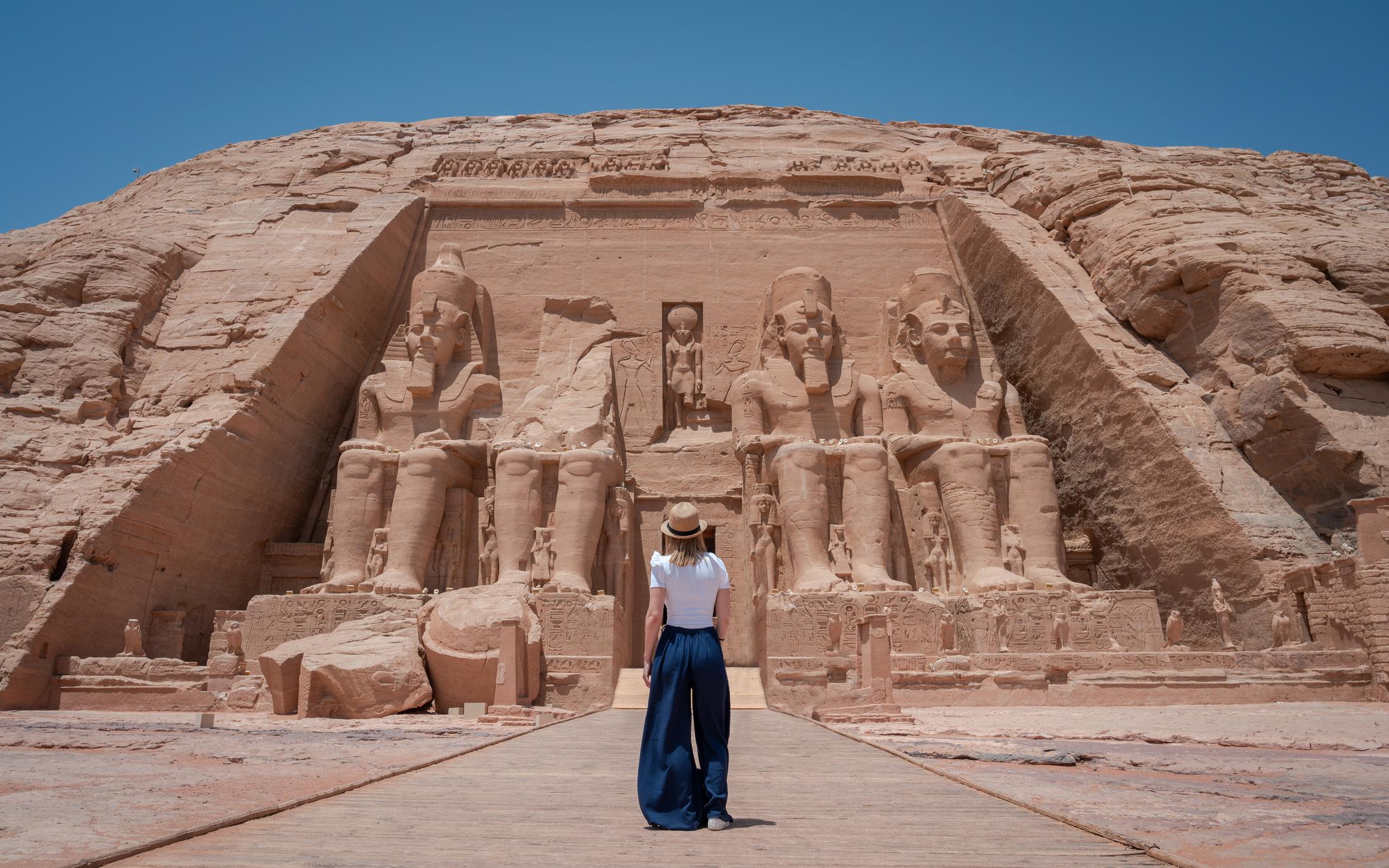
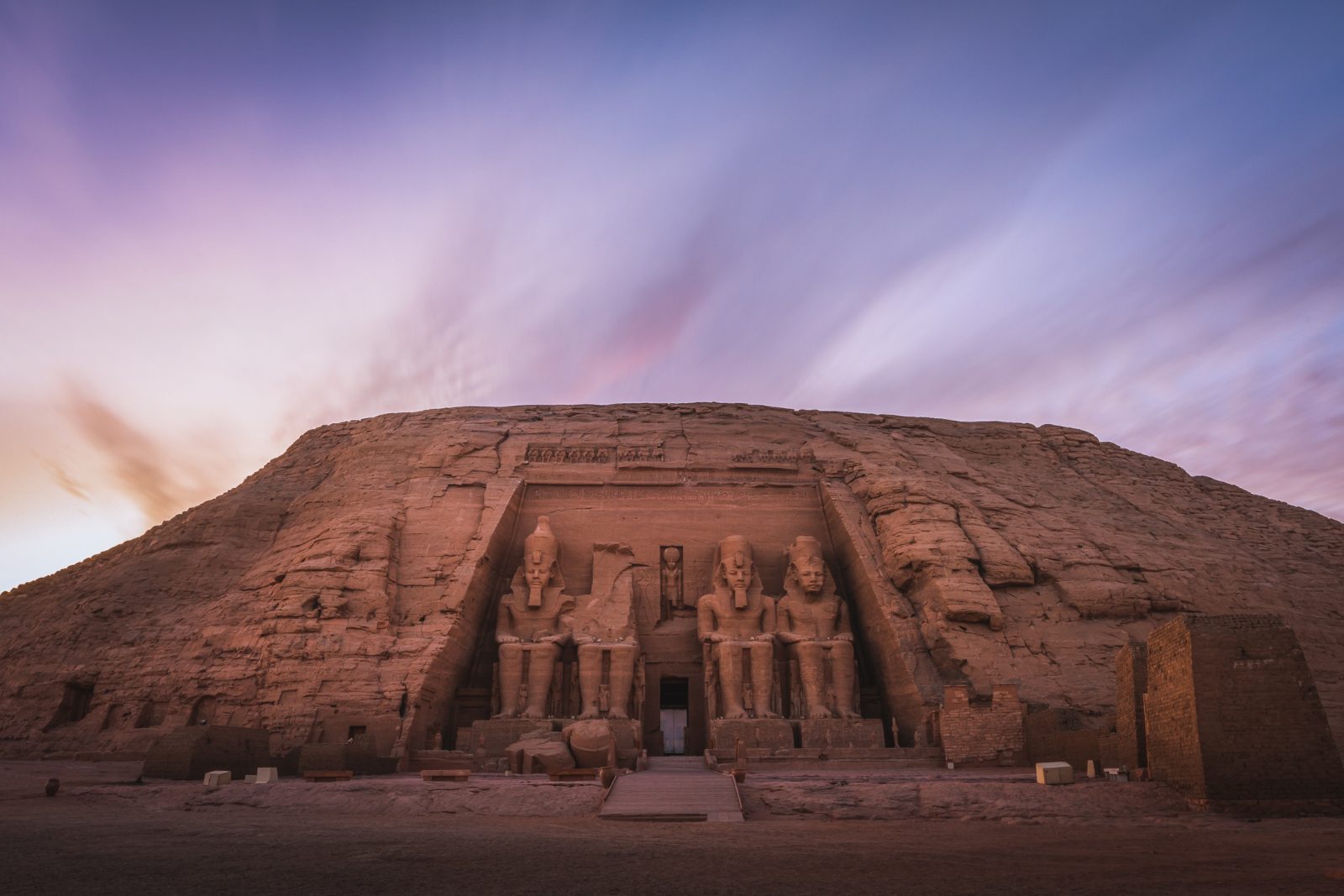
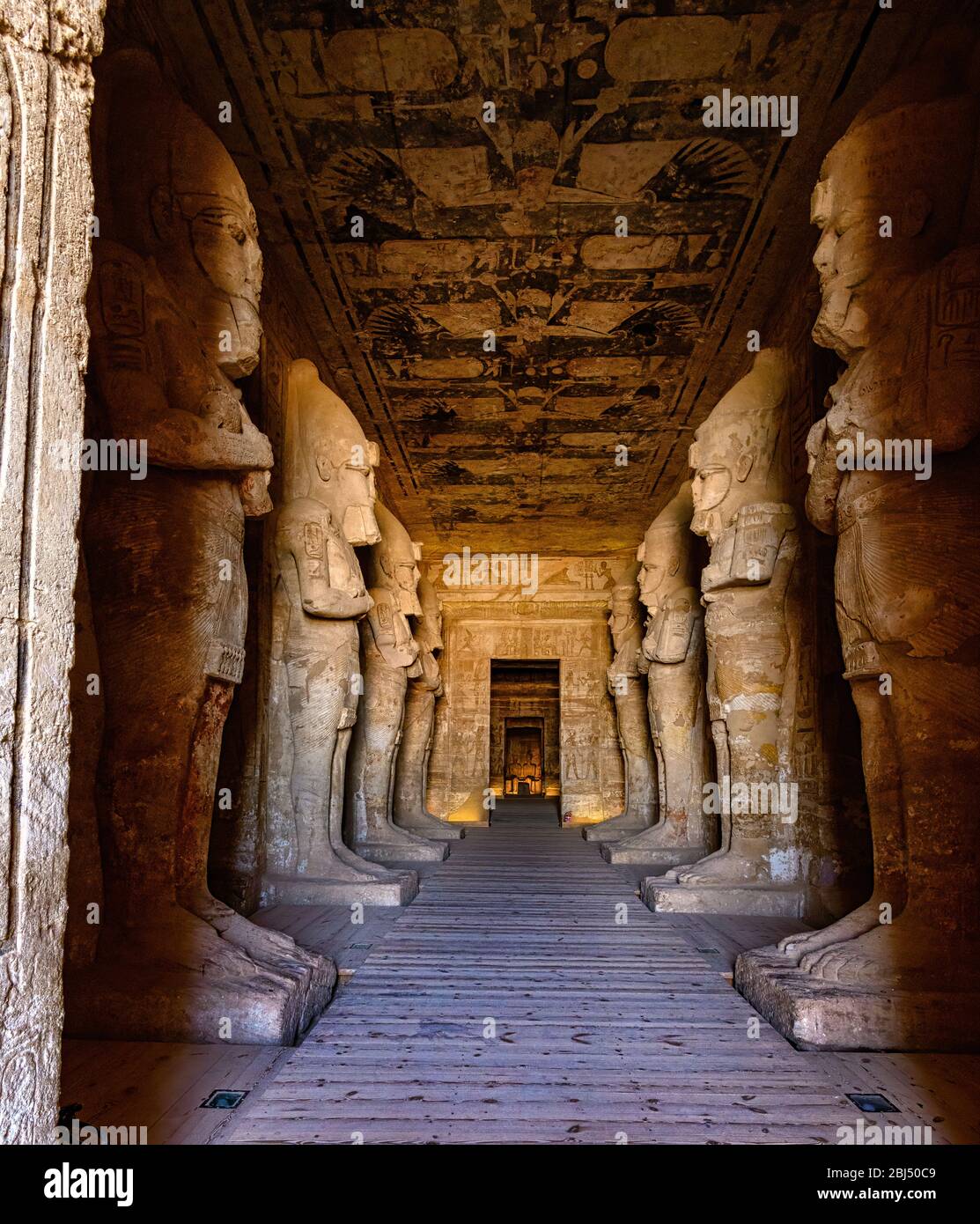
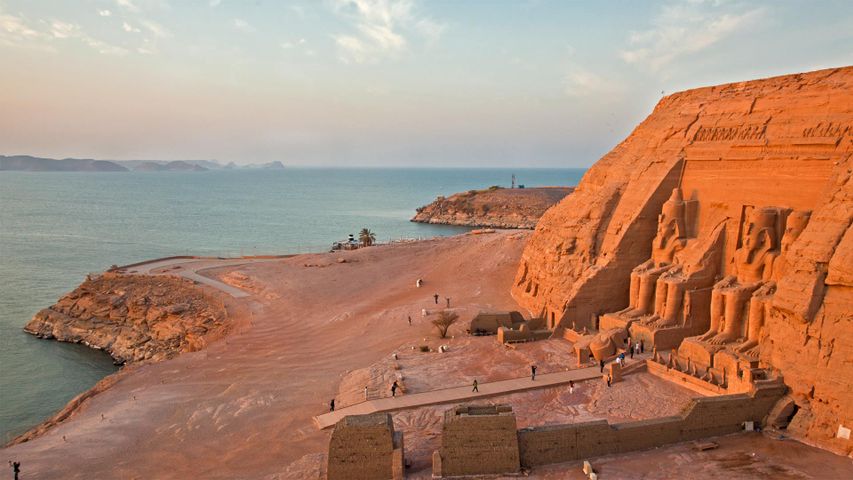
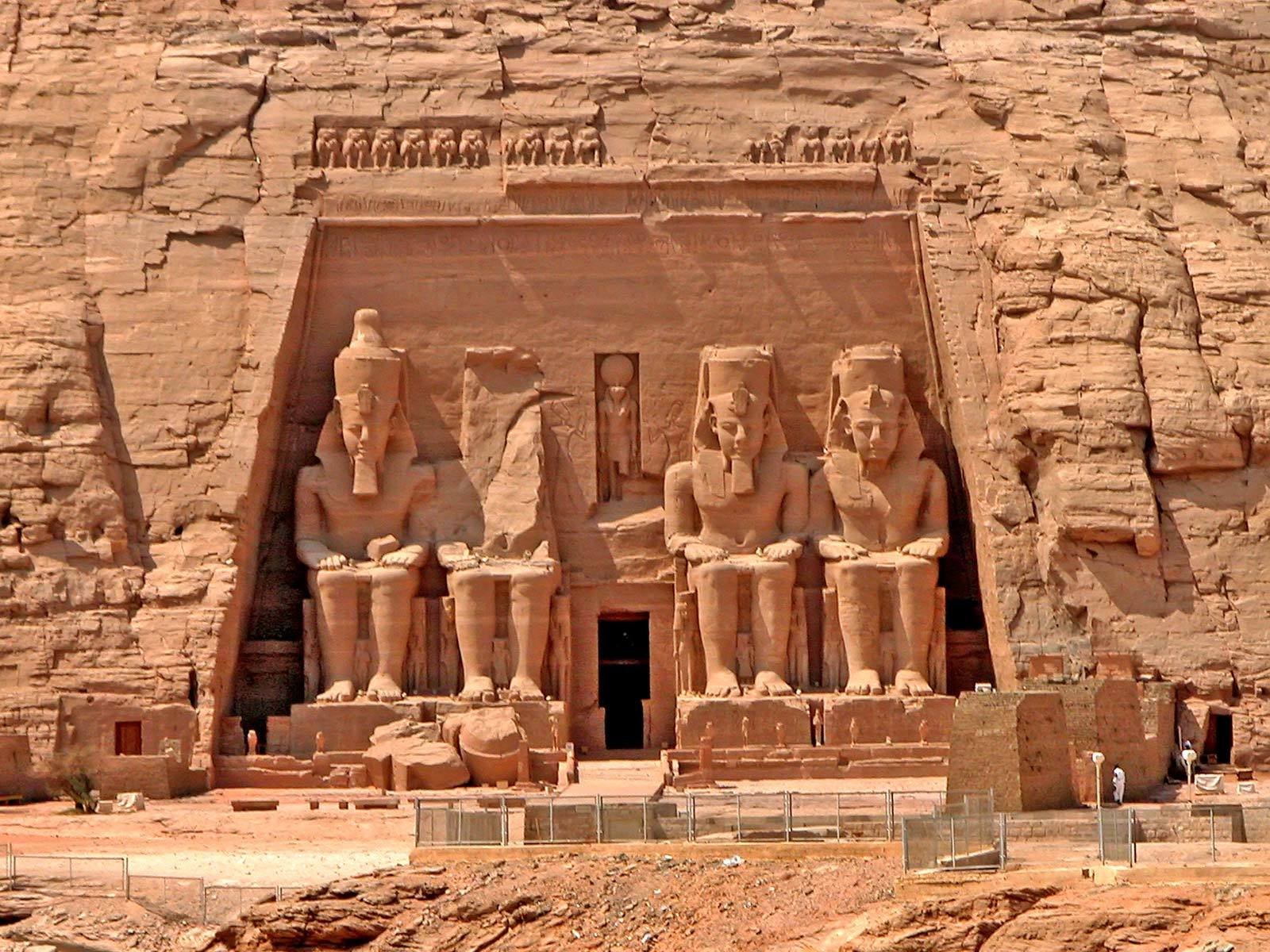
The larger of the two rock-cut temples is fronted by four seated statues of Ramses II, each standing about 20 meters tall, carved directly into the sandstone cliff. Inside, a hypostyle hall lined with Osirid pillars leads roughly 65 meters back to the inner sanctuary.

Inner Sanctuary

At the rear of the Great Temple sits a small chamber holding four seated statues representing Ramses II alongside the gods Amun-Ra, Ra-Horakhty, and Ptah. Twice a year, on February 22 and October 22, sunrise light travels the length of the hall to illuminate three of the four figures, leaving Ptah in shadow.

Hypostyle Hall

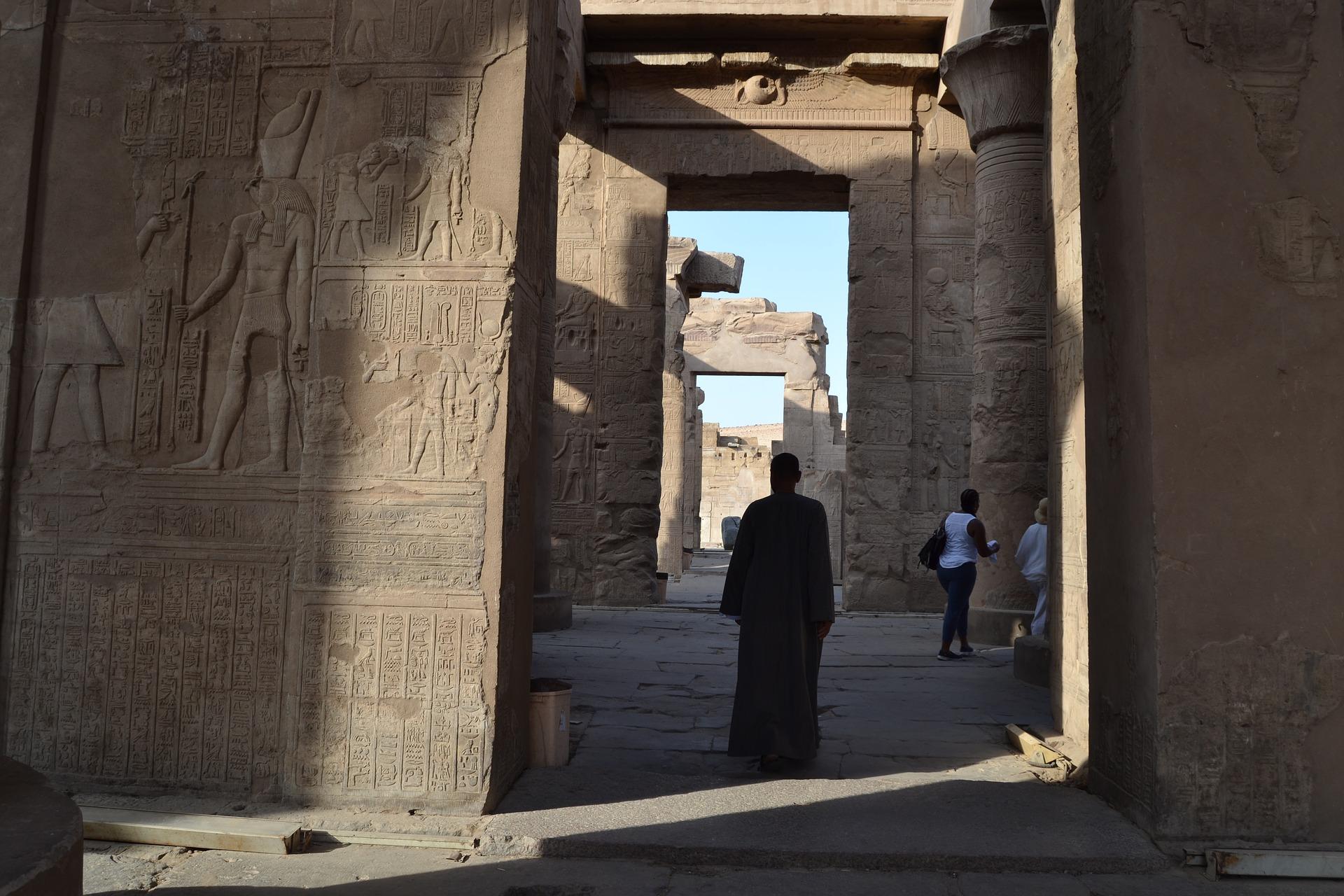
This grand columned hall inside the Great Temple features eight Osirid pillars depicting Ramses II in the guise of Osiris, along with wall reliefs recording the Battle of Kadesh. The reliefs stretch across multiple registers showing chariots and infantry in detailed battle formation.

Temple of Hathor and Nefertari

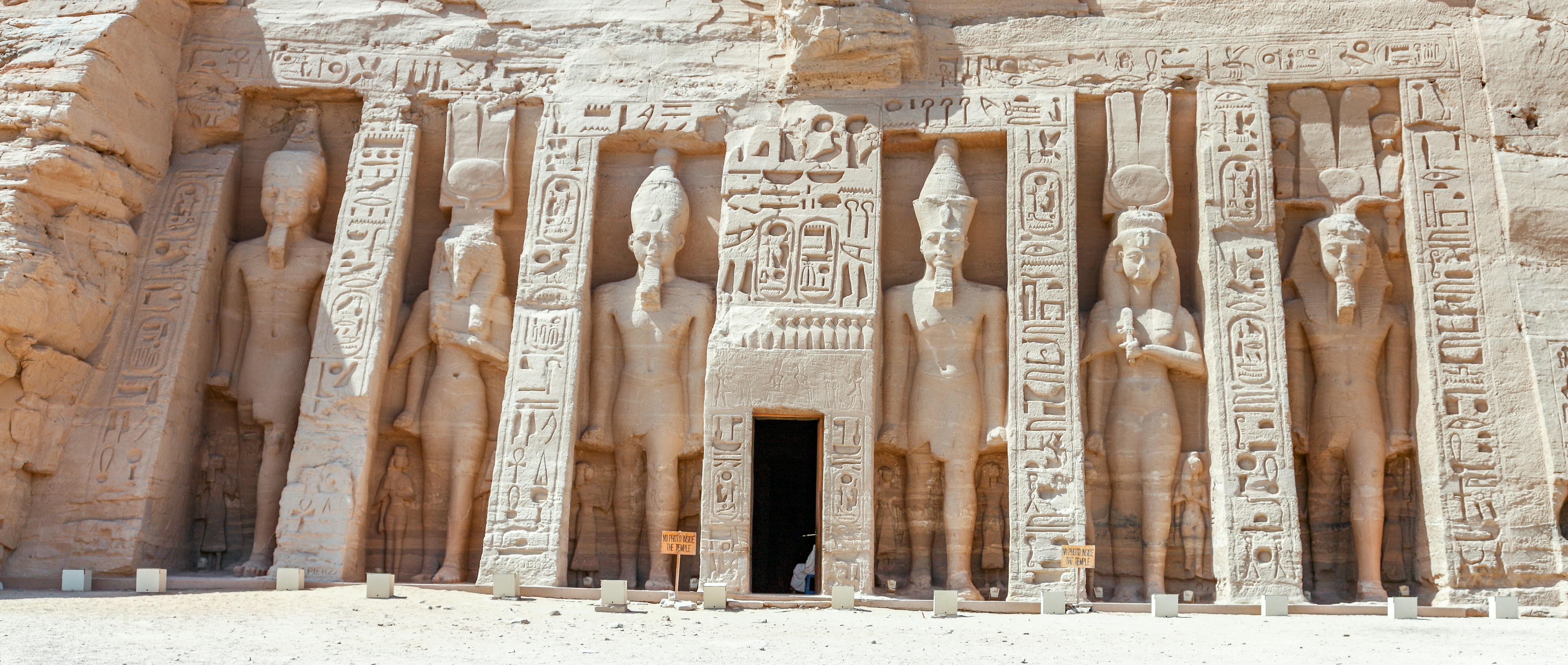
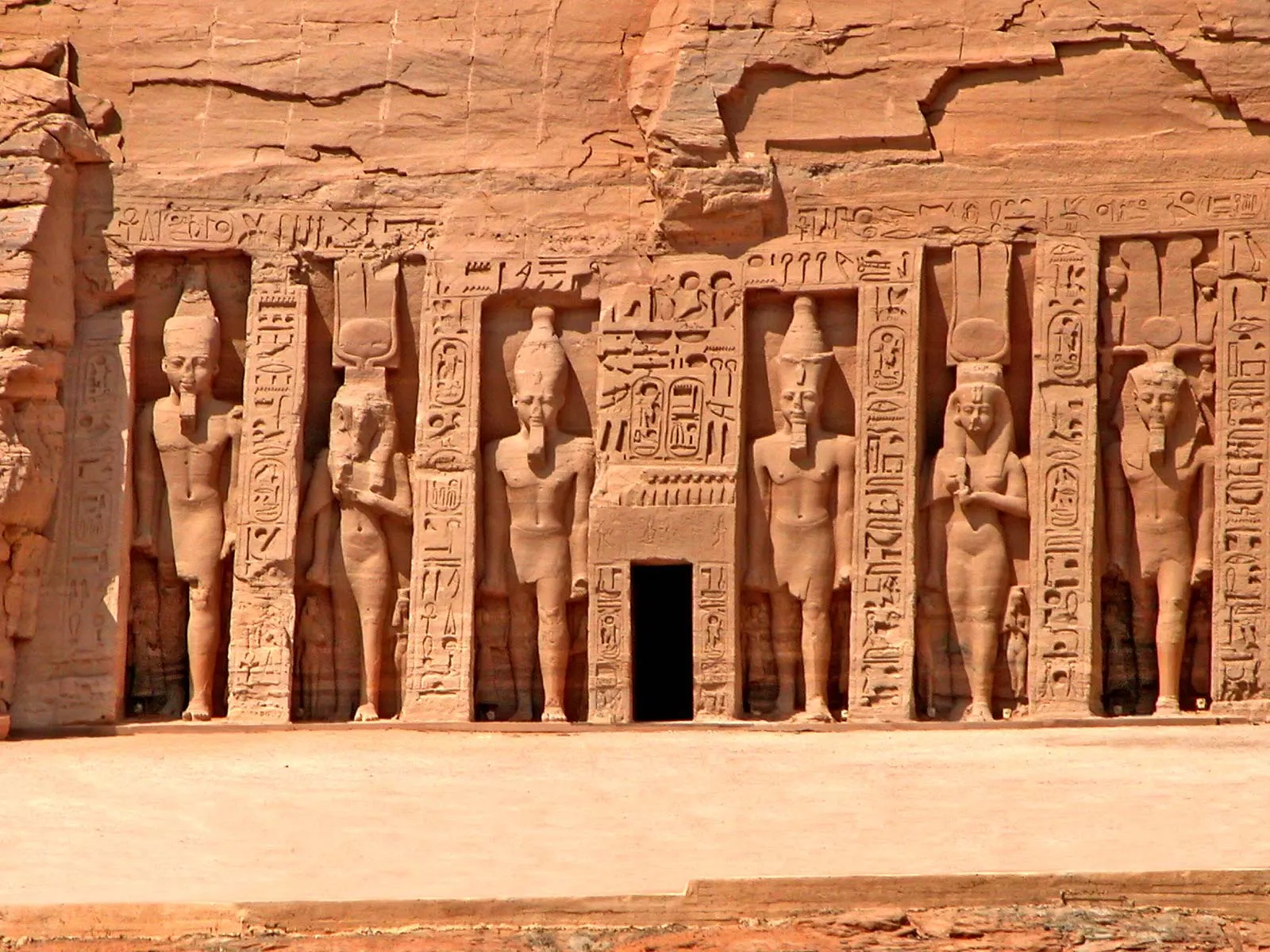
The smaller of the two temples is dedicated to the goddess Hathor and Queen Nefertari, fronted by six standing statues roughly 10 meters tall, an unusual arrangement showing the queen at nearly equal scale to the king. It is one of the few ancient Egyptian temples built specifically to honor a royal consort.

Relocation Site and Artificial Mountain

Both temples were cut into blocks and reassembled atop an artificial hill in the 1960s during a UNESCO-led rescue operation that saved them from the rising waters of Lake Nasser after the Aswan High Dam's construction. The dome-like concrete structure supporting the reassembled temples remains hidden beneath the sculpted rock facade.

Colossi Facade and Forecourt

The open plaza in front of the Great Temple offers the classic wide view of all four colossal statues together, with smaller figures of Ramses II's family carved between his legs and feet.

The experience

What the visit is really like

You set out before first light, the road running south through empty desert until Lake Nasser opens on your left and the temple bluff appears against the water. You arrive early, in the cool hours between 06:00 and 09:00, when the façade catches the low sun and the tour buses have not yet gathered. You walk the curving path around the artificial hill and the four colossi come into view all at once, each taller than a four-storey building, one cracked at the shoulder where it fell in antiquity. You pause at the feet, where smaller figures of queens and princes barely reach the pharaoh's ankles. You step into the Great Temple and the air cools; you move through the hall of Osiride pillars, your eyes adjusting to reliefs of chariots and archers cut deep into the wall. You follow the axis inward, past side chambers, to the sanctuary where four gods sit in the dark. You come back out into the glare and cross to the Temple of Hathor next door, its smaller scale a relief after the colossi. A luxor to abu simbel day trip gives you a few unhurried hours here before the heat builds. You linger at the water's edge, look back once at the cliff, and let the reliefs settle before the road north.

Everything You Need to Know

Your complete experience guide

All the details about your upcoming adventure in one place

Planning Your Luxor to Abu Simbel Journey

The luxor to abu simbel route carries travelers south toward the twin temples of Ramesses II and Nefertari, rock-cut monuments carved into a sandstone cliff above Lake Nasser. Most luxor to abu simbel tours run as long day trips crossing Nubian desert to reach this UNESCO World Heritage site near the Sudanese border. Whether guided by convoy or private driver, the Abu Simbel temples reward the distance with their colossal facade and Great Hall of Ramesses.

The four seated colossi of Ramses II each rise about 20 metres, carved directly from a sandstone cliff on the west bank of the Nile in the thirteenth century BCE. The route from luxor to abu simbel traces the river south past Aswan, the granite quarries, and the reservoir of Lake Nasser, ending at two temples the pharaoh dedicated to himself and to his queen, Nefertari. The Great Temple was hewn for Ramses II and the gods Amun, Ra-Horakhty, and Ptah; the smaller Temple of Hathor honours Nefertari, its façade set with standing figures of the royal couple at equal height, a rare gesture in Egyptian art. The complex sat near the ancient Nubian frontier, a statement of power aimed at travellers arriving from the south. Twice each year the rising sun once penetrated the innermost sanctuary to illuminate three of the four seated deities, a solar alignment that still draws crowds each February and October. What gives a luxor to abu simbel journey its weight today is less the distance than the survival of the monuments themselves. The temples were cut into the living rock, their interiors a sequence of pillared halls lined with reliefs of the Battle of Kadesh, files of bound captives, and processions of gods. Hypostyle chambers give way to smaller vestibules and the shadowed sanctuary beyond, the stone still holding traces of pigment where the light does not reach. Abu Simbel belongs to the Nubian Monuments inscribed on the UNESCO World Heritage list, a designation earned in part by an act of engineering as remarkable as the original carving. The façades face east across the water, catching the first light of morning as they were designed to do more than three thousand years ago. Those planning luxor to abu simbel tours find the temples treated as the culmination of any southern itinerary along the Nile, the point where the river narrows toward the Sudanese border and the desert closes in on both banks. The reliefs reward slow attention. Ramses appears in his chariot, bow drawn; smaller figures of daughters and sons line the colossi's legs; hieroglyphic cartouches repeat the king's throne name across every surface. The sculptors worked at a scale meant to be read from the river, yet the interior detail is intimate, almost private. Together the two temples form one of the most complete statements of New Kingdom ambition still standing, a landmark of Aswan Governorate that continues to define the far south of Egypt for every visitor who reaches it.

The sculptors worked at a scale meant to be read from the river, yet the interior detail is intimate, almost private.

Dress code

Modest clothing is expected at Abu Simbel: shoulders and knees covered for both men and women, which also protects against the strong desert sun. Lightweight, breathable fabrics work best given the heat encountered on a typical Luxor to Abu Simbel excursion, since there is little shade around the temple forecourt.

Bags & security

A security checkpoint with bag scanning sits at the entrance plaza before the 200-meter walk up to the temples. Large backpacks and daypacks are permitted but may be opened for inspection, and there is no formal bag storage on site, so most Luxor to Abu Simbel tours advise carrying only a small bag.

Photography

Photography of the temple facades and surrounding site is permitted with a standard ticket, but flash and tripods are not allowed anywhere on the grounds. Photography inside the temple chambers is officially restricted to protect the reliefs, and a separate photography permit is required for professional or commercial camera equipment.

Families & strollers

Children generally enjoy the scale of the colossal statues, but the site has no playgrounds or dedicated kid facilities, so families should plan around the heat rather than around entertainment. Strollers can manage the outdoor plaza but not the temple interior thresholds.

Accessibility

The route from the parking and ticket area to the Great Temple covers roughly 200 meters over paved but sloped ground, which is manageable for most wheelchair users with assistance, while the temple interiors have raised stone thresholds and uneven rock floors that limit wheelchair access beyond the entrance. There are no elevators or ramps inside the rock-cut chambers themselves.

Food & drink

A small cluster of cafes and souvenir stalls sits near the visitor parking area outside the ticketed zone, offering bottled water, soft drinks, and light snacks at prices higher than in Aswan. No food or drink is allowed inside the temple chambers themselves, so visitors typically eat before or after entering.

Not allowed

× Tripods inside temples × Flash photography inside chambers × Drones × Professional camera rigs without a permit × Large suitcases × Food inside temple interiors × Glass containers × Sharp objects × Outside alcohol × Loud speakers or amplified sound × Climbing on statues or reliefs × Touching carved surfaces × Pets (except service animals)

What to bring

✓ Wide-brim hat ✓ Reusable water bottle ✓ Sunscreen ✓ Sunglasses ✓ Comfortable closed shoes ✓ Cash and card for entrance fee ✓ Light scarf or shawl ✓ Passport or ID

Opening hours

Mon 06:00 – 17:00
Tue 06:00 – 17:00
Wed 06:00 – 17:00
Thu 06:00 – 17:00
Fri 06:00 – 17:00

Slightly busier, weekend convoy overlap

Sat 06:00 – 17:00

Busiest day, peak convoy arrivals

Sun 06:00 – 17:00

Closures & exceptions

  • ·Feb 21-22 — Sun Festival — premium pricing, dawn crowds
  • ·Oct 21-22 — Sun Festival — premium pricing, dawn crowds

At a glance

Hours

Open daily 06:00–17:00

Getting there

Car · 3-4 hours each way · Mid-range, often bundled into day-tour pricing

Private car or organized coach travels the desert highway from Aswan, typically in an escorted convoy departing before dawn; the road covers roughly 280-290 km each way

Public transport · 3.5-4.5 hours each way · Budget

Shared minibuses and occasional public buses run from Aswan's bus station toward Abu Simbel, though schedules are less predictable than organized convoys

Car · Approximately 45 minutes · Higher cost, time-saving

Domestic flights connect Aswan Airport to Abu Simbel Airport, covering the same distance in a fraction of the time

Taxi · 3-4 hours each way · Mid-range to premium

Private taxis can be arranged in Aswan for a direct one-way or round-trip run to Abu Simbel, useful for smaller groups wanting flexible timing

Cancellation policy

Tickets and organized Luxor to Abu Simbel tours can typically be cancelled or rescheduled free of charge up to 24-48 hours before the scheduled departure, with the 750 EGP entrance fee itself non-refundable once purchased at the gate. Confirm the specific cutoff with the tour operator at time of booking, since policies vary between road-trip and flight-based Luxor to Abu Simbel tours.

Plan your time

How long do you need?

Recommended time

2-2.5 hours

Two to two and a half hours on-site covers the Great Temple of Ramses II, the adjoining Temple of Nefertari, and a slow walk along the terrace between them; standard package tours often allot closer to 1.5 to 2 hours, which feels tight if you want to linger inside the hypostyle hall. Arriving in the 06:00-09:00 window is best for light and cooler air, but it is also when tourist buses from Nile cruise ships converge, so add extra time for shuffling past groups at the facade. Anyone planning a luxor to abu simbel day trip should treat 09:00-11:00 as the peak crush, then expect the site to empty out fast as tours head back for lunch. Queues at the ticket gate are usually brief; the real bottleneck is bodies bunched at the temple entrances, not the booth itself.

Crowd levels through the day

Early morning (06:00-07:00) Light, rising fast
Peak arrival (07:00-09:00) Heavy, tour buses
Late morning (09:00-11:00) Heavy, lingering groups
Midday (11:00-13:00) Moderate, groups thinning
Early afternoon (13:00-15:00) Light, buses gone
Late afternoon (15:00-17:00) Quiet, closing hours
Plan ahead

When to go — year at a glance

Weather · crowds · average price — dots go green to amber to red as each metric rises.

Winter (Dec-Feb)

Daytime highs stay around 20-25°C, the most comfortable months for the site and for Nile Valley travel generally, with the February 22 Sun Festival drawing large dawn crowds

Spring (Mar-Apr)

Temperatures climb into the 30s°C by midday, so early arrivals matter more; this shoulder season sees moderate crowd levels

Summer (Jun-Aug)

Daytime heat regularly exceeds 40°C, making the early morning hours the only comfortable window; crowds thin out compared to winter

Autumn (Sep-Oct)

Conditions cool gradually through October, and the October 22 Sun Festival brings a second annual crowd spike similar to February

Insider tips

Helpful tips for your visit

Book the entrance ticket window that matches your convoy

Road convoys from Aswan typically depart before dawn, so tickets and arrival times are set around the 06:00 opening rather than personal preference.

Carry a card for the entrance fee

As of 2026, many Egyptian sites including Abu Simbel favor card payment for the 750 EGP entrance fee, so having a card on hand avoids delays at the gate.

Pack a headlamp or phone flashlight

The rear chambers of the Great Temple are dimly lit, and a small light helps make out relief details on the walls.

Confirm Sun Festival dates ahead of booking

If traveling on or near February 22 or October 22, expect substantially larger dawn crowds tied to the solar alignment events.

Bring small bills for local vendors

The cafes and stalls near the parking area often prefer small denominations of Egyptian pounds over cards.

Wear closed, sturdy shoes

The path from the parking area to the temples crosses uneven paved and sandy ground.

Where to meet

Meeting points

Abu Simbel main entrance gate

Abu Simbel Temples, Abu Simbel, Aswan Governorate, Egypt

Primary checkpoint where tickets are validated and bags are screened

Get directions

Abu Simbel Airport arrivals

Abu Simbel Airport, Aswan Governorate, Egypt

Common pickup point for travelers arriving by domestic flight from Aswan

Get directions

Aswan convoy departure point

Aswan, Aswan Governorate, Egypt

Early-morning gathering point for road convoys heading south to Abu Simbel

Get directions
The story

The history behind the site

Ramesses II ordered the Great Temple carved into the sandstone cliff at Abu Simbel around 1264 BC. The work took roughly two decades. He dedicated the larger structure to the gods Amun, Ra-Horakhty, and Ptah, and to his own deified image. Four seated colossi, each about 20 meters tall, guard the facade. A smaller temple honored his queen, Nefertari, and the goddess Hathor. The site marked Egypt's southern frontier in Nubia. Its axis was aligned so sunlight would penetrate the inner sanctuary twice each year, illuminating the seated statues within. Any traveler planning a luxor to abu simbel journey today is following a route toward one of the most deliberate feats of Nineteenth Dynasty propaganda ever cut in stone. The temples slept beneath drifting sand until Johann Ludwig Burckhardt recorded the facade in 1813. Giovanni Belzoni forced an entrance in 1817. For a century afterward, the monuments drew explorers and early Egyptologists documenting the Nubian frontier. The modern crisis arrived in 1959. Egypt began building the Aswan High Dam, and the rising reservoir of Lake Nasser threatened to submerge the temples entirely. UNESCO launched an international appeal in 1960. Fifty nations contributed funds and engineers. Between 1964 and 1968, workers sawed both temples into more than 1,000 numbered blocks, some weighing up to 30 tons. The pieces were hoisted 65 meters higher and set back 200 meters from the water on an artificial hill. Two concrete domes now carry the reconstructed cliff. The reassembly concluded on September 22, 1968. The realignment shifted the solar event by one day, a detail still debated by visitors booking luxor to abu simbel tours. Skip-the-line Abu Simbel access and organized Aswan landmarks itineraries all lead to this relocated monument rather than its original bed, now underwater. The rescue cost around 40 million dollars and became a founding case for the World Heritage concept, which UNESCO formalized in 1972. Every luxor to abu simbel tour and every set of luxor to abu simbel tickets sold today rests on that engineering gamble. Guides on a typical Abu Simbel tour still point out the fine seams where the sawn blocks meet. The colossi, the Nubian reliefs, and the twice-yearly sun alignment survive because of a decade of coordinated salvage.

c. 1264 BC

Ramesses II begins cutting the Great Temple into the Nubian cliff.

c. 1244 BC

The two rock temples, dedicated to state gods and Queen Nefertari, are completed.

1813

Johann Ludwig Burckhardt rediscovers the sand-buried facade.

1817

Giovanni Belzoni clears the entrance and enters the inner sanctuary.

1959

Aswan High Dam construction threatens the temples with flooding.

1960

UNESCO launches its international appeal to save the monuments.

1964–1968

Both temples are sawn into over 1,000 blocks and raised 65 meters.

22 Sep 1968

The relocated temples are formally completed on higher ground.

Photo spots

Best photo spots

Great Temple Facade

Best light · Before 09:00 for soft light and empty forecourt

Stand back on the forecourt to frame all four seated colossi of Ramesses II carved into the cliff, with the entrance portal centered between the second pair of statues. This is the classic straight-on shot most travelers booking a luxor to abu simbel trip come to capture, and shooting low and wide exaggerates the 20-meter scale.

Hilltop Panoramic Terrace

Best light · Mid-morning, before haze builds

Follow the short path up and behind the temples to the plateau terrace, where a wide shot takes in both temple roofs, the desert escarpment, and Lake Nasser stretching beyond. It's the only spot that shows the full relocated site in one frame.

Lake Nasser Shoreline Path

Best light · Early morning calm water

Walk the lakeside approach path below the temples for a low-angle composition pairing the colossi with open water and reflections. Standing near the water's edge separates the facade from the rock backdrop for a cleaner silhouette.

Small Temple of Nefertari Facade

Best light · Late morning, quieter than the Great Temple

Face the six standing colossi of Ramesses II and Nefertari cut into the rock, positioning yourself slightly off-center to catch the carved text bands above the niches. It sits just north of the Great Temple and draws far fewer visitors, making it easier to shoot without crowds in frame.

Gallery

Moments from the experience

With kids

Visiting with kids

Visiting Abu Simbel with children means blending a long travel day with an ancient site that offers no shade and limited patience for slow feet, so most of your planning energy should go toward pacing rather than the temples themselves. Families doing a luxor to abu simbel trip tend to do best when they treat the visit as a short, focused burst rather than a leisurely wander.

Strollers

Paved paths link the car park, ticket office, and toilet blocks, but once you reach the temple forecourt it turns to sandy, uneven rock. A rugged jogging-style stroller can manage the paved section; for toddlers, a carrier is more reliable for the final approach.

Best ages

Children old enough to walk steadily and sit through a short explanation, roughly age 6 and up, get the most from the carved facades and interior halls. Babies and toddlers can still come, but plan on a much shorter stay.

Facilities

Toilet blocks sit near the parking area and ticket office, with a small fee typically charged. There is no dedicated baby-change room, so bring your own mat, and carry formula, water, and diapers since shops nearby mainly stock snacks and drinks.

Pacing

With the site open 06:00-17:00, aim to be inside within the first hour, since heat builds fast and shade is minimal near the statues. For toddlers or preschoolers, budget around 45 minutes to an hour on site rather than lingering.

Heat management

There is little natural shade anywhere between the car park and the temples, so hats, water, and sun cream matter more here than at most stops on a Luxor Abu Simbel tour. Plan bathroom and water breaks before attention spans start to slip in the sun.

Customer Reviews

What travelers say

Real experiences from real travelers

4.6
Based on undefined reviews
1 ★ 520
2 ★ 410
3 ★ 900
4 ★ 3100
5 ★ 16200
M
Marcus H.
Germany · 2026-06-18

Worth the early alarm

We booked a luxor to abu simbel tour and left in the pre-dawn dark, and the desert drive south was silent except for the hum of the coach. By the time we reached the temples the sun was low and the colossi of Ramesses glowed orange. Bring water because even at 8am the heat off the sandstone was intense.

E
Elena R.
Spain · 2026-05-30

Colossi at golden light

Standing at the base of the four seated statues makes you feel very small, and the scale only registers when a person walks past for comparison. The carved reliefs inside the hypostyle hall were sharper than I expected after three thousand years. Our luxor to abu simbel guide knew the mythology behind every wall.

T
Takeshi M.
Japan · 2026-07-02

Long but rewarding day

The road journey is genuinely long so temper expectations, but the Abu Simbel temples reward the effort completely. Nefertari's temple beside the Great Temple often gets overlooked and I found the six standing figures moving. Lake Nasser behind the site was a deep blue I did not anticipate in the middle of the desert.

S
Sarah T.
United States · 2026-04-11

Hot but memorable

Loved the temples themselves though the midday return leg was tiring in the heat. If you can, do the luxor to abu simbel tours that leave earliest so you beat both the crowds and the sun. The Osiris pillars in the inner hall were a highlight for me.

B
Bruno C.
Brazil · 2026-03-22

The sun aligns

Seeing the alignment carvings and hearing how the temple was oriented to the sun was the intellectual highlight of our trip south from Luxor. The hieroglyphs still hold faint color in places, which surprised our whole group. A proper Abu Simbel temple tour makes the drive feel purposeful rather than a slog.

A
Anika P.
Netherlands · 2026-02-14

Desert horizon and stone

We watched light move across the facade of Ramesses' great monument and it was quieter than any site we visited near Luxor. The border town setting adds to the remote feeling. If you want the classic Egypt landmarks experience, this belongs at the top.

L
Liam O.
Ireland · 2026-01-30

Better than the postcards

The luxor to abu simbel tickets were straightforward to arrange through our operator and included transport, which made the long distance manageable. Nothing prepares you for the moment you round the rock and the four colossi appear. Wear a hat, the sandstone throws heat back at you.

F
Fatima Z.
Morocco · 2025-12-08

Remote and grand

A skip-the-line Abu Simbel entry saved us standing in the sun, which I recommend for the summer months. The relocation story of how the whole temple was cut and moved above the rising lake amazed me even before I saw it. Deep Nile blue water framing ancient stone stays with you.

D
David K.
Australia · 2025-10-19

Silent giants

Arriving early meant we had the Hathor temple almost to ourselves and the light through the entrance lit the inner sanctuary. Our luxor to abu simbel driver timed it perfectly. The scale of Ramesses staring out over Lake Nasser is something I keep thinking about.

C
Chloe B.
France · 2025-08-27

Egypt highlight

Of all the Egypt landmarks we saw, the temples at the southern edge near the Sudanese border left the strongest impression. The carved interior chambers were cooler and full of detailed reliefs telling battle scenes. Book a luxor to abu simbel tour that starts before dawn and you will thank yourself.

FAQ

Frequently asked questions

Everything you need to know for your journey

Around the corner

Nearby landmarks worth a detour

Lake Nasser

5 min walk

viewpoint

The vast reservoir formed by the Aswan High Dam stretches behind the relocated temples, offering open water views uncommon elsewhere in the Nile Valley. Boat excursions on the lake are sometimes arranged from the nearby town.

Nubian Museum (Aswan)

Day-trip distance

museum

Located back in Aswan, this museum covers Nubian culture and the UNESCO rescue campaign that relocated Abu Simbel's temples. It is often paired with an Abu Simbel day trip on the return leg.

Abu Simbel village

10 min walk

landmark

The small town surrounding the site includes modest markets and guesthouses serving visitors and the local Nubian community.

UNESCO relocation marker

On-site

landmark

Informational markers near the temple describe the 1960s international engineering effort that cut and reassembled the temples on higher ground.

Where to stay

Where to stay nearby

Seti Abu Simbel Lake Resort

10 min drive

mid-range

A lakeside hotel on Lake Nasser offering rooms with water views, popular with travelers staying overnight near the temples.

Eskaleh Nubian Ecolodge

15 min drive

boutique

A Nubian-style ecolodge built with traditional materials, set on the shore of Lake Nasser near the village.

Abu Simbel village guesthouses

5-10 min walk

budget

Small family-run guesthouses in the village offer simple rooms for travelers who prefer to overnight rather than day-trip.

Explore More

More Things to Do in Abu Simbel

Ready for Adventure?

Join thousands of happy travelers who have discovered this incredible experience

Book Your Experience Now