Open today · 06:00 – 17:00

Abu Simbel By Air

Abu Simbel By Air — Fixed-Wing Flights & Twin-Temple Entry

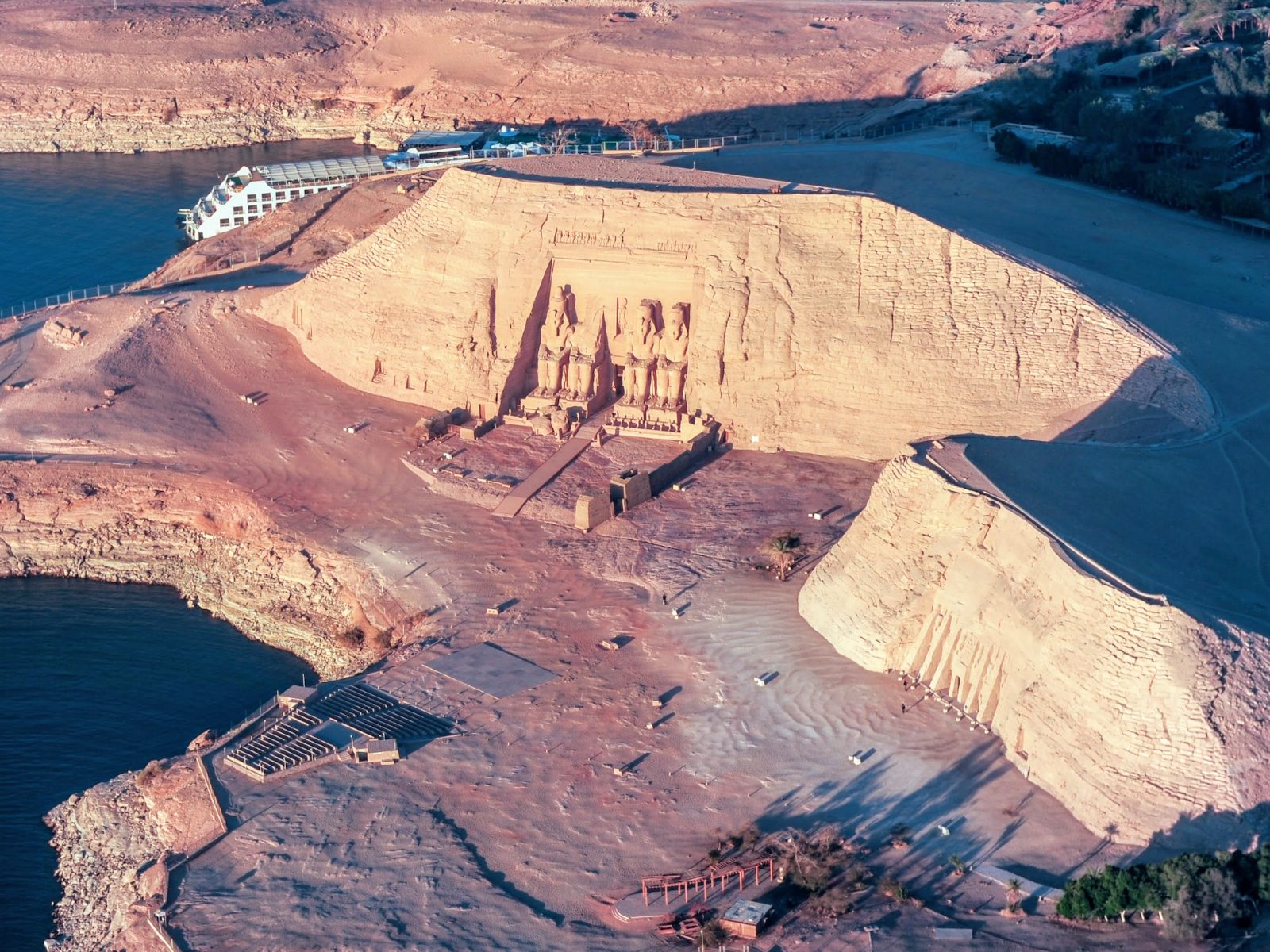
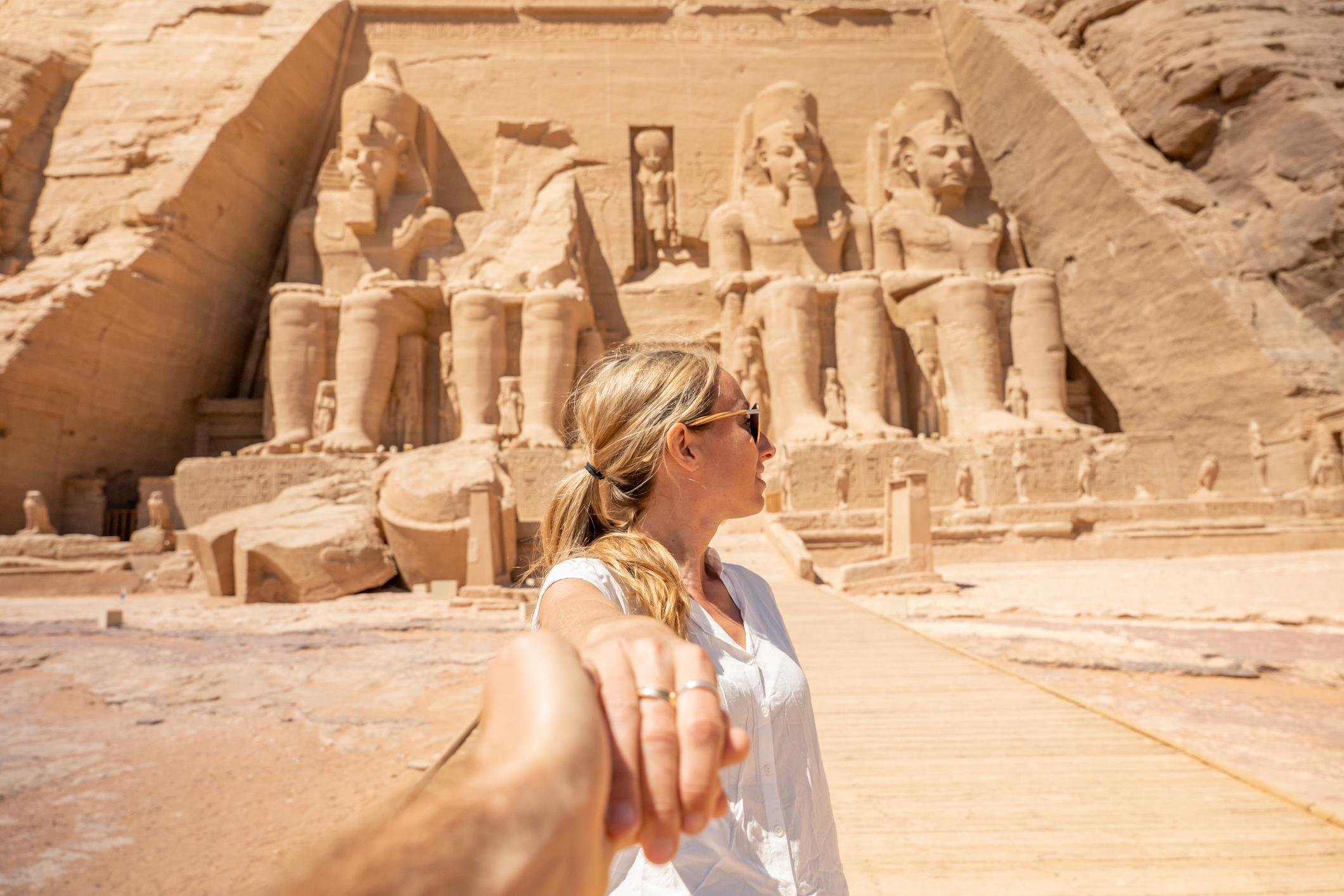
Above the reservoir at dawn, four kings waiting in stone.

142K+ travelers chose this
Free Cancellation
Right now: Moderate — summer weekday Arrive early; midday heat in July is intense
4-5 hours recommended
1 Languages
Up to 12 travelers
Free Cancellation
Free cancellation Instant confirmation Mobile voucher Verified partner Skip-the-line
20 m
Colossi height
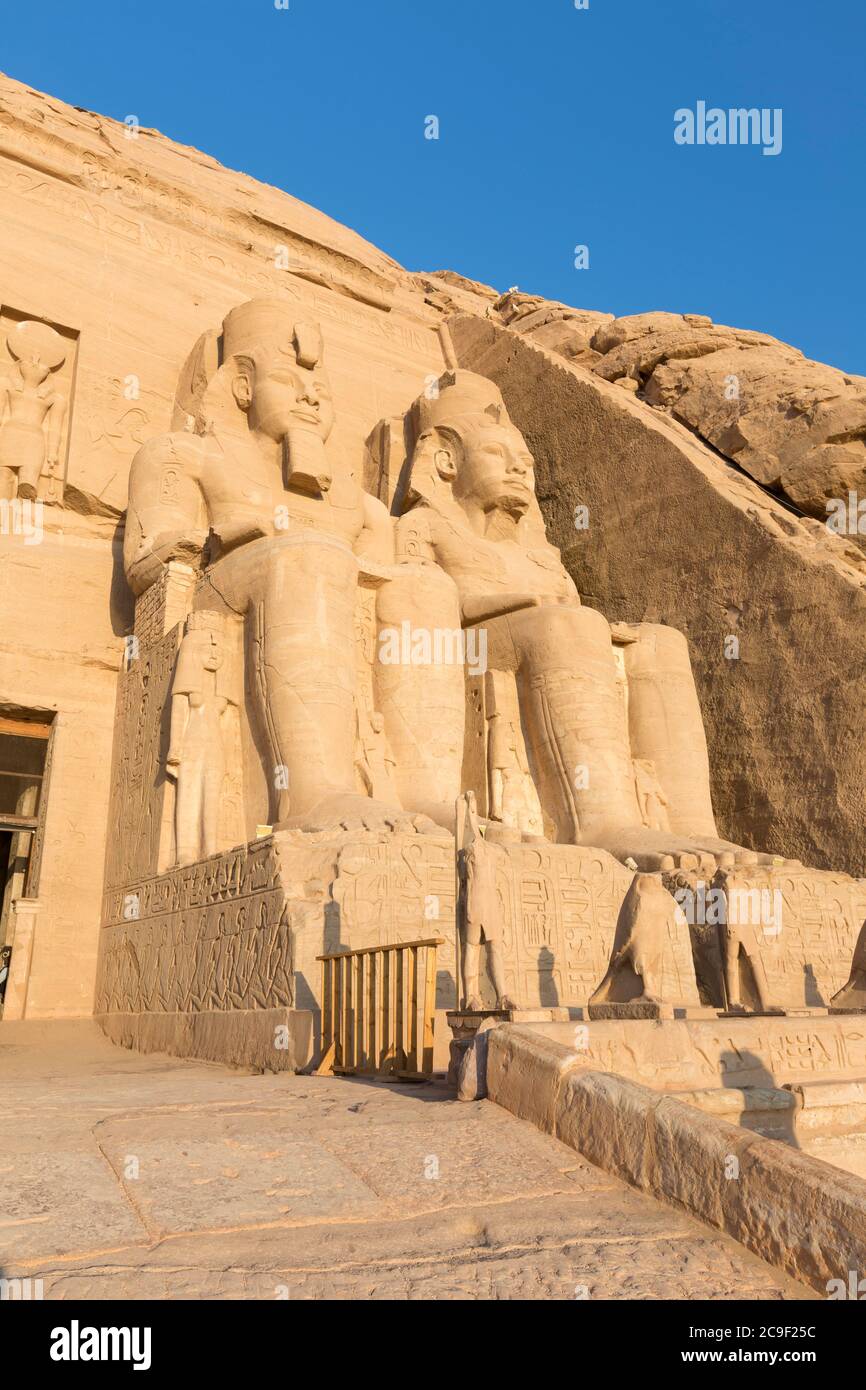
Four seated statues of Ramesses II
3,200+ yrs
Age of temples
Carved 13th century BC
45 min
Flight from Aswan
By air, no road convoy
750 EGP
Entrance fee
Foreign adult, both temples
Feb 22
Sun Festival date
Light hits inner sanctuary
Oct 22
Sun Festival date
Second annual alignment
Choose your ticket

Ticket options at a glance

Compare fares, pick the fit — all bookings are mobile-voucher and eligible for free cancellation where shown.

Aswan: Abu Simbel & Nefertari Temple Express Air Tour 6 hr
Guided Experience

Aswan: Abu Simbel & Nefertari Temple Express Air Tour

4.2 (5)
€430
  • Expert local guide
  • Small group
  • Skip-the-line access
  • Free cancellation
Book this ticket
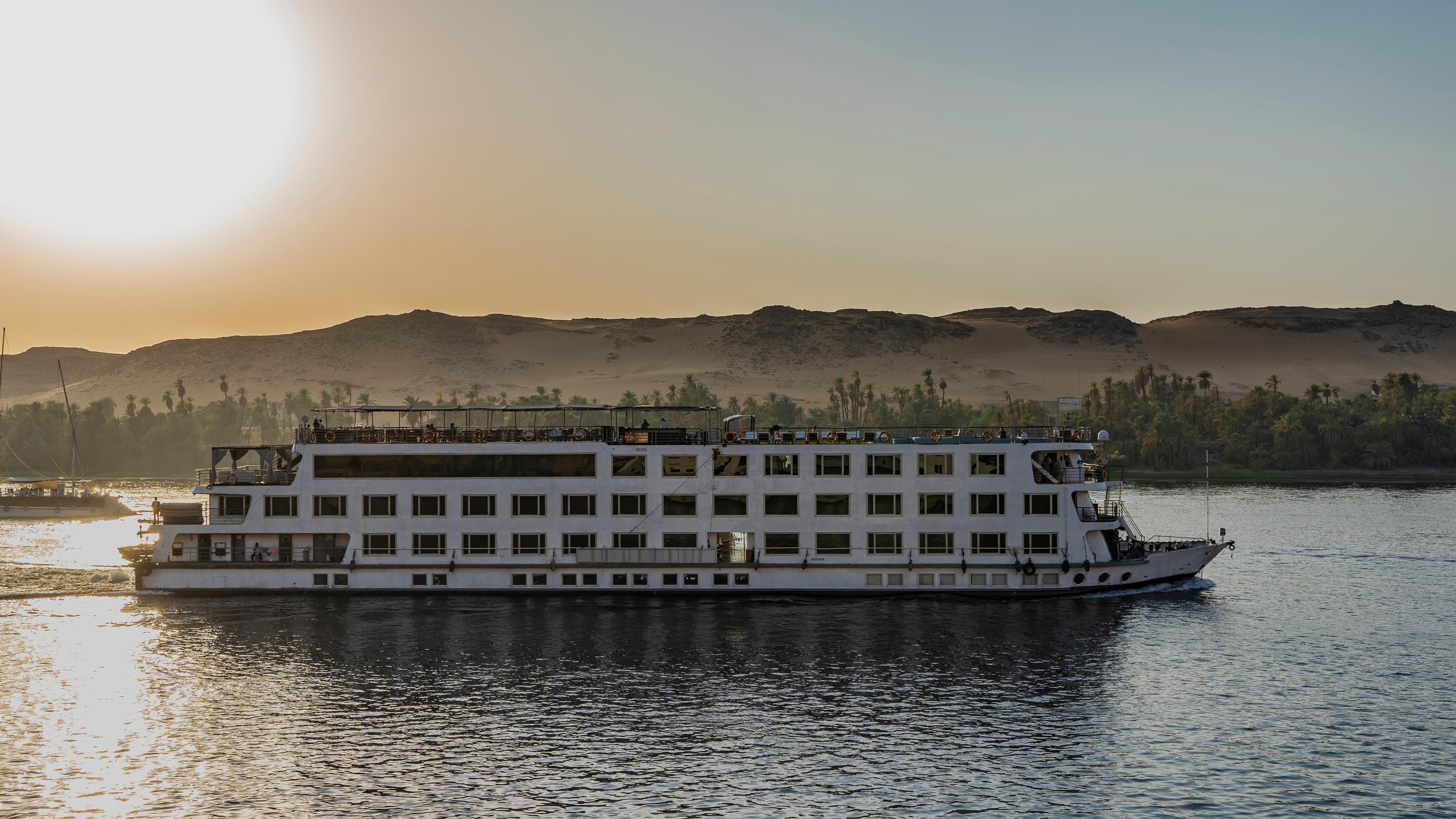
4-Day Nile Cruise from Cairo: Aswan to Luxor 96 hr
Guided Experience

4-Day Nile Cruise from Cairo: Aswan to Luxor

4 (48)
€956
  • Expert local guide
  • Small group
  • Skip-the-line access
  • Free cancellation
Book this ticket

Is it worth it?

Worth it for time-tight first-timers

Choosing abu simbel by air means paying the 750 EGP entrance on top of a pricier flight from Aswan, and in return you get the sandstone colossi of Ramses II, the sunken temple to Nefertari, and the salvaged Nubian monuments compressed into a single morning. The catch is math: a flight itinerary hands you roughly 90 minutes on site, so you are effectively buying convenience and shade at dawn, not a leisurely visit. For travellers on a two-day Aswan window, that trade pays off — you skip a punishing pre-dawn desert drive and reach the colossi ahead of the convoys. Budget backpackers with slack days get thinner value, since the cheaper road option delivers the same UNESCO relocation story for far less outlay. Weighed honestly, abu simbel by air tickets reward those short on time and heavy on itinerary, and disappoint anyone chasing lingering hours or the lowest possible spend.

What makes it worth it

  • Reach colossi at dawn, ahead of convoys
  • Saves a brutal pre-dawn desert drive
  • Both temples plus Nefertari in one morning
  • Frees a full day of your Aswan trip
  • Soft early light on the Ramses facade

Keep in mind

  • Roughly 90 minutes on site only
  • Flight cost far exceeds the road option
  • Midday return crowds if timing slips
  • Little slack for lingering or repeat visits

Bottom line: If your days are scarce and your Aswan window tight, the abu simbel by air tour earns its premium; if time is loose, take the cheaper road.

Head to head

Abu Simbel By Air Or By Road Convoy — Which Should You Choose?

Most travelers who compare both call flying the easier trip: an Abu Simbel by air hop trims a full day of desert driving down to a 45-minute flight, though the police-escorted road convoy remains the budget-friendly classic for those chasing sunrise over the Nubian desert.

Top pick
Abu Simbel by Air
Road Convoy from Aswan
Travel time each way 3–4 hours by desert highway
Physical comfort and fatigue High fatigue — 4 AM start, cramped bus
Schedule flexibility Fixed convoy departures only (~4 AM, 11 AM)
Time actually spent at the temples About 2 hours typical
Reliability (sandstorm/weather risk) Road travel also disrupted, plus checkpoint delays
Best fit for traveler type Budget travelers, overland adventurers

Verdict: Skip-the-line abu simbel by air tours suit anyone short on time or stamina, while the road convoy rewards travelers who want the desert drive itself as part of the story, and both abu simbel by air tickets and convoy seats sell out fast in peak season so book the abu simbel by air tour or your bus seat well ahead.

Featured Experiences

Popular tours & activities

Hand-picked experiences loved by thousands of travelers

Recommended Experience

Powered by GetYourGuide

Another traveler favorite

Powered by GetYourGuide
2-Day Private Egypt Explorer: Luxor, Aswan, & Abu Simbel 2 days Free Cancellation

2-Day Private Egypt Explorer: Luxor, Aswan, & Abu Simbel

Experience Egypt’s top ancient wonders on a comprehensive private 2-day flight tour from Cairo.

4.4 (23)
FromFrom €708.6
See details
5-Day Private Egyptian Highlights Expedition with Domestic Flights 5 days Free Cancellation

5-Day Private Egyptian Highlights Expedition with Domestic Flights

Experience Egypt's top landmarks from Cairo to Alexandria on this fully-guided, 5-day private excursion.

4 (346)
FromFrom €1040.72
See details
5-Day Private Egyptian Explorer: Pyramids, Nile Cruise & Abu Simbel 5 days Free Cancellation

5-Day Private Egyptian Explorer: Pyramids, Nile Cruise & Abu Simbel

Discover Egypt’s greatest treasures on an all-inclusive 5-day journey featuring a Nile cruise, hot air ballooning, and iconic ancient sites.

4.2 (288)
FromFrom €1217.22
See details
Your journey

Step-by-step — what your day looks like

1

Arrival and ticket check

Enter through the visitor gate near the parking area and show your 750 EGP entrance ticket before the walk to the temples.

2

Great Temple of Ramses II

View the four colossal seated statues at the facade, then walk through the pillared hall into the inner sanctuary.

3

Small Temple of Hathor

Walk to the neighboring temple dedicated to Nefertari and the goddess Hathor, noting its six standing colossi.

4

Lakeside viewpoint

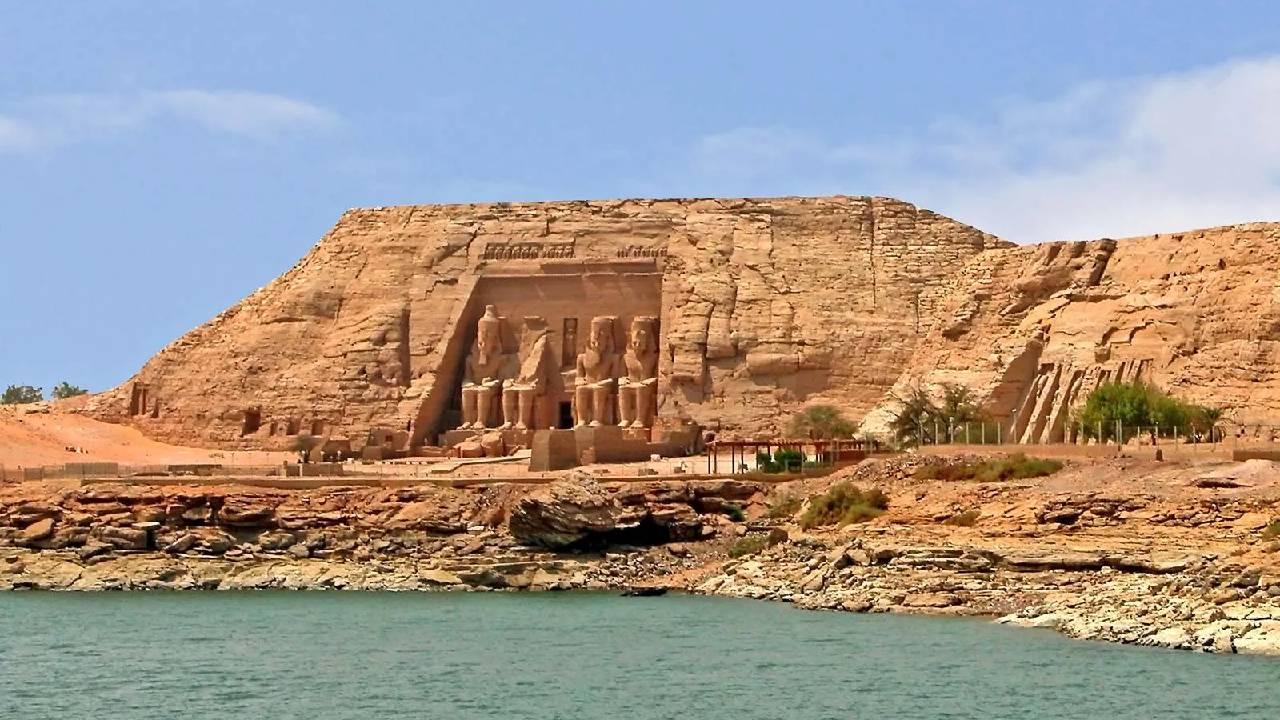
Step around to the Lake Nasser shoreline behind the artificial hill for a view over the water.

5

Return to transport

What you'll see

Highlights not to miss

Great Temple of Ramses II

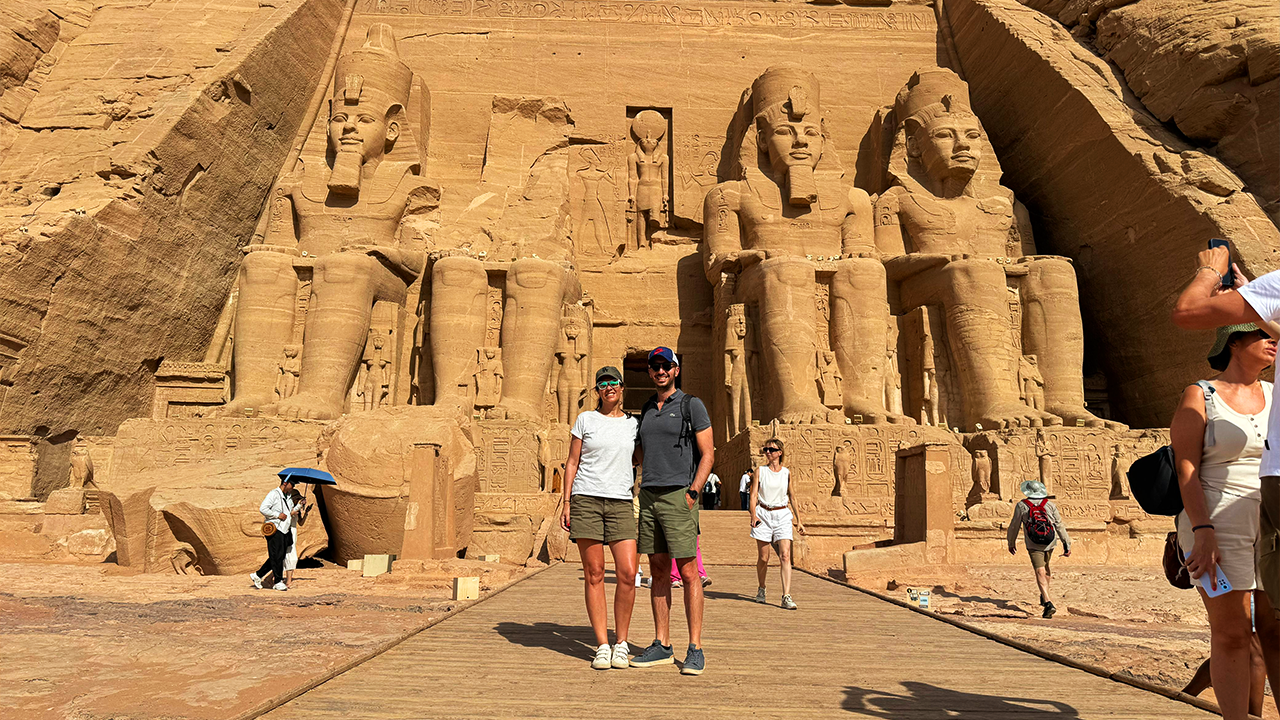
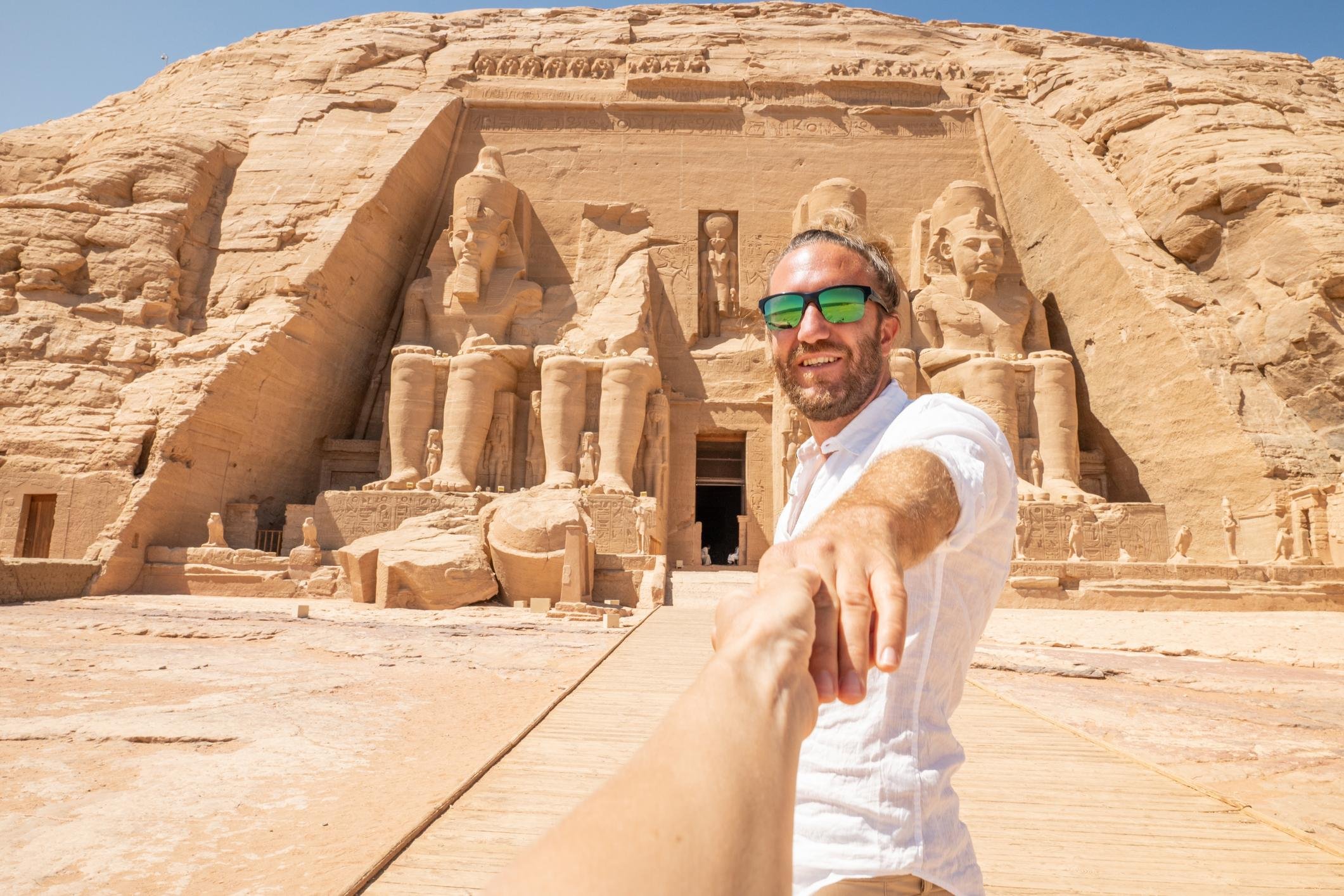
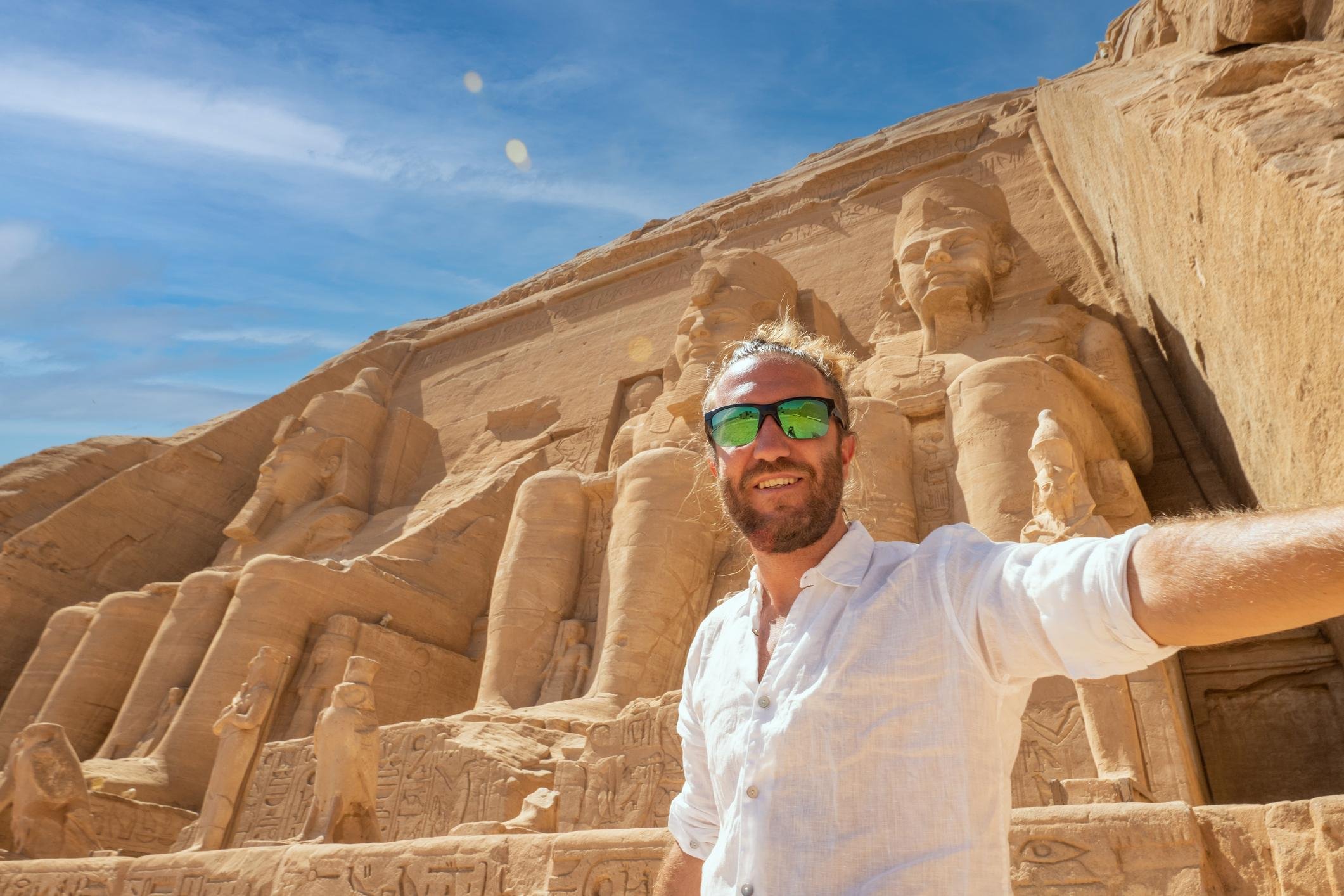
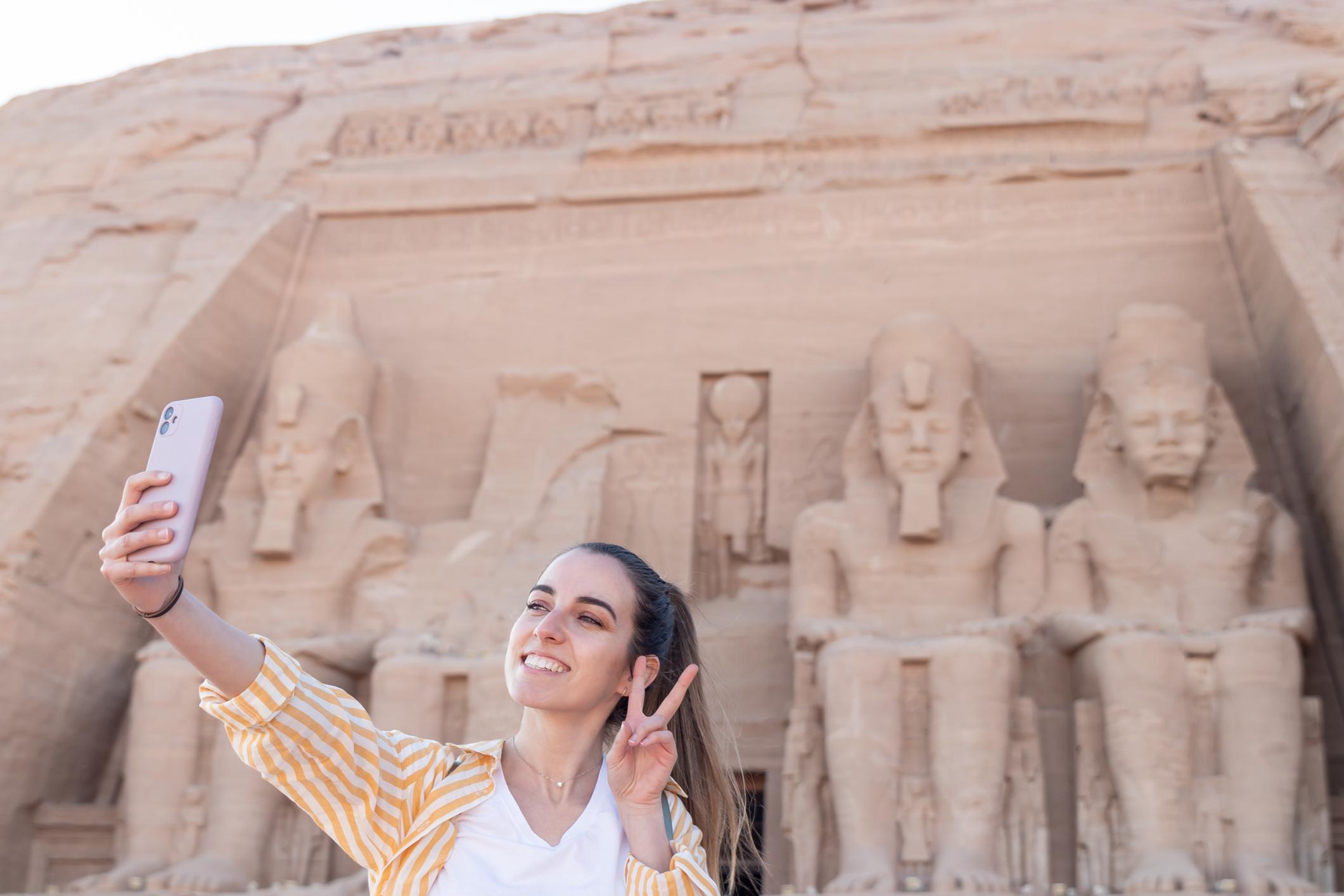
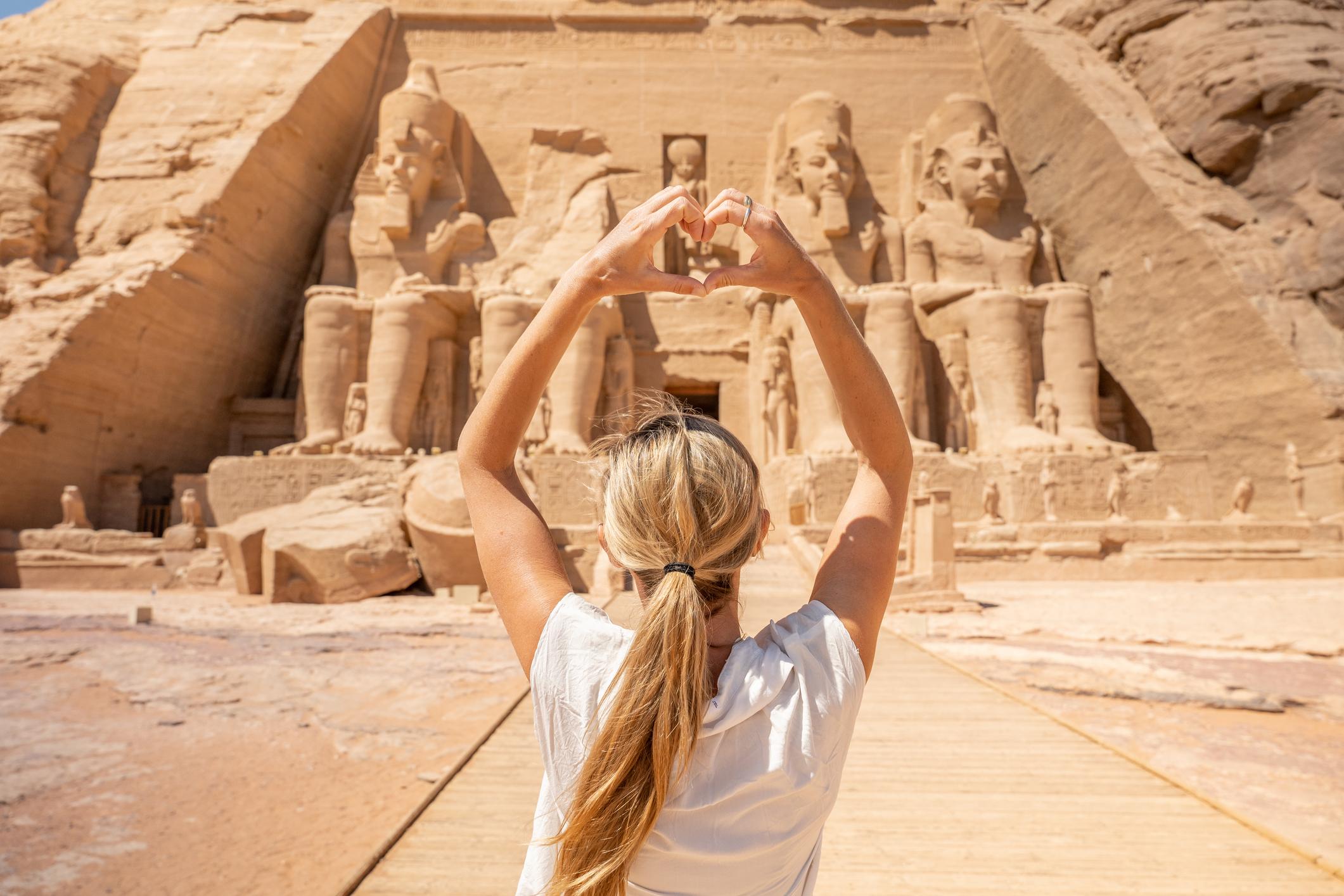
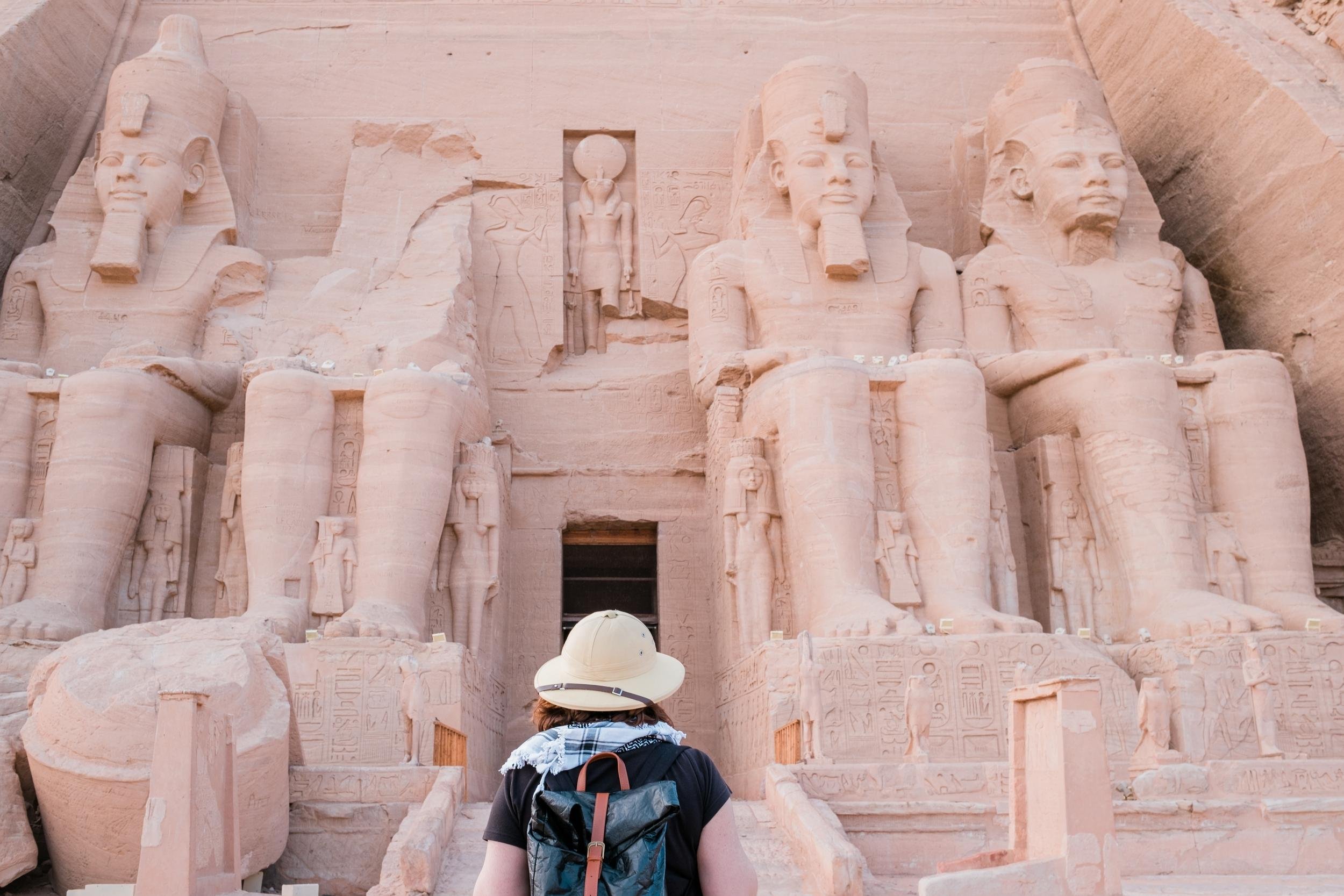
Four seated colossi of Ramses II, each over 20 meters tall, dominate the facade; one statue's upper half has lain fractured at its base since an ancient earthquake. Twice a year, on February 22 and October 22, sunlight travels down the axis of the temple to illuminate the inner sanctuary statues.

Small Temple of Hathor

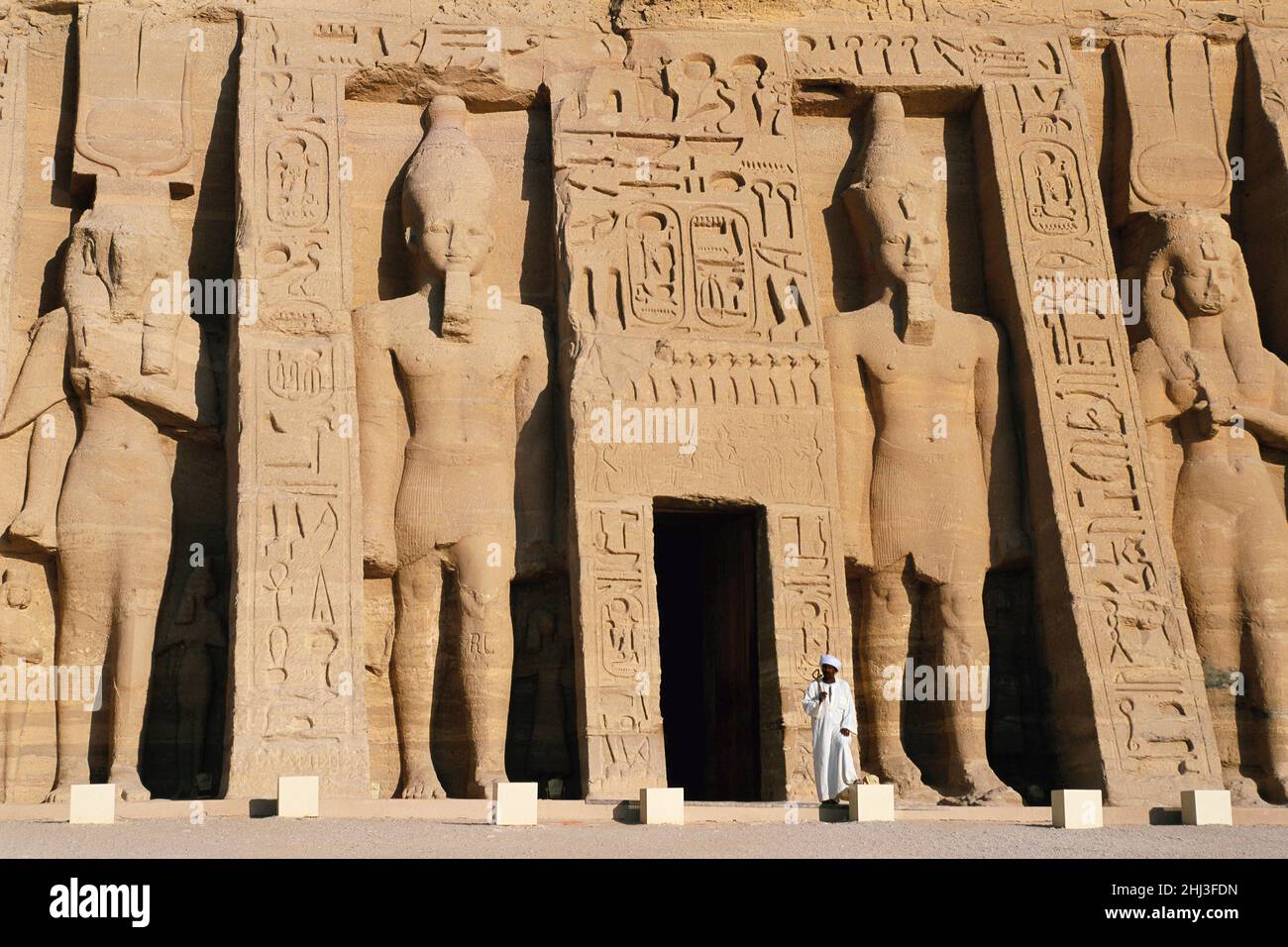
Dedicated to Queen Nefertari and the goddess Hathor, this smaller temple features six standing statues on its facade, an unusually rare tribute for a royal consort in ancient Egypt. Its interior columns are carved with Hathor-headed capitals.

Inner Sanctuary

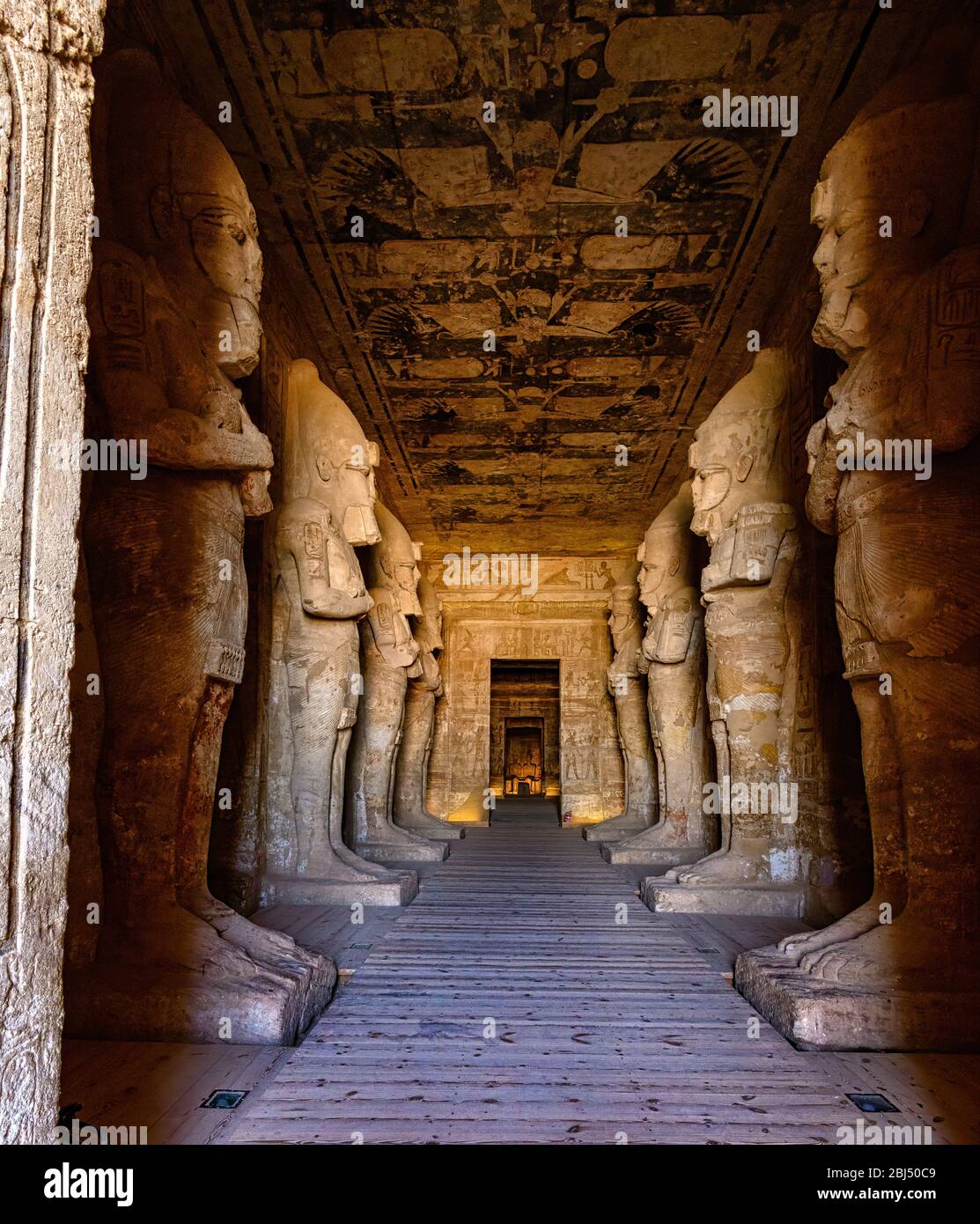
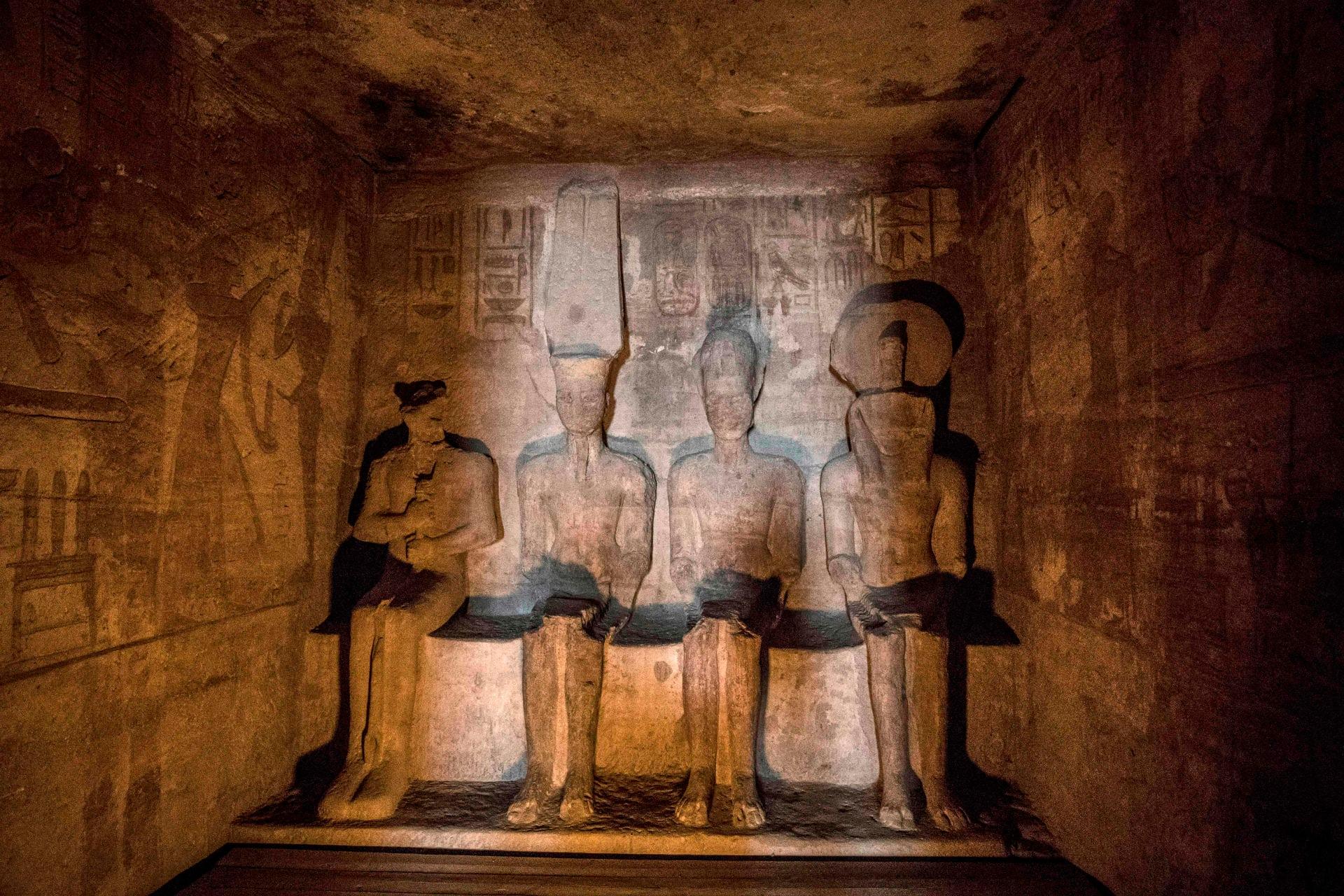
The innermost chamber of the Great Temple holds four seated statues representing Ramses II alongside the gods Amun-Ra, Ra-Horakhty, and Ptah, positioned roughly 60 meters from the entrance. Only during the biannual sun alignment does light reach this deep chamber naturally.

Hypostyle Hall

A pillared hall lined with eight Osiris-pillar statues of Ramses II leads toward the sanctuary, its walls covered in reliefs depicting the Battle of Kadesh against the Hittites.

Artificial Relocation Hill

The concrete dome hidden beneath an artificial hill supports both relocated temples, part of the 1960s UNESCO engineering effort that moved the monuments block by block to escape the rising waters of Lake Nasser.

Lake Nasser Shoreline

Behind the temple hill, the shoreline of Lake Nasser offers an open view of the reservoir created by the Aswan High Dam, a quieter spot away from the temple entrance crowds.

The experience

What the visit is really like

You lift off from Aswan in the early morning and watch the desert give way to the blue sheet of Lake Nasser before the aircraft banks toward the airstrip. From touchdown, a short transfer brings you to the entrance gate, where foreign adult entry to both temples is 750 EGP. You buy your ticket, pass the checkpoint, and follow the path around an artificial hill — the very mound built to hide the 1960s reconstruction. Then the façade opens in front of you. You stand at the feet of the four colossi, each roughly twenty metres tall, and crane upward at the baboon frieze catching the light. You step into the pillared hall, where Osiride statues of the king line the axis, and you move slowly through cooler, dim chambers toward the sanctuary at the rear. Next door, you cross to Nefertari's smaller temple and trace the Hathor-headed columns and the reliefs of the queen. You pause at the water's edge, where the reservoir laps below the relocated cliff. Booking abu simbel by air keeps the visit tight: you see both temples, walk the shoreline, and are back at the airstrip before the midday sun turns the sandstone white.

Everything You Need to Know

Your complete experience guide

All the details about your upcoming adventure in one place

Reaching Abu Simbel by Air

Choosing abu simbel by air connects Aswan with the twin temples of Ramesses II and Queen Nefertari through a short flight over Lake Nasser and the Nubian desert. Guided abu simbel by air tours pair a licensed Egyptologist with the great sun temple and its four colossal statues, framing the site as a cornerstone of Nubian monuments and UNESCO heritage. Travelers who prefer flying skip the long overland corridor while still exploring one of Egypt's landmark archaeological sites.

The four colossi of Ramesses II were carved so that twice each year, on roughly 22 February and 22 October, the rising sun crosses the temple threshold and strikes three of the four seated gods in the innermost sanctuary, leaving Ptah of the underworld in shadow. That alignment, held across more than three millennia, is the reason travellers choosing abu simbel by air arrive at a monument engineered as much for astronomy as for empire. The two temples stand on the western bank of Lake Nasser, roughly 280 kilometres south of Aswan and close to the Sudanese frontier. The Great Temple honours Ramesses II and the state gods Ra-Horakhty, Amun and Ptah; the smaller temple, fronted by six standing figures, is dedicated to the king's principal wife, Nefertari, and the goddess Hathor. Cut directly into a sandstone cliff during the thirteenth century BC, both are hypogea — rock-cut interiors rather than freestanding masonry — their halls lined with Osiride pillars and painted reliefs of the Battle of Kadesh. What gives the site its modern weight is not only survival but rescue. Between 1964 and 1968, a UNESCO-led coalition sawed both temples into more than a thousand blocks and reassembled them on higher ground, sixty-five metres above and two hundred metres back from their original setting, ahead of the Aswan High Dam's rising reservoir. The reconstruction was precise enough to preserve the solar alignment, though it now falls a day later than in antiquity. Visitors weighing an abu simbel by air tour are, in effect, viewing one of the twentieth century's largest feats of archaeological engineering laid over a Ramesside original. The scale still governs first impressions. Each seated colossus on the Great Temple façade rises about twenty metres; the figures wear the double crown of Upper and Lower Egypt, and a frieze of baboons greets the dawn above the entrance. Inside, a processional axis draws the eye through successive halls toward the sanctuary, the walls carrying hieroglyphic cartouches, tribute scenes and the propaganda of a long reign. For those comparing abu simbel by air tickets, the appeal is partly logistical and partly atmospheric: the flight compresses a long desert corridor into a short hop and delivers arrival before the heat and the coaches. Among Nubian-Egyptian landmarks and the wider catalogue of Aswan Governorate landmarks, few sites reward the effort with such immediate physical drama, and the temple complex remains a UNESCO World Heritage property drawing steady interest through 2026.

Twice a year the rising sun crosses the threshold and lights three of the four gods, leaving the fourth in permanent shadow.

Dress code

Cover shoulders and knees, especially inside the temple chambers where modest dress is expected out of respect for the ancient religious spaces. Lightweight, breathable fabrics are recommended given the desert heat, and a wide-brimmed hat helps during the walk from the bus park to the temple entrance.

Bags & security

Bags are screened at a checkpoint before the temple approach, and large backpacks or hard cases may be asked to be left with your driver or guide. Security staff patrol both the Great Temple of Ramses II and the Small Temple of Hathor, and bag checks are routine given the site's proximity to Egypt's southern border region.

Photography

Photography is permitted on the exterior facades and colossal statues without restriction, but flash and tripods are prohibited throughout, and photography inside the temple chambers is officially restricted to protect the carved reliefs. A separate photography permit has historically been required for professional camera equipment or commercial shoots.

Families & strollers

Children generally manage the site well since the outdoor plaza between the Great Temple and the Small Temple is flat and open, though the temple interiors are dim and can feel close for younger kids. There is little shade outside, so families should plan around the 06:00–08:00 window before the sun gets strong.

Accessibility

The walk from the visitor parking area to the temple entrance is roughly 200 meters over packed sand and paved sections with some uphill grade. Wheelchair users can view both facades from the plaza, but the temple interiors have raised stone thresholds and narrow rock-cut corridors that are not wheelchair accessible.

Food & drink

Food and drink are not permitted inside the temple chambers, and there are only a handful of cafés and kiosks near the visitor center in Abu Simbel village. Bottled water is sold near the entrance, but options thin out quickly on high-traffic mornings, so bringing your own supply is worthwhile.

Not allowed

× Tripods inside temples × Flash photography inside temples × Drones × Large backpacks in temple chambers × Food inside temples × Sharp objects × Glass containers × Loud speakers × Pets × Selfie sticks inside chambers × Commercial filming without permit × Climbing on statues × Touching carved reliefs

What to bring

✓ Sun hat ✓ Bottled water ✓ Sunscreen ✓ Comfortable walking shoes ✓ Light scarf for shoulders ✓ Cash in small EGP notes ✓ Camera without flash

Opening hours

Mon 06:00 – 17:00
Tue 06:00 – 17:00
Wed 06:00 – 17:00
Thu 06:00 – 17:00
Fri 06:00 – 17:00

Busier with weekend convoy arrivals

Sat 06:00 – 17:00

Busiest day of the week

Sun 06:00 – 17:00

Closures & exceptions

  • ·Feb 22 — Sun Festival — high crowds, no closure
  • ·Oct 22 — Sun Festival — high crowds, no closure

At a glance

Hours

06:00–17:00 daily, all week

Address

Abu Simbel Temples, Abu Simbel, Aswan Governorate, Egypt

Access

200m walk from bus park, uphill, limited wheelchair access to facades only

Best Arrival

06:00–08:00 for cooler air and soft light

Bag Policy

Small bags only, no large backpacks or tripods inside

Getting there

Car · 3–4 hours each way · Shared taxi or private car pricing varies by group size

Private car or taxi from Aswan follows the desert road south, roughly 280 km with checkpoints along the way; most drivers depart before dawn to reach the site by opening time.

Public transport · 3–4 hours each way · Bus seat typically bundled into day-tour pricing

A supervised morning convoy of tour buses departs Aswan for Abu Simbel and is the standard way independent travelers reach the site without a private car.

Taxi · 3–4 hours each way · Negotiated per trip, higher for solo travelers

Direct taxis can be arranged through hotels in Aswan for a day trip, usually joining the same road convoy for security reasons.

Cancellation policy

Entry tickets purchased at the gate are non-refundable once issued, since the 750 EGP fee covers same-day access to both temples. Tour packages booked through operators typically allow free cancellation up to 24–48 hours before pickup, with refund terms set by the individual operator rather than the site itself.

Plan your time

How long do you need?

Recommended time

2-3 hours

Flight schedules on an abu simbel by air itinerary compress the on-site window to roughly 90 minutes, which is enough to cover both temples but leaves little slack for a slow pace or long photo stops. Add time only if your flight lands after 09:00, since later arrivals overlap with road convoys and queues at the ticket gate and security checkpoint thicken fast. Taking the first flight, timed to the 06:00 opening, gets you inside before buses from Aswan arrive, so the forecourt and Great Temple facade are still nearly empty. Budget the full 90 minutes as working time, not buffer, and expect the shuttle to the site and back to eat a further 15-20 minutes on each side.

Crowd levels through the day

First flight arrival (06:00-07:00) Very light
Mid-morning (08:00-09:30) Filling up
Late morning (09:30-11:00) Heavy, bus convoys
Midday (11:00-13:00) Peak, hottest hours
Early afternoon (13:00-15:00) Thinning out
Late afternoon (15:00-17:00) Light, near closing
Plan ahead

When to go — year at a glance

Weather · crowds · average price — dots go green to amber to red as each metric rises.

October to April

Cooler daytime temperatures make the walk and temple interiors far more comfortable, and this period covers both Sun Festival dates on February 22 and October 22.

May to September

Summer heat in Abu Simbel regularly exceeds 40°C by midday, so an early 06:00 arrival becomes essential rather than optional.

February 22 and October 22

The Sun Festival draws large crowds at dawn when sunlight aligns with the inner sanctuary, so tickets and transport should be booked well in advance.

December to February

Peak tourist season in Aswan overall, meaning fuller convoys and buses arriving through mid-morning.

Insider tips

Helpful tips for your visit

Book flights early

Egypt Air's Aswan–Abu Simbel route runs limited daily flights and seats sell out fast around the Sun Festival dates of February 22 and October 22.

Carry small EGP notes

Change and card acceptance are limited in Abu Simbel village, so small denominations help for tips, water, and incidental purchases.

Check last entry timing

Ticket counters can stop selling before the stated 17:00 closing time, so build in a buffer rather than arriving right at the cutoff.

Pack water for the walk

There's minimal shade between the parking area and the temple plaza, and vendors near the entrance can run out of cold water on busy mornings.

Confirm convoy departure the night before

Road travelers from Aswan should reconfirm pickup times with their hotel or operator, since convoy schedules can shift slightly by season.

Keep your ticket until you exit

Staff may recheck tickets near the Small Temple of Hathor, so hold onto the stub rather than discarding it after the first checkpoint.

Where to meet

Meeting points

Abu Simbel Visitor Center

Abu Simbel Temples, Abu Simbel, Aswan Governorate, Egypt

Main gate where tour groups regroup before entry

Get directions

Bus and car park

Adjacent to the temple access road, Abu Simbel

Starting point for the 200-meter walk to the temples

Get directions
The story

The history behind the site

Ramesses II ordered the twin temples cut from the sandstone cliff during the 13th century BC, work traditionally dated to around 1264 BC and completed roughly two decades later. The Great Temple faced east toward the second cataract of the Nile. It served as a southern-border statement, a warning carved in stone for Nubians approaching Egypt from the south. Four colossal seated figures of the pharaoh guard the façade, each near twenty metres tall. The sanctuary was dedicated to Amun, Ra-Horakhty and Ptah, alongside the deified king himself. A smaller temple beside it honoured Queen Nefertari and the goddess Hathor. Those who research abu simbel by air often begin with these dedications, since the alignment and iconography frame everything visitors later see. The monuments slipped from memory for centuries, buried to the shoulders in drifting sand. On 22 March 1813 the Swiss traveller Johann Ludwig Burckhardt recorded the upper cornice of the Great Temple. The Italian Giovanni Belzoni cleared the entrance on 1 August 1817 and entered the interior. That rediscovery placed Abu Simbel firmly among the Nubian landmarks charted by nineteenth-century explorers, and modern abu simbel by air tours still retrace the route these men followed upriver. The twentieth century brought the gravest threat. Construction of the Aswan High Dam, begun in 1960, would raise Lake Nasser and drown the temples entirely. UNESCO launched an international rescue campaign in 1959. Between 1964 and 1968 engineers sawed both temples into more than a thousand blocks, some weighing thirty tonnes, and lifted them roughly sixty-five metres higher and two hundred metres back from the water. The reassembly preserved the original solar alignment. Twice yearly, sunlight still reaches the inner sanctuary. This relocation defined the modern era of heritage conservation, and travellers booking an abu simbel by air tour arrive at a site engineered to survive. Anyone holding abu simbel by air tickets today stands before stone twice raised: once by Ramesses, once by the twentieth century. The campaign concluded in 1968, and in 1979 UNESCO inscribed the Nubian Monuments, Abu Simbel among them, on its World Heritage list.

13th c. BC

Ramesses II orders the twin temples carved from the cliff, dedicated to Amun, Ra-Horakhty and Ptah.

1813

Johann Ludwig Burckhardt records the sand-buried façade on 22 March.

1817

Giovanni Belzoni clears the entrance and enters the Great Temple on 1 August.

1960

Construction of the Aswan High Dam begins, threatening the temples with Lake Nasser.

1964–1968

UNESCO engineers cut both temples into blocks and raise them sixty-five metres higher.

1968

The relocation campaign concludes with the solar alignment preserved.

1979

The Nubian Monuments, including Abu Simbel, are inscribed as a UNESCO World Heritage Site.

Photo spots

Best photo spots

Great Temple Facade Approach

Best light · Early morning, soft side light

Walking in from the visitor path, the four seated colossi of Ramses II emerge gradually from behind the rock face, a reveal many arriving on an abu simbel by air tour say beats any photo they had seen beforehand. Stand back on the sandy approach path for the full facade in one frame before moving closer.

Temple of Nefertari and Hathor

Best light · Before 09:00, fewer tour groups

About 100 meters north of the Great Temple, this smaller rock-cut facade shows six standing colossi, four of Ramses II and two of Nefertari, flanking the entrance. Shoot straight-on from the open plaza for a symmetrical frame, or angle low to exaggerate the statue height.

Great Hypostyle Hall Interior

Best light · Midday, interior lighting only

Inside the Great Temple, eight Osirid pillars of Ramses II line the hall, and photography here requires a separate photo permit purchased at the entrance. Position centrally between the pillar rows to capture the corridor perspective toward the inner sanctuary.

Lake Nasser Overlook

Best light · Late afternoon, calm water

From the raised ground beside the temple enclosure, the view opens onto Lake Nasser's water framed by desert cliffs, with the colossi visible in the same frame at a distance. It is the standard wide shot for showing the whole site's setting, including for visitors who arranged their abu simbel by air tickets specifically to see this waterside panorama.

Sun Festival Alignment Spot

Best light · Sunrise, February 22 and October 22 only

Twice a year the rising sun aligns through the Great Temple entrance to light the inner sanctuary statues, and photographers gather directly in front of the doorway on the approach path to capture the shaft of light. Arrive well before dawn since the viewing area fills quickly.

Gallery

Moments from the experience

Customer Reviews

What travelers say

Real experiences from real travelers

4.6
Based on undefined reviews
1 ★ 560
2 ★ 410
3 ★ 820
4 ★ 2400
5 ★ 16800
M
Marisa T.
United States · 2026-06-18

Worth the early flight

We booked abu simbel by air out of Aswan and the short hop over Lake Nasser was the smartest choice we made. Arriving mid-morning the sandstone was already glowing amber and the four colossi felt impossibly tall standing at their feet. Bring a hat, there is almost no shade on the approach.

L
Lukas B.
Germany · 2026-05-02

Colossi at eye level

The scale of Ramesses II carved into the cliff does not translate in photos until you are standing below them. Our abu simbel by air tour meant we skipped a very long desert drive and had energy left to actually explore the hypostyle hall. The painted reliefs inside were more vivid than I expected.

A
Ana Sofía R.
Spain · 2026-04-27

Lake Nasser from above

Flying in, the view of the temples set against Lake Nasser and the endless desert was the highlight before we even landed. The abu simbel by air tickets included transfers to the site which made the tight schedule painless. Nefertari's temple next door is smaller but the Hathor columns are lovely.

K
Kenji M.
Japan · 2026-03-14

Great but rushed

The flight itself was smooth and the Abu Simbel temples are everything you hope for, deep carvings and that warm stone. My only note is the ground time felt short, so move quickly toward the inner sanctuary first. Still, choosing abu simbel by air over the road convoy was the right call for us.

P
Priya N.
India · 2026-07-08

Cooler morning slots

We took an early departure and the summer heat was bearable when we arrived, the light hitting the facade was soft and golden. Seeing these Abu Simbel landmarks up close, the sun-carved figures of Ramesses, stayed with me all day. The Lake Nasser panorama on the way back was a quiet bonus.

T
Thomas L.
France · 2026-02-11

Smooth and simple

Everything about the abu simbel by air tours ran on time, from the Aswan gate to the temple gate. Standing before the Great Temple with the double crown of Ramesses catching the light was the moment of the trip. The interior sanctuary and its four seated gods were smaller and more intimate than I imagined.

B
Beatriz C.
Brazil · 2026-01-30

Desert light

The colours of the sandstone shift as the sun moves and by late morning the whole facade was honey-toned. Our guide pointed out the toppled colossus and the fine detail on Nefertari's temple beside it. Doing the abu simbel by air tour saved us hours and the aerial approach over the desert was memorable.

O
Owen H.
Australia · 2025-11-19

Big statues, tight timing

Impressive site, the four giants of Ramesses II dominate everything and the reliefs inside reward a slow look. The plane was quick and comfortable and Lake Nasser stretched out beautifully below. Just know the visit window is compact so prioritise the temple interior early.

C
Chloé D.
Canada · 2025-09-05

Beyond expectations

Standing at the base of the Great Temple with the morning sun warming the stone was serene despite the crowds. The Hathor temple carvings of Nefertari were a highlight I did not anticipate. Flying in over the desert made the whole Abu Simbel excursion feel effortless.

M
Miguel A.
Mexico · 2025-06-22

Aerial approach wins

Watching the twin temples emerge beside the blue of Lake Nasser from the air was worth it alone. Up close, the sheer height of the seated Ramesses figures and the crisp hieroglyphs left a strong impression. The Abu Simbel tour by plane kept a long day manageable in the heat.

FAQ

Frequently asked questions

Everything you need to know for your journey

Around the corner

Nearby landmarks worth a detour

Lake Nasser shoreline

5 min walk

viewpoint

The reservoir formed by the Aswan High Dam stretches behind the temple hill, offering open water views away from the crowds. Sunset light over the lake is a quieter alternative to the morning temple rush.

Nubian Museum (Aswan)

Day-trip distance from Aswan

museum

Located in Aswan rather than Abu Simbel itself, this museum documents the Nubian villages relocated during the UNESCO rescue campaign. It pairs well with an Abu Simbel day trip as a same-region stop.

Abu Simbel village center

10 min walk

square

A small settlement built to house workers during the temple relocation project, now home to a few shops and cafés. It gives a sense of daily life in this remote part of Aswan Governorate.

Where to stay

Where to stay nearby

Abu Simbel village

10 min walk

budget

A handful of small guesthouses and budget hotels cluster near the site for travelers who overnight rather than day-trip from Aswan.

Seti Abu Simbel Lake Resort

15 min drive

mid-range

A lakeside resort on Lake Nasser offering rooms with water views, positioned for travelers doing an overnight Abu Simbel stay.

Aswan city center

Day-trip distance

district

Most visitors base themselves in Aswan, which has a far wider range of hotels from budget to luxury Nile-view properties.

Explore More

More Things to Do in Abu Simbel

Ready for Adventure?

Join thousands of happy travelers who have discovered this incredible experience

Book Your Experience Now